
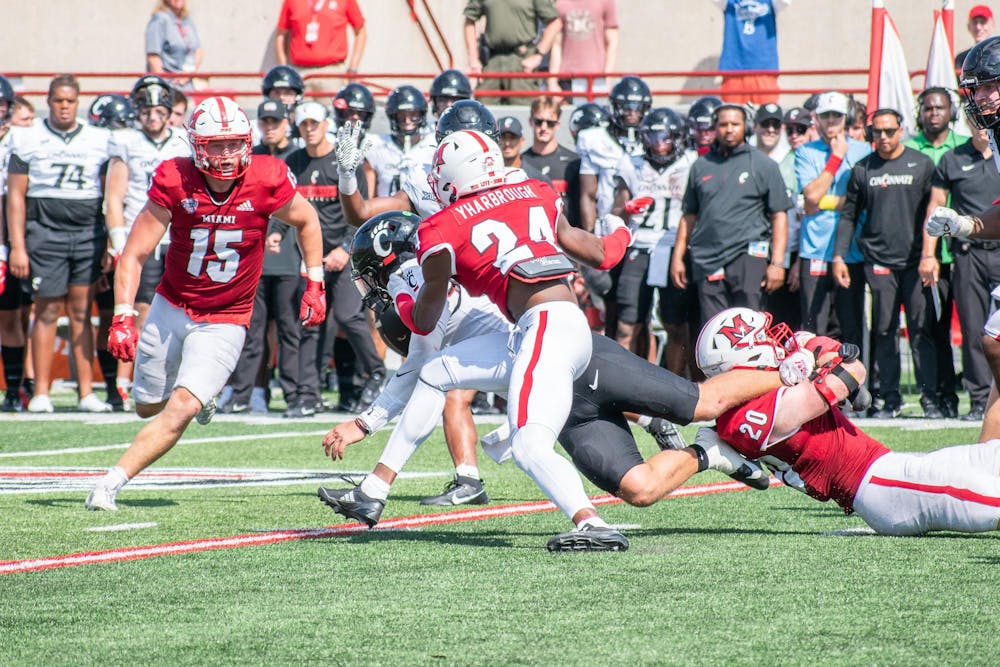
Adidas-branded pants with a Miami logo, backpacks adorned with large red M’s and shirts that read “Issued by Miami Athletics”: this is what most student athletes look like as they walk around campus.
They often travel in groups with other athletes, walking or scootering around campus. But what happens when scooters get switched out for crutches and practice time is spent watching from the sideline or bench?
Injuries are a part of sports, rarely avoided, even by the best athletes in the world. According to a National Health Statistics Report, roughly 8.6 million sports and recreation related injuries occur annually, with children and young adults (ages 5-24) accounting for more than half.
When young people become injured, it affects more than just the body part involved. Depression, anxiety, isolation and identity crisis can all play a factor in recovery. The mind can prevent the body from fully healing.
There’s a correlation between physiological injuries and psychological symptoms, meaning mental response can be exacerbated by injury, according to a research article published in Sports Health in 2023.
Injury often comes with mental health implications, especially when the injuries require surgery and long recovery times. At Miami, professionals like basketball athletic trainer Chris Elmore are often the first to recognize injuries as well as the mental health struggles that may accompany them.
The athletics department has a sports-specific mental health professional that athletes are referred to when mental health concerns arise. Athletic trainers serve as the connection between the athlete and Student Counseling Services.
Elmore said since athletic trainers spend more time with players than most coaches or other support staff, sometimes they are the first to notice, and the task of helping athletes with mental struggles can fall on them.
“People see the physical side of [injury]; they miss the mental side of it quite a bit, and the struggle that they have to go through to get back, basically regain their identity of a student athlete,” Elmore said. “We see that on the front lines more than just about anybody else, so it’s one of our jobs as athletic trainers to recognize that, and talk to them, and then guide them to the resources they need.”
For senior defensive back Mychal Yharbrough, who tore his ACL in 2024, athletics trainers played a huge part in his recovery. They drove him to appointments and helped him through the whole process.
Yharbrough said when he was injured, it was difficult to miss out on practice, but it was important to find ways he could still participate and be a member of the team.
“It definitely takes a toll on you, so you gotta find different ways to express that side of yourself,” Yharbrough said. “Whether that’s watching film or watching practice or doing extra [physical therapy] to keep yourself in that athletic mindset.”
Enjoy what you're reading?
Signup for our newsletter
When senior guard Evan Ipsaro tore his ACL only 12 games into Miami basketball’s historic season last year, he said his identity changed. He became known more for his injury than anything. Coping mechanisms for normal, everyday stress no longer worked when his outlet was stripped away by his injury.
“My whole life has just been, if I had something going on, I go to practice, I forget about it, I play basketball,” Ipsaro said. “Now it’s like [I] don't really have that outlet, and even if you’re at practice just sitting there watching, my mind can drift off and it’s like not really having an outlet.”
Having to miss an undefeated season and a March Madness appearance was tough for Ipsaro, but framing it as being happy for his teammates’ success helped him view it differently.
“You get in like a room by yourself and it’s like, ‘Why was that taken away from me?’” Ipsaro said. “But, it’s the reason I came here: I wanted this place to win. This place is bigger than just myself … time’s just not gonna stop for me”
Sports injuries in men create a mental health issue that’s caught between two impossible stereotypes surrounding men’s health and athletes. Both identities create an assumption of strength that’s almost impossible to adhere too when you’re walking around on crutches.
According to the Anxiety & Depression Association of America, one in 10 men experience mental health struggles, but less than half receive treatment. Additionally, while men represent 80% of suicides, many never receive care.
When men feel the need to “man up” or just deal with it, their willingness to attend counseling decreases. Athletes may feel pressured by coaches and teammates as well as to adhere to stereotypes of strength, and in turn, not seek help or talk about their struggles.
“Unfortunately, there’s a negative view of mental health services from a lot of people just because they think it makes them look weak or makes them not as good … when that’s not the case,” Elmore said.
Elmore said that sometimes when students come to him, they don’t feel comfortable going to Counseling Services. He and his colleagues do their best to support their students using their mental health training, and know when to have a conversation if the support they need is beyond their qualifications.
Injuries feel life-altering in the moment. Coaches, teammates and trainers around are there to support students outside of just the sport and resources at Miami are available for anyone who is struggling. Yharbrough said mentality is key for anyone in a similar situation.
“Try to keep yourself in a good headspace,” Yharbrough said. “Don’t get down, don’t worry about other people. Just keep grinding and making yourself known to the coaches, and even your teammates, that you’re still here. You’re still active. You still want to be a part of the team.”
Read More

Oxford police cite underage drinking, fake IDs and warrants
By Austin Smith | 2 hours agoBetween Aug. 24 and Aug. 31, police officers responded to 33 incidents, according to the Oxford Police Department report.

Five books to ramp up your fall aesthetic this year
By Layla Norris | 3 hours agoIf you’re anything like me, you’ve been yearning for the fall season — big sweaters, pumpkin spice, cozy nights in and it finally being acceptable to watch Halloween movies. Thankfully, it’s almost upon us.Even after you’ve rewatched “Gilmore Girls" and all the “Harry Potter” movies, it’s still important to consume as much fall media as you possibly can (it’s vital to your health). The best way to pass the time on a fall night and succumb to the academia aesthetic is reading.Here are five books to read with a fall vibe that will immerse you in the season.