
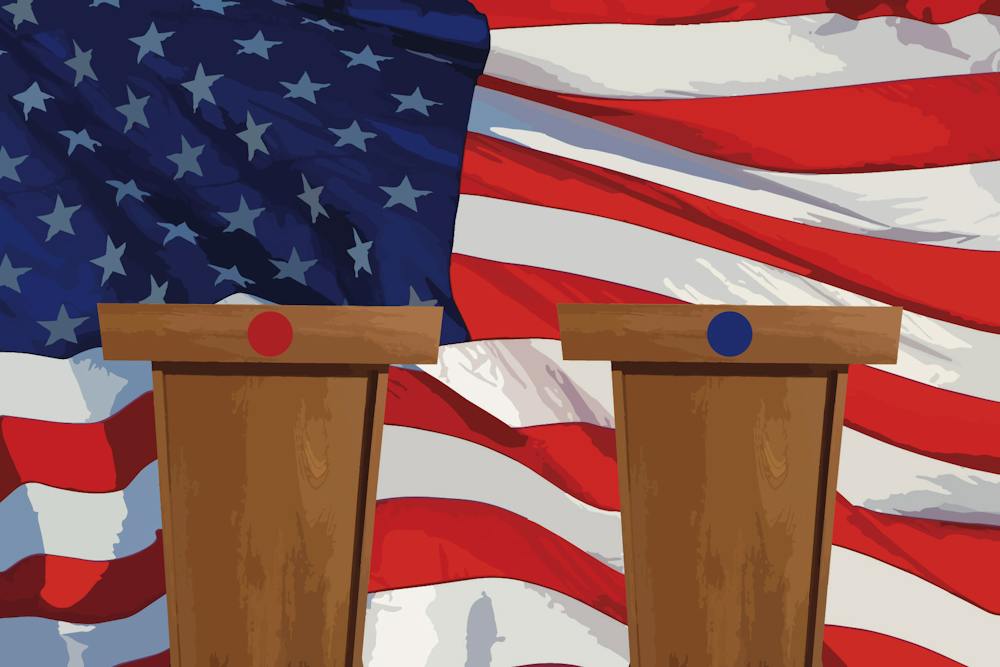
Politics and the humanities have always had an overlapping past. Artwork has been made in the darkest moments of history, stories have been written during war and the American Constitution was founded on philosophy.
One could say the humanities have a responsibility to be political, in the sense that it is the medium through which silenced voices are heard. It was the humanities that advocated for free speech, the abolition of slavery and the idea that all people are created equal.
The humanities have a pattern of becoming more politically involved during times of injustice. Charles Dickens, for example, wrote Oliver Twist when he lived in a class-divided society to expose the struggles of those in poverty. The oppressive pushback to art as a form of protest in history is often because the work was censored or controversial for its era, and as such, many great pieces did not become popular until years after their creators’ deaths.
Katie Johnson, professor of English and Western endowed professor, is developing a new project: “Outcast: Staging Race in Transnational Theatre.” The book will be about ethnic outcasts in 19th-century Irish theater. Throughout her research, she has investigated art and artists against the odds — how people have made art, in this case theater, despite being silenced.
“It’s astonishing to me to see that … those voices come through, and I think if we look hard enough, we can find them,” Johnson said.
To an extent, the idea of politics in the humanities is certainly not new. Art has been used as an instrument for expressing change, from Pablo Picasso’s “Guernica” to political cartoons. The main difference is that now, people who did not have an equal chance for their art to be seen or heard have that opportunity — particularly on social media. Even art that was not made to be political reveals aspects of its culture’s political climate: who gets to share their art, what is considered neutral or safe and its intended audience.
Given how everyone is now plugged into world events, and we’re faced with the news and politics everywhere we look, art is naturally going to reflect that. Especially in the digital age — everyone has the ability to hear about something in the world, make art about it and post it.
I am an English major, so I get emails from the humanities department, and I have noticed that a lot of the happenings in the department are related to politics. For example, the film showing “First They Came for My College,” the upcoming lecture “Love, Politics, and Peoples: A Critique of ‘Love Talk’ in Politics” by Eyo Ewara and “The Politics of Grievance: A Nietzschean Analysis” by Jay Wallace.
This could be related to the fact that it is almost impossible to be around technology and not hear about world issues, whether through content or advertisements. As Oscar Wilde said, “Life imitates art.”
How does or will society reflect what writers are writing about, what artists are creating or what historians are learning? Free artistic expression and equal opportunities for artists are a strong positive about social media, but they could also be tools for propaganda.
It is important for the humanities to talk about politics while everyone has a voice, especially when it is easy for misinformation to spread. In addition to artwork, the humanities teach people to think critically and read between the lines of what is being said.
The study of English, philosophy, history and culture teaches us how to take a step back and carefully analyze the intentions behind every piece of media we encounter. Nathan French, associate professor of religion and international studies, describes a phenomenon in the media called recency bias — notably related to journalism involving the Middle East.
Enjoy what you're reading?
Signup for our newsletter
“[Recency bias is] very interested in what just happened, and it’s always interested in the next thing to occur,” French said. “When it comes to historical studies of jihadism, it’s our opportunity to step back from that literature, which can be very necessary literature, and reevaluate the assumptions that were made — notice patterns, ideas, concepts — that we weren’t considering at that time.”
As the world at large navigates this new era, the humanities can be a tool to make sense of it. We can look back at history and make inferences we might not have been able to before by challenging our prior assumptions of ethics. Politics in the humanities bridges the gap between study and real-world engagement.
Discussing the political and cultural impact of art can create a modus vivendi between acknowledging both the controversy of art and appreciating its value and history. In fact, it makes a case as to why art, history and philosophy should continue to be studied: Reevaluating the past is the key to reshaping the future.
Catherine Sherman is a sophomore double majoring in professional writing and philosophy. Outside of classwork, she enjoys reading classics, developing her art and spending time with friends.
Read More

The young adult novel you’ll never forget
By August Humphrey | 2397 minutes agoIf you were born before the year 2000 or after the COVID-19 pandemic, the “orphaned girl who singlehandedly brings down a corrupt government” era of young adult novels probably passed you by without even bothering to introduce itself to you. If that’s the case, I’m honored to introduce to you (probably) one of the best series to come out of that era: “The Hunger Games.”
Reports of an active threat create widespread confusion
By Shannon Mahoney and Owen Martin | 14 hours agoAt approximately 2:00 p.m. on Oct. 15, Miami University students received multiple warnings about “active threats” on campus.

JANUS Forum sparks open conversations about politics
By Molly Fahy and Parker Green | 18 hours agoOn paper, the only things former Ambassador to the Netherlands Shefali Razdan Duggal and former Speaker of the House Paul Ryan shared on Oct. 13 were an alma mater and a stage.