
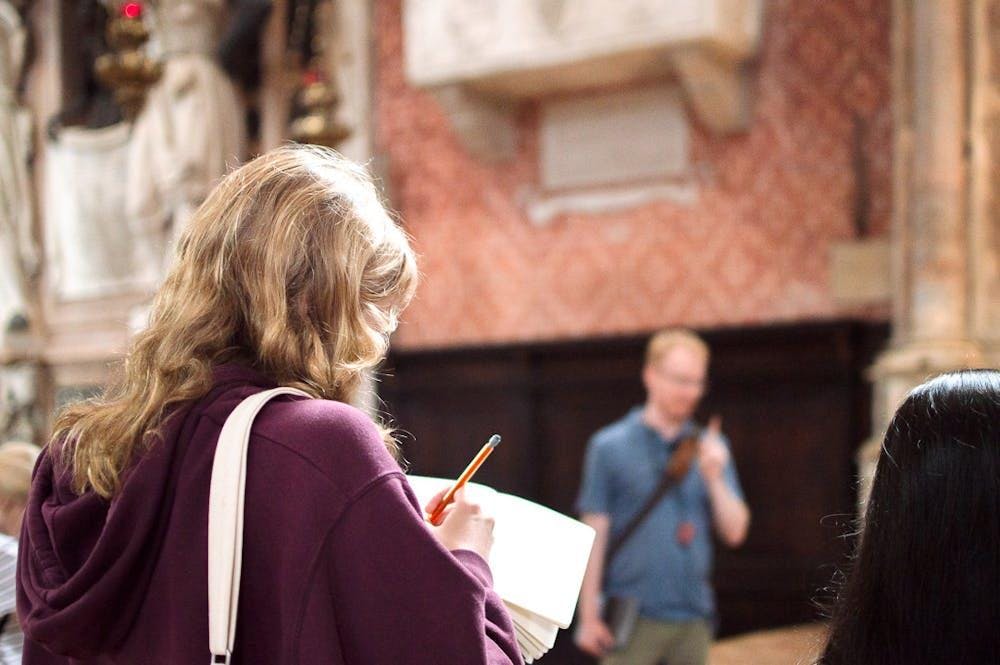
Study abroad brochures in American universities promise transformation. Their pages advertise cobblestone streets, bustling markets and the open-armed welcome of “cultural immersion.”
But behind the glossy images and curated slogans lies a truth that is harder to name out loud: Study abroad has become an industry, and in the process, global experience is increasingly packaged as a commodity.
As an international student at Miami University, I watch this dynamic unfold from a position that is both inside and outside the system. I have lived in multiple countries. My first move abroad was not a “program;” it was migration.
When I see the way global mobility is sold in American universities, I feel both tenderness and discomfort. Not because study abroad is inherently harmful — it is often life-changing — but because its commercialization can flatten the world into an experience to be consumed rather than a relationship to be built.
The industry of experience
Study abroad is a marketing machine: posters promising “life-changing adventures,” Instagram accounts spotlighting picture-perfect moments and short-term programs priced like luxury vacations.
For many United States students, a faculty-led trip to Florence or Tokyo is the first time they have left the country. The structure of these programs, which are highly curated, can shield them from the very uncertainties that make genuine cross-cultural learning possible.
When everything is curated, the destination becomes a backdrop. When an academic experience is built around ease, comfort and safety, the world is often reduced to something you “do” for a few weeks, then return home and summarize as a bullet point on a resume.
American universities often frame study abroad as a marketable skill: a boost to employability, a signal of cultural competency, a differentiator in a competitive job market. However, when global experience must justify itself through productivity, students begin to consume cultures the way they consume internships or brand-name leadership programs: as assets that increase personal value.
The nuances of going abroad as an American
To be an American abroad carries its own baggage. They move through the world with a passport that opens doors, English fluency that dissolves barriers and a global culture that has already shaped many of the places they will visit. This influence creates an uneven encounter: American students expect the world to be accessible and understandable. Many host communities bend to meet those expectations.
And yet, American students abroad also face their own vulnerabilities. They grapple with culture shock, political tensions and the unfamiliarity of being “the other.” But unlike many migrants worldwide, they do so with institutional cushioning. If something goes wrong, the university intervenes. If the experience becomes overwhelming, they fly home. This safety net is a privilege that is rarely named but always present.
Enjoy what you're reading?
Signup for our newsletter
The nuance matters: American students are not wrong for wanting to learn from the world. The issue is the assumption, built quietly into the study abroad industry, that the world is there for them.
When cultural exchange turns into appropriation
Appropriation isn’t always loud or malicious. Sometimes it happens quietly, in the mismatch between intent and impact.
It happens when students treat local customs as aesthetic objects rather than living traditions. It happens when poverty is photographed but not understood. It happens when study abroad becomes a checklist: pasta making in Italy, market tours in Morocco, temples in Thailand; standardized experiences that flatten culture into consumable fragments.
As an international student, I’ve met American classmates who gush about “discovering” foods I grew up eating or “experiencing” political instability that my family endured for decades. I do not blame them for their excitement or curiosity, but the power imbalance is real: What is adventure for some, is a lived reality for others.
What we lose when we package the world
There is a difference between travel and encounter. The commercialization of study abroad encourages the former at the expense of the latter.
When global education is turned into a product, host communities become service providers rather than equal partners, universities compete to offer the most convenient, scenic, marketable experience, often sidelining long-term engagement or ethical reciprocity.
We lose the possibility of genuine connection, the kind that requires time, humility and vulnerability.
Toward a more ethical study abroad
This article is not an argument against study abroad. It is an argument against reducing the world to a classroom without recognizing the responsibilities that come with entering someone else’s home.
A more ethical approach would require universities to build long-term partnerships with local institutions rather than parachuting in for short-term programs. It would mean preparing students not only logistically, but politically, by teaching them about power, privilege and historical context. It would also encourage reflection not just on what students will gain, but on what they will give and how they will listen. And it would include international students — whose lives already span borders, in conversations about global education.
American students deserve the chance to experience the world. However, they also deserve the honesty to grapple with the asymmetries of their mobility. Universities owe it to them, and to host communities, to design programs rooted in respect, reciprocity and humility, not just market appeal.
Studying abroad can open minds, but only if we stop selling the world as a product, and start treating it as a relationship — a fragile, difficult and profoundly human one.
Anastasija Mladenovska is a senior majoring in political science and REEES. An international student from Macedonia, she writes on migration, identity and global politics. Her work has appeared in outlets including the University of Oxford Political Review, Balkan Insight, Public Seminar, Happy Captive and The New Contemporary.
Read More
College students should be taught by human professors, not AI
By Elena Jackson Albarrán , Cathy Wagner and Theresa Kulbaga | June 12, 2026"The Faculty Alliance of Miami (FAM), the union representing nearly 800 full-time continuing faculty and librarians, is fighting for reasonable protections, including a stipulation that faculty cannot be replaced by AI. The administration is refusing to agree even to these minimal protections."

Meet the Columnist: Whitney Wilson-Harris
By Whitney Wilson-Harris | May 13, 2026"Instead, I wrote to communicate. As part of that, I sometimes crafted elaborate short stories. I’ve always loved writing and have always excelled at it."

What we will (and won’t) miss about Williams Hall
By Maureen Wilson | May 11, 2026"Williams is still bustling with activity, arguably more than ever. Its faculty and students have already seen the writing on the wall, and as a result, decided to leave their own."