
A version of this column was published in the Oxford Free Press on Nov. 10.
It was Bill Kovach who told me that Kofenya, the name of Oxford’s popular uptown hangout, was derived from Albanian and Russian words for coffee. His parents were Albanian immigrants.
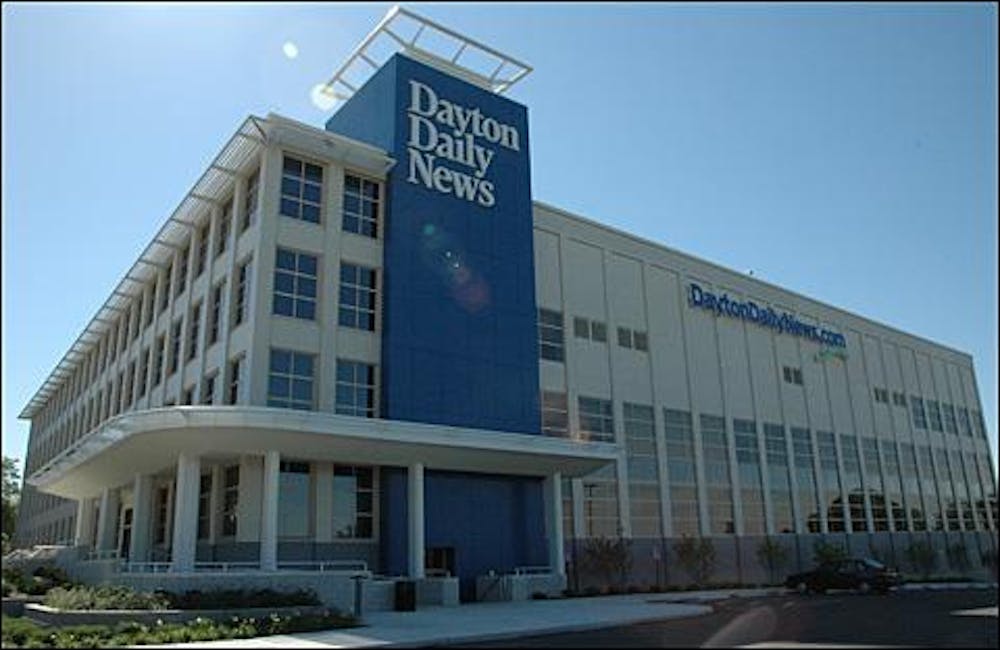
I was reminded of Kovach when The Atlanta Journal-Constitution, owned by Cox Enterprises (which also owns the Dayton Daily News and the Journal-News), announced that it will go digital-only, shutting down its print newspaper at the end of this year.
Kovach was the award-winning editor of The Atlanta Journal and Constitution newspapers from 1986 to 1988 (they were merged in 2001). Alongside Nellie Bly and Ida B. Wells, Kovach ranks high among my journalism heroes. The papers won two Pulitzer Prizes and had five other finalists under his brief tenure, and, at its peak, had combined daily circulations of 600,000 newspapers, serving a metropolitan area of two million residents. Kovach once told me the year he resigned, the papers had their highest profit margin.
Today, the paper serves a metro area of six million residents, but with the decline of classified ads and the rise of the internet, the print circulation is now around 40,000 with 75,000 digital-only subscribers.
Kovach resigned in late 1988. As The New York Times reported at the time, Kovach left “after a confrontation with his publisher” over “the authority of the editor.” The dispute involved “control over the Washington bureau of Cox newspapers, the 20-member chain of which the Atlanta dailies are the flagship.”
In addition to running the Atlanta papers, Kovach was promised oversight of the bureau in order to strengthen Cox’s overall national political coverage. After all, Kovach had been the chief of the Washington bureau for The New York Times for seven years before moving to Atlanta. The papers received high praise in 1988 for their coverage of the Democratic National Convention, held in Atlanta. After the convention, Cox management reneged on its promise.
Kovach also ruffled the feathers of the business and banking community in Atlanta. One Pulitzer Prize went to the paper's investigative series “The Color of Money” — Bill Dedman’s reporting on “red-lining,” the practice of loan companies and banks steering middle-class Black homebuyers away from white neighborhoods.
After his resignation, 88 reporters and editors left the Journal-Constitution for other papers. Kovach became a teacher and mentor as curator of Harvard University’s prestigious Nieman Foundation for Journalism from 1989 to 2000.
In the early 1990s, the novelist Pat Conroy (“The Prince of Tides”) and Wendell “Sonny” Rawls Jr. wrote a screenplay about the Kovach years at the paper. It was titled “Above the Fold.” Rawls worked for Kovach in Atlanta and had earned his own Pulitzer in 1977 for his investigative reporting at the Philadelphia Enquirer.
In April 1992, the Los Angeles Times reported, “Move over, Bob Woodward. Robert Redford has a new journalistic hero and plans to bring his story to the big screen. Redford [who portrayed Bob Woodward in “All the President’s Men”] has agreed to portray Bill Kovach in a movie about Kovach’s stormy 23 months as editor of the Atlanta Journal and Constitution. Kovach resigned under pressure in 1988 after clashes with the management of Cox Newspapers. Warner Bros. backed the project and had plans to begin shooting this summer.”
The movie was never made.
Enjoy what you're reading?
Signup for our newsletter
The producers wanted to add a fabricated sex scene and some sexual tension between characters portraying Kovach and Ann Cox Chambers, then a co-owner of Cox Enterprises. (She was the daughter of James Cox, who, incidentally, ran for president in 1920 and founded the Dayton Daily News in 1898.)
In an email, Rawls told me, “Those ideas made their way into much later subsequent re-writes by other writers that included those scenes. Pat Conroy and I were apoplectic. Bill told the producers, ‘If you do this crap, I can, and I will, go on every television talk show in the country denouncing this movie.’ Bill eventually prevailed and Redford lost interest.”
Before coming to Miami University, I was the director of the School of Journalism at Middle Tennessee State University in Murfreesboro. I hired Sonny Rawls to teach an investigative reporting class. When we decided to hire him full-time, MTSU Provost Barbara Haskew counted his Pulitzer as a doctor of philosophy equivalent and made him a full professor. He later earned tenure.
In a recent phone call, Rawls told me Kovach (now with dementia at 93) was “fearless and uncompromising,” dedicated to quality journalism. In his time at Atlanta, Rawls said Kovach dramatically lifted the quality of the papers, “setting the agenda for the communities that the papers served.” His mantra was, “Do the right thing.”
Our new journalism program at Miami invited Kovach to speak back in 2007. For years, we used his book, “The Elements of Journalism” (co-written with Tom Rosenstiel), as our primary text in our intro to journalism classes.
I have written before about journalism’s displacement by social media, talk radio and cable punditry — not places where you typically find good reporting. In our current partisan era, pundits and influencers pronounce on all sorts of issues, but often with minimal evidence and no on-site reporting to support opinions.
As an editor and educator, Kovach called such punditry “the journalism of assertion,” driven by ratings and profits, “an arena solely for polarized debate, not for compromise, consensus and solution.” He contrasted this with “the journalism of verification” — disciplined reporting that cited reliable sources and researched evidence.
“The Elements of Journalism” argues “the purpose of journalism is to provide people with the information they need to be free and self-governing.” In order to “do the right thing,” this is what Kovach demanded of journalism:
- Its first obligation is to the truth.
- Its first loyalty is to citizens.
- Its essence is a discipline of verification.
- Its practitioners must maintain an independence from those they cover.
- It must be an independent monitor of power.
- It must provide a forum for public criticism and compromise.
- It must strive to make the significant interesting and relevant.
- It must present the news in a way that is comprehensive and proportional.
- Its practitioners have an obligation to exercise their personal conscience.
- Citizens have rights and responsibilities when it comes to the news as well — even more so as they become producers and editors themselves.
“It is the discipline of verification,” Kovach once wrote, “that separates journalism from entertainment, propaganda, fiction or art.”
Richard Campbell is a professor emeritus and founding chair of the Department of Media, Journalism & Film at Miami University. He is the board secretary for the Oxford Free Press.
Read More
Meet the Columnist: Taylor Powers
By Taylor Powers | 3356 minutes ago"I joined The Miami Student in my first year, but very quickly experienced burnout. I joined the Opinion section as a creative outlet, and here I am today as the editor."

Media Matters: Wil Haygood — ‘Solo Voyager’
By Richard Campbell | March 25, 2026"I first met Haygood, a 1976 Miami University graduate, in spring 2013. He delivered Miami’s commencement address, beginning his talk with the trailer for 'The Butler.'"

Law schools must do more to help students choose a specialty
By Arush Chandna | March 24, 2026“Internal and holistic guidance can help students choose beyond just financial outcomes.”