
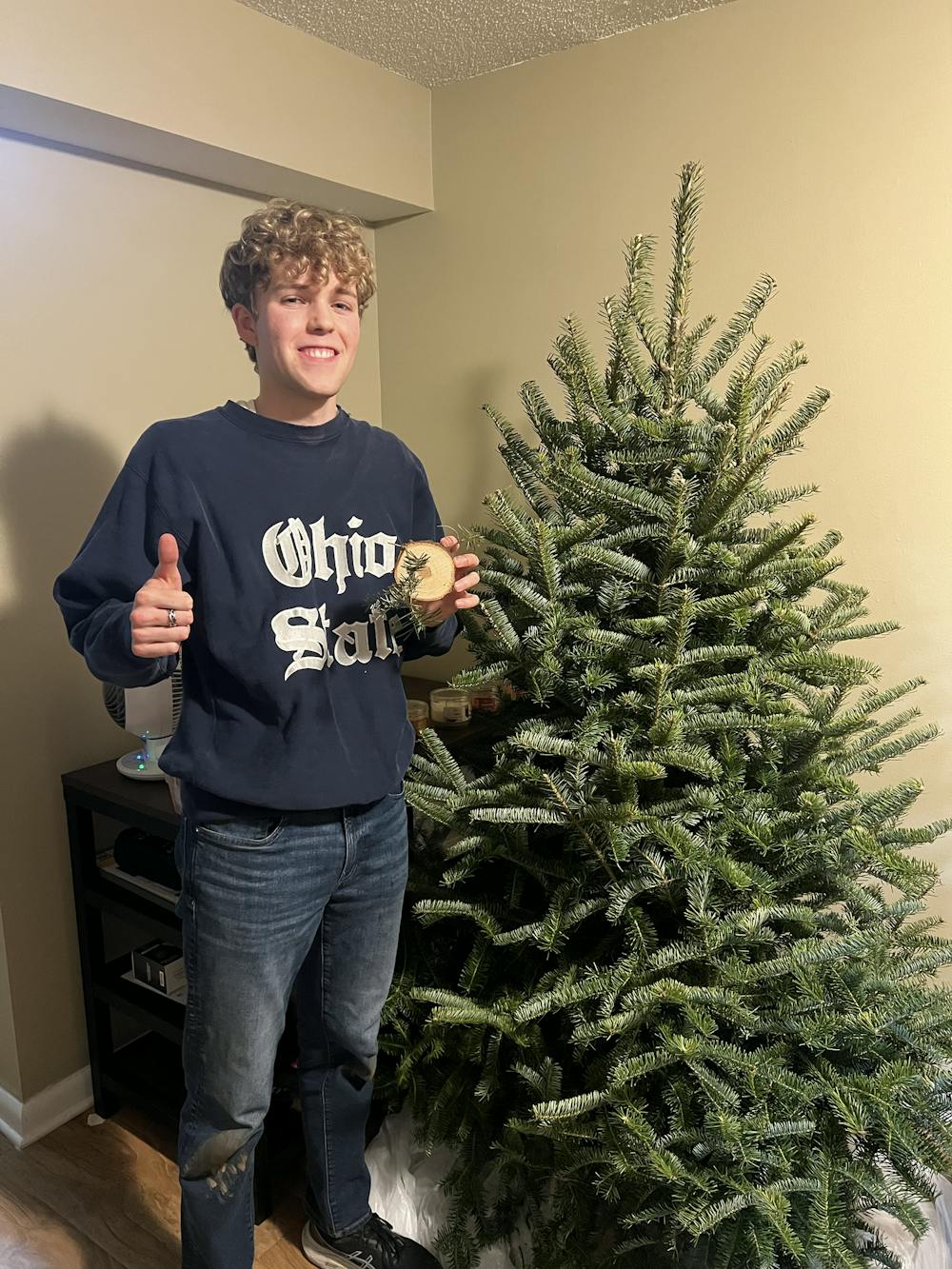
We are quickly approaching what is arguably the best time of the year. The air gets colder, the winter lights come out and the Christmas trees go up. But where does this practice come from? Whose idea was it to set up a tree in our homes, decorating it with lights and little trinkets? Isn’t that a little strange?
Although it seems so random, it’s actually a long and well-developed tradition, tracing all the way back to 8th-century Germany. At that time, Germanic pagans worshiped at an oak, where they offered human sacrifices to their pagan god, Thor. In the mid-700s, a boy was about to be sacrificed on an altar below that oak tree, but St. Boniface, a Catholic missionary, saved the boy from the pagans. He then axed down Thor’s oak, so it would never be used again.
Behind the fallen oak stood a young fir tree, to which St. Boniface spoke to the people, calling it a true symbol of peace — unlike the pagan oak — and invited them to bring the tree to their home. The townspeople carried the fir to the village, where they set it up and placed candles in its branches.
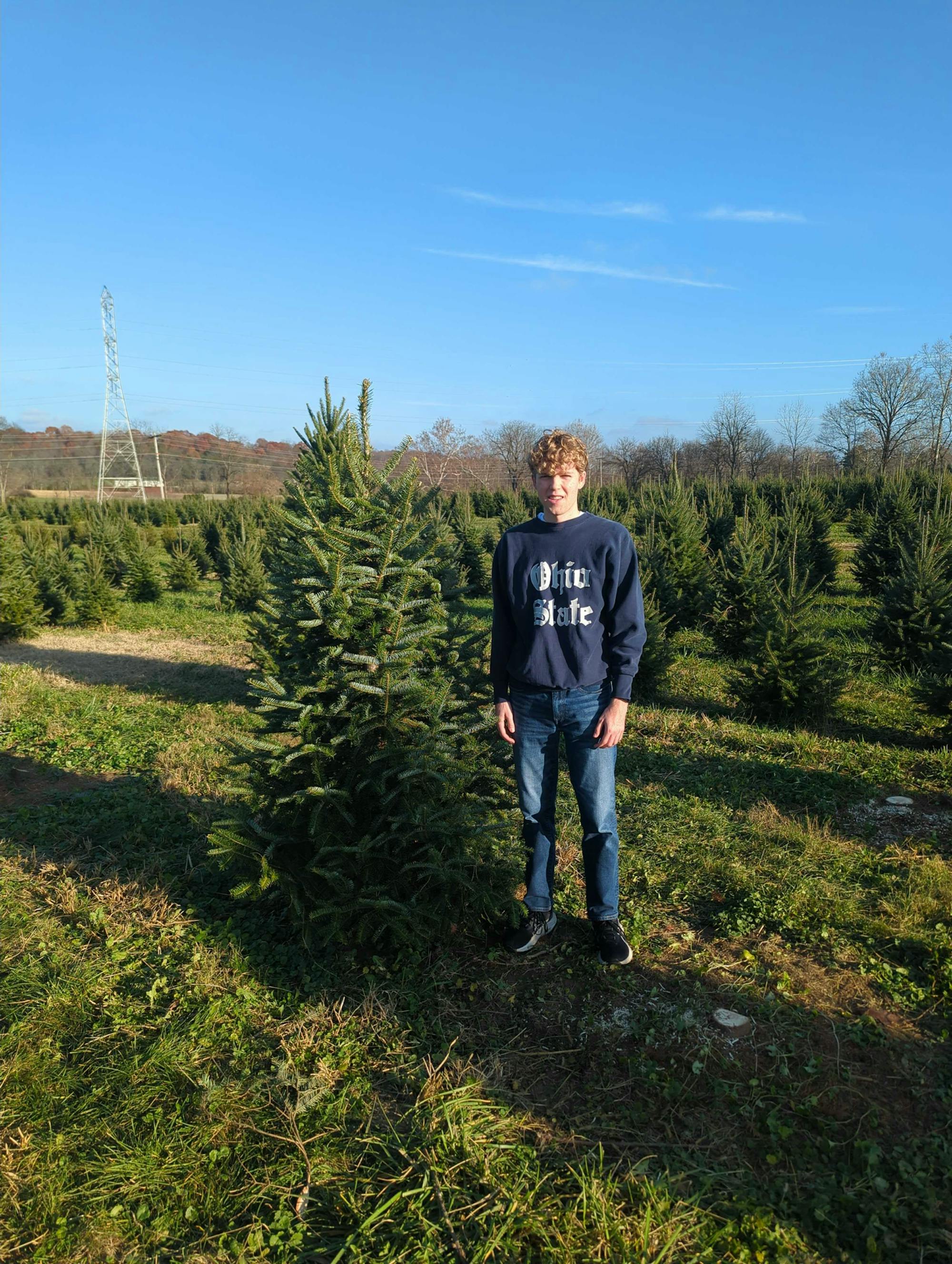
From that point on, the custom continued, especially in Germany, eventually evolving and expanding across the globe, becoming what we have today. On Nov. 22, I followed suit in this tradition by driving to the John T. Nieman Nursery, a Christmas tree farm in Hamilton, where I cut down my own Christmas tree for the first time.
But looking around today, it’s clear things have changed. The living fir tree has been replaced, in many homes, by plastic. A 2025 survey by the American Christmas Tree Association confirms it: 83% of households that want a tree will choose an artificial one.
The trees aren’t real anymore. Is this really what’s come of such a great tradition?
Natural Christmas trees bring life to your home. The sap-coated trunk, resinous scent and green pine needles are all symptoms of the universe and signs of life. There is a beautiful symbolism in the tree reaching its full glory, adorned with lights and ornaments, right in time for Christmas, before then passing away, just as the Christmas season too passes away. Of course, the season doesn’t come from the tree, but there’s intention behind the harmony of the living season and the living tree.
Live trees are also renewable. Reliable fir farms replant what they cut each year, and when the season ends, trees can be mulched, composted or used to support wildlife, leaving zero lasting waste behind. These farms are owned by local families too, not large corporations or overseas industries that don’t actually care much about you.
There’s no such thing as a perfect tree, however. Life does have its costs. Christmas trees are thirsty, and they can drink up to a gallon of water a day. They require attention and resources to stay alive, and yet death is still inevitable. The tree will eventually dry out and scatter pine needles all over the floor, needing to be disposed of.
Live trees can also be pricey, since a new one is needed each year. Canaan Firs, an evergreen tree, typically cost between $5-15 per foot, depending on size, quality and seller’s discretion. Transportation and setup of the tree can be a hassle, too.
Artificial trees, on the other hand, undeniably offer convenience. They can be used year after year, never shed needles, don’t need water and don’t trigger allergies. They’re simple, low-cost and basic. It’s no wonder so many people today have adopted them.
Enjoy what you're reading?
Signup for our newsletter
But real trees are temporary by nature, while artificial ones are temporary by design. One returns to the earth while the other ends up as just another piece of trash.
Fake trees are usually composed of nonbiodegradable plastics and metals, which are terrible for the environment. According to the Institute for Environmental Research and Education (IERE), even if the same fake tree is used for 15 years, its environmental impact is almost always worse than buying a fresh tree each year.
Artificiality does bring efficiency, but the core spirit of the season is lost in the process. Real trees have the same appeal as real flowers instead of fake ones, handwritten letters instead of emails, vinyl records instead of digital music, and paper books instead of ebooks. The modern alternatives all offer greater utility, but the originals stick around because meaning goes beyond convenience.
The choice between a fresh-cut tree and a synthetic one is a choice between two ideas of Christmas. One is living, innately imperfect and genuine. The other is precise and mass-produced, but empty of the warmth and story that made our cultural habit so meaningful in the first place.
All of this is to say: don’t settle for plastic. Ditch your fake tree, and take up the axe. Follow in the footsteps of your ancestors, and of St. Boniface, and cut down a real Christmas tree.
The tradition is in the tree. Hold on to it.
Jacob Van Riper is a junior business analytics and marketing double major. He is the marketing director at the Miami Catholic Newman Center and a senator for the Associated Student Government. He also serves as chancellor of Oxford’s Knights of Columbus Council 18322, and hosts the metal and rock radio show “Soul Wars” at RedHawk Radio.
Read More

Miami dominates Holy Cross for first win of the 2026 campaign
By Cooper Meneghetti | YesterdayThe Miami University football team (1-1) defeated the College of the Holy Cross Crusaders (0-3) in a convincing 45-7 fashion.

Meet the Columnist: Karma Abboud
By Karma Abboud | 5 days ago"While I still love creative writing, creating opinion articles for The Miami Student is not just a hobby or coping mechanism: It allows me to share my thoughts confidently with the Miami community."

Recommendations from a reminiscing junior on having roommates
By Jada Rogers | 5 days ago"I made myself miserable as a first-year student because I refused to make other long-term friends, swayed by my own misconception that my roommate was the only person I needed. Humans crave companionship, so please go find your people."