
If you haven’t seen Sydney Sweeney’s latest controversial ad, in which she’s naked and promoting sports betting, I envy you, and I fear for you after the Google search I know you’re about to endure.
The actress, best known for her role in the hit series “Euphoria,” is no stranger to controversy. Just last year, her “good jeans” slogan in an American Eagle jeans commercial sparked a major online discussion about beauty standards and accused her of promoting eugenics.
This new ad, for the sports trading company Novig, shows Sweeney mostly nude holding or wearing a variety of athletic equipment that just barely covers the necessary bits in order to run the footage on television.
It’s so rare to see a joint effort of entire demographics coming together to fight a specific cause, but the reactions from women across so many different sports and professions prove how damaging this has truly been.
I’ve seen videos from every corner of the women’s sports community showing how valuable sports are and what they mean to women. Diminishing our love for sports by making a nude commercial is not only hurtful but harmful.
The community at large — fans and players alike — is already somewhat misogynistic to begin with. Women’s sports hardly get the same recognition men’s do. Women in broadcasting get the spotlight significantly less than their male coworkers, usually being subjected to sideline interviews instead of true commentating.
According to an AP Research Study, about three in 10 U.S. adults follow women’s sports, and overall, men’s sports at collegiate and professional levels draw in significantly more viewers and followers.
Even here at Miami University, our Mid-American Conference champion women’s basketball team only drew in half of the viewers as the men’s team at their most-attended game, according to reporting from The Miami Student.
In sports journalism, although the numbers are rising, women make up barely 21% of reporters and make 98% of what men earn, according to a report from Zippia.
In addition to receiving fewer jobs, women endure hate speech. In a study by three communication sciences professors at the University of Málaga in Málaga, Spain, 71.6% of female journalists report being affected by hate speech on social media or online platforms, while only 28.4% of their male counterparts were affected.
Harassment also affects female sports journalists, with 89.6% of those interviewed reporting being harassed. Of those cases, 76.9% were rooted in misogyny.
As journalists, we understand that people will always question our work. But being doubted for your credibility or opinion simply because of gender is a common struggle that female sports reporters should not have to deal with.
Enjoy what you're reading?
Signup for our newsletter
Women who are fans receive similar judgments. It’s a common experience to have your knowledge questioned, and when wearing a jersey or T-shirt supporting a team, have someone approach you to ask you to name five players.
On social media, a current trend has emerged in the wake of Sweeney’s ad where women and girls post videos of themselves enjoying or participating in sports to show what they truly mean to them.
The stereotype of women in sports already suffers from oversexualization, and women are always doubted whether they’re on the field, the sidelines or in the stands. Sweeney’s new ad perpetuates these stereotypes and pushes women back in a fight that we’ve made so much progress in.
“Coming from a girl who LOVES sports… the Sydney Sweeney sports betting ad is exactly why women in sports aren’t taken seriously,” one user wrote on TikTok.
The ad objectifies women. It diminishes women to sexual objects. It mocks women in sports.
Female fans, athletes and journalists are being affected by the idea that our place in the sports world is just to be a pretty face. While I’m certainly open to people thinking I’m pretty, I want to be respected for my ideas and opinions too.
I want to be obnoxious at a game and not get chastised for being too loud. I want to wear a jersey or T-shirt to proudly represent my team without being accused of being a bandwagon fan. I want to put on a cute outfit for a game and not have people assume I’m there as an outlet for playing dress-up.
These age-old stereotypes need to stay in the past where they belong. Sweeney does not represent us and our talents, skills and meaningful additions to the sports world.
Women belong in sports.
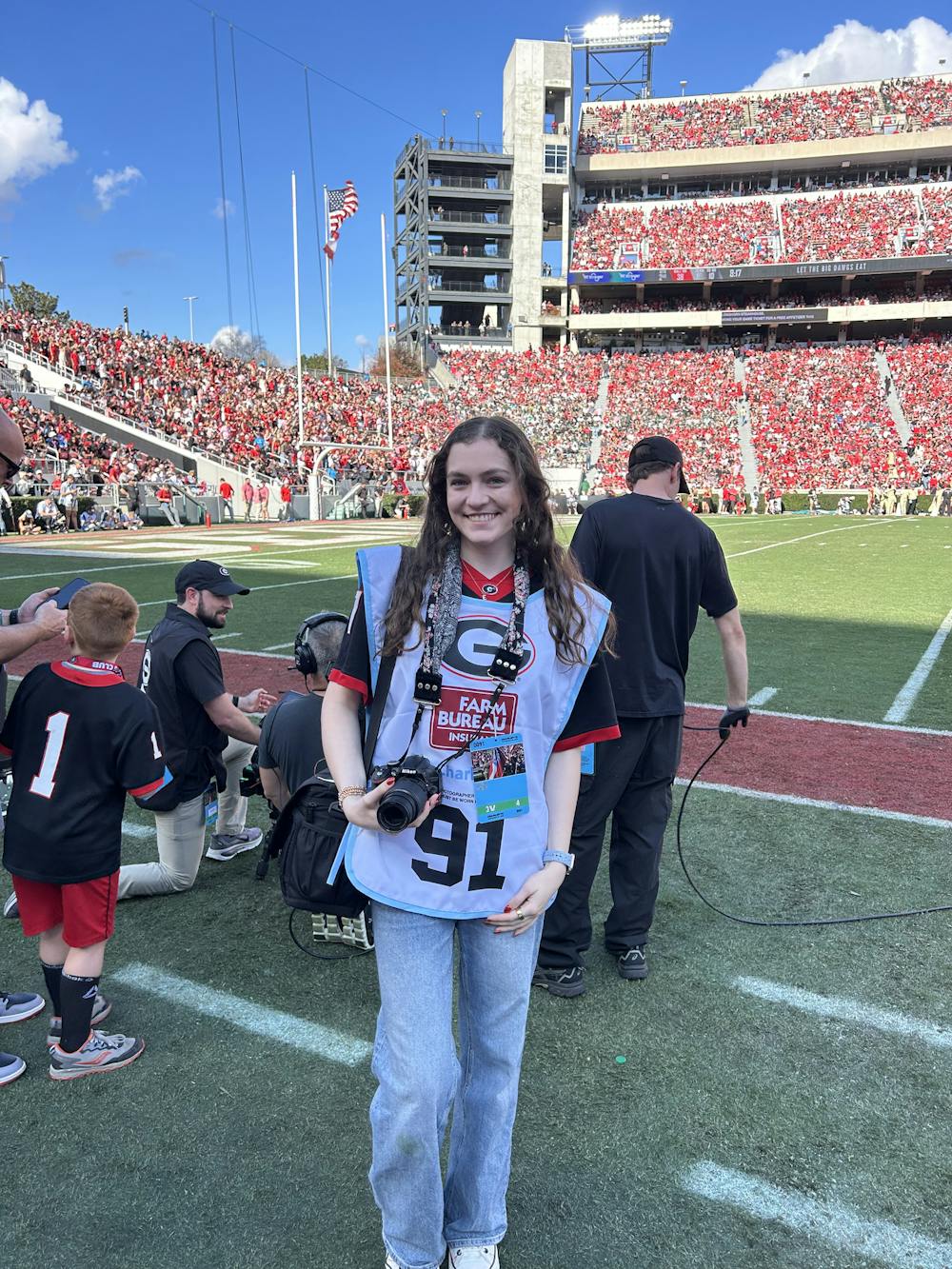
Elisa Rosenthal is a senior Spanish education major with a passion for writing and storytelling. She’s originally from Georgia and writes sports articles for The Student, honoring a long family love for college sports.
Read More

Saturday soundtrack: The perfect game day playlist
By Elise Hanna | 1 hours agoMusic is an integral part of players’ pregame ritual. Watch any warm-up, from the pros to your local little league, and I guarantee you’ll hear something pumping from the speakers.

Miami University professor alters course after backlash about AI chatbot
By Liam Clarke | 23 hours agoA Miami University professor was forced to reconstruct his class after a failed attempt to integrate an Artificial Intelligence (AI) chatbot. The attempt to enhance learning overwhelmed students.

Bring the Bell home: RedHawks need you in Cincinnati
By Zoe Fleischer | 23 hours agoFew things in sports are worse than empty stadiums, even venues with a lot of fans rooting for the other team. Students should travel to pack TQL stadium for the Battle of the Victory Bell.