
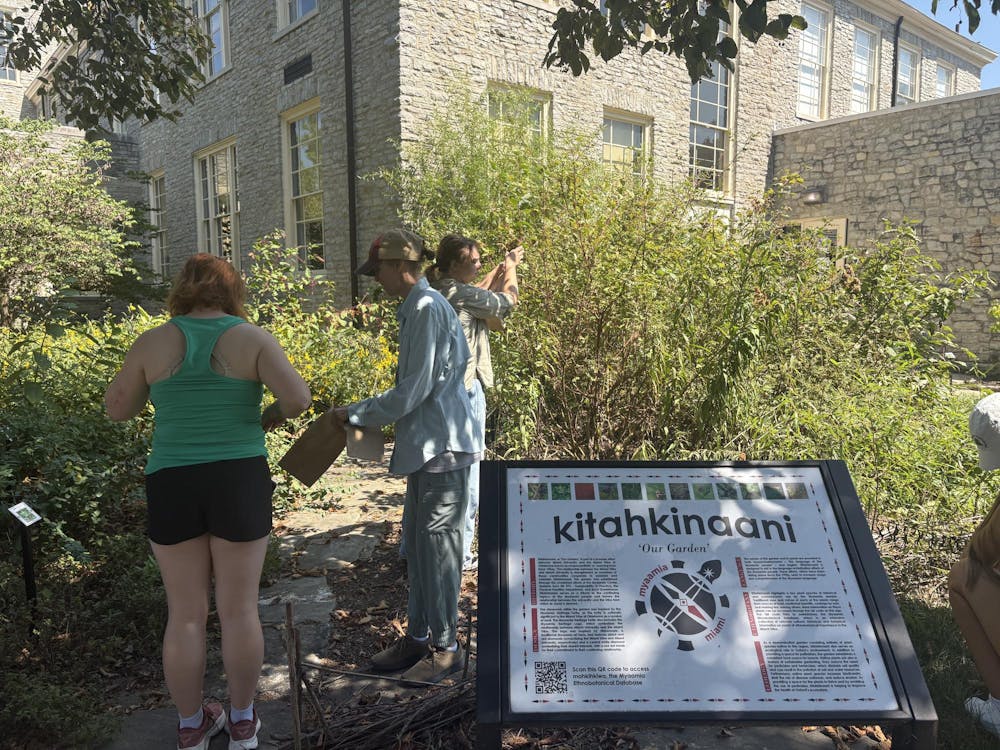
As the fall semester kicks off at Miami University many students nearing graduation are putting the skills they’ve learned into use and beginning hands-on research experiences. From waste reduction to native plant restoration, these projects aim to provide educational experiences while promoting sustainability and benefitting future generations of Miami students.
Will Sayner, a graduate student in the Masters of Environmental Science program, said a waste reduction project that he and colleagues at the Office of Sustainability have been working on since spring will come to a close at the end of this year.
The final goal of the project is a comprehensive waste reduction plan, which will guide departments across the university as well as inform the 2040 Climate Action Plan. This comprehensive plan will be created using the feedback of stakeholders across campus, such as Dining Services and recycling services, which Sayner and his research partner Shannon Albert have been gathering in interviews over several months.
“[I hope to see] everything that we talked about over the past year put into an action plan and coming to life on campus,” Sayner said. “Hopefully changing the behavior of students and staff on campus and trying to get everyone involved in zero waste even if they don’t know it [by] making it as easy as possible for [them] to recycle and compost and take care of their waste correctly.”
Undergraduate students in the Institute for the Environment and Sustainability are also gearing up for research experiences this semester. Sarah Dumyahn, professor of environmental science, is leading hands-on student research and gardening experiences.
Students in her independent study course will choose between two research projects. The first focuses on the Kitahkinaani garden, a small garden home to native plant species. Students will work alongside the Myaamia center to care for existing plants and incorporate new native plants to the plot. The garden contributes to an ethnobotanical database called “Mahkihkiwa” that works to develop the Myaamia language through species documentation.
The second will work towards establishing a food forest on the Miami farm, with edible plants from root to canopy and a focus on native plant species. This farm would serve as a sustainable form of agriculture that future generations of students could interact with and learn from. Dumyahn also said it will be a big step forward for the farm after experiencing budget and staffing hardships in 2024.
“We are trying to figure out what the future vision is for the farm,” she said. “We’re hoping that with a food forest project out there, we can get some more excitement and have opportunities to connect with a variety of different classes across campus.”
Dumyahn said that she also looks forward to seeing her students foster their teamwork skills both with each other and with Physical Facilities partner Jay Hammer and Myaamia Center mentor Andy Sawyer.
Junior environmental earth science major Sophia Bowling said that she looks forward to putting the skills that she has learned in previous coursework into a longer-term project that she can watch come to fruition.
“I think that it’ll be a very well rounded experience because using a farm or a garden, you immediately get the hands-on experience of working with plants and cultivating a visual experience as well,” she said. “. . . It’s less about the skills and more the confidence that you know what you’re doing. These are some of the skills that most people already have . . . but being able to have something to show for it and watch all your progress is like ‘I know that I actually can do this.’”
The farm and garden projects will come to a close at the end of the fall semester while the waste reduction project will be finalized at the end of the spring semester. Participants of the projects hope to leave Miami more sustainable than they found it.
Enjoy what you're reading?
Signup for our newsletter
Read More

Outdoor Pursuits Center brings adventure to Miami
By Tori Fee | 5 days agoMiami University's Outdoor Pursuits Center offers programming and exploration opportunities for community members of all ages.

Students and staff advocate for environment in arena project plans
By Sarah Kennel | August 27, 2026The decision to approve a new arena project on Cook Field shocked Miami students and triggered a wave of conversation and debate. Given the project’s direct proximity to Miami’s natural areas, one concern brought to the table was the preservation of these green spaces.

Leaving a green footprint: Sustainable clubs and organizations to join
By Venezia McHenry | August 26, 2026Miami University has many ways to experience nature, through hiking trails and local parks. In addition, there are also many clubs and organizations that can connect the outdoors to academic interests.