
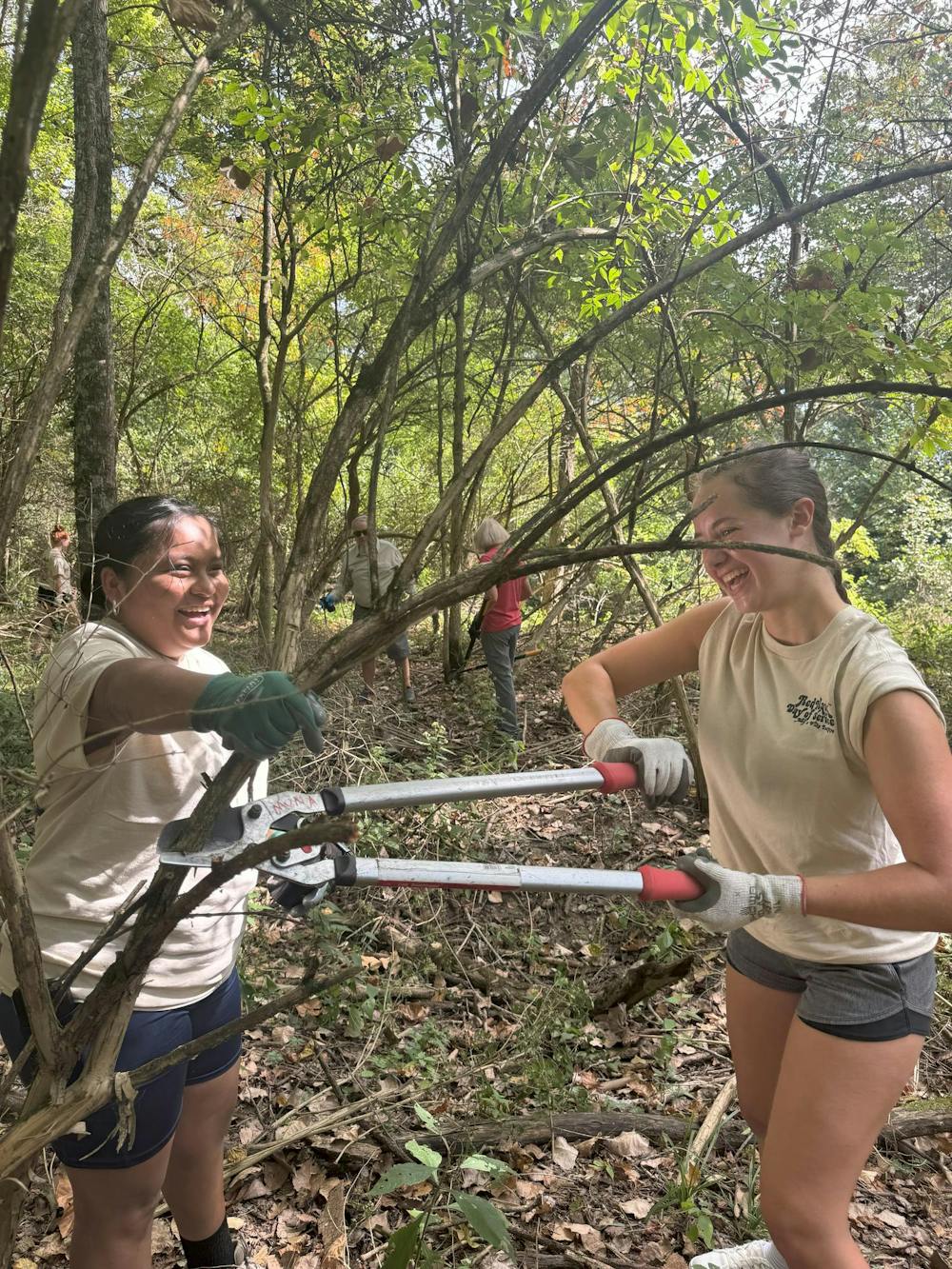
One thousand acres of natural areas surround Miami University’s campus and contain miles of interconnected paved and dirt trails for students to use. Fallen trees, invasive plants and broken bridges cause these paths to be inaccessible for hikers. A small natural areas team dedicates their time every week to ensure the trails are safe and enjoyable for everyone.
Natural Areas Field Manager Rob Atkinson and four Miami students are in charge of addressing the trail maintenance.
Atkinson started his position at the beginning of the academic year, but works hard to provide a safe and beautiful place for students to explore. As Natural Areas manager, he has many responsibilities and every day is different.
“Yesterday I was out in the woods cutting back brush and trees, getting them out of the way,” Atkinson said. “I also do repairs to the trail surface itself and take care of erosion or tripping hazards. I operate chainsaws, weedwhackers and hand tools, and also maintain all our equipment.”
David Gorchov, professor of biology, is chair of the Natural Areas Committee and works to make decisions for any issues that arise with maintenance and management of the Natural Areas.
Gorchov said one of the biggest problems for the trails is storm damage. High winds bring fallen trees that block paths and create broken bridges that are unsafe for hikers. Floods cause water to rush up the trails and litter the walkways with debris. Atkinson and his team focus on solving these issues every week.
He also said the maintenance of the Natural Areas is fully funded by donations and endowments. They do not receive any income from the university.
“The university supports us with in-kind support, so if we need a load of gravel delivered to a trail head the university will do that free of charge,” Gorchov said. “The university helps out in a lot of ways, but there are no student tuition dollars, no student fee money and no taxpayer of Ohio money supporting the Natural Areas; It’s all donations.”
Alex Miller, sustainability engagement coordinator, is also a part of the Natural Areas Committee and works to get Miami students and organizations involved with the natural areas. One thing she focuses on is the “adopt a trail” program where people can “adopt” their own trail with a paid sponsorship. Adopters host volunteer opportunities for organizations and help maintain their assigned trail.
Miller said that Atkinson and his team try to attend to all the issues, but with 1,000 acres, it can be hard to maintain everything. This is where the volunteers help by working to clean their trail at least three times a year.
“It’s a huge help for our staff and the people from the Natural Areas team,” Miller said. “Getting students outside is also really important and it gives people service hours and I think it’s one of the more fun service projects on campus.”
Miller also said the Natural Areas raised funds for a storage shed for all the trail adopters and their organizations to get materials and tools for their events. She said it gives students more autonomy and frees up time for Atkinson to complete other projects.
Enjoy what you're reading?
Signup for our newsletter
Britain Kandel, a senior environmental science major, and Chloe Trimmer, a senior finance major, are two student workers who assist Atkinson with maintenance of the trails every week.
Trimmer said she got involved because she loved trail running and wanted to begin participating in the actual trail maintenance. The work they do largely depends on the season, so their routine varies from day to day.
“There is a ton of basic mowing and trimming that needs to be done, because the trails are overgrown,” Trimmer said. “We could have anything from giant fallen trees that we’re having to take down for the safety of everybody, to building a bridge, to putting in steps or water bars.”
Kandel said he also leads volunteer groups, student organizations and fraternities and sororities that help with invasive species removal and build stairs for the trails. He said he likes the community aspect of teaching people about the Natural Areas.
“There’s also more to do out here than just walking around on the trail,” Kandel said. “I’ve gone fishing, I’ve taken rafts and slid down the dam. Even if people are into flipping rocks and finding fish, just go for it.”
Atkinson said his main message as Natural Areas manager is that the Natural Areas are there for students, and they can utilize them in many different ways.
“If people like to hike or need to get away, they can find some peace and quiet,” Atkinson said. “It’s literally right there, and it is so easy to get to.”
Read More

Oxford helps keep the Great Miami River clean
By Cameron Murray | 2 hours agoOn Sep. 19, volunteers across southwestern Ohio and southeastern Indiana participated in the annual Clean Sweep of the Great Miami River Watershed event.

One man, one year, two hundred birds
By Cameron Murray | 2 days agoAt the beginning of the year, Harrison Shupe set a goal: to observe and identify 200 unique bird species in Ohio before Dec. 31. On Aug. 31, he found his 201st.

Going long: Miami’s waste management this football season and beyond
By Julia Hall | 5 days agoAs the Miami University RedHawks kick off another football season, Miami sustainability advocates are making plays of their own.