
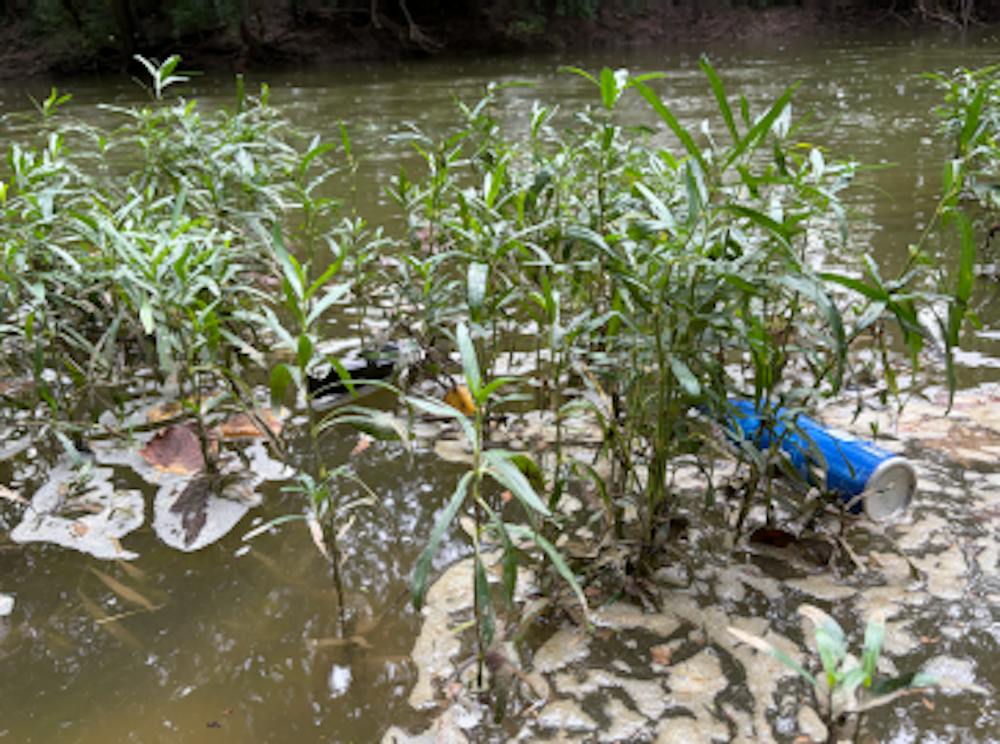
On Sep. 19, volunteers across southwestern Ohio and southeastern Indiana participated in the annual Clean Sweep of the Great Miami River Watershed event.
A watershed is the land area around a natural body of water where rainwater and snowfall accumulate and flow into creeks, rivers or lakes. When trash is left in the Great Miami River watershed, it often ends up accumulating in the river itself, potentially harming the wildlife that call the river home.
For the Clean Sweep event, the 170 miles of the Great Miami River was split into smaller, more manageable sections. Todd Kehr, water treatment plant manager for the City of Oxford, led the group of volunteers responsible for cleaning up the section between Dewitt Cabin and Peffer Park. It was Kehr’s fourth year participating in the event.
“[Our goal is] to just clean up as much as we can around the Four Mile Creek,” Kehr said.
Armed with gloves, reach extenders and trash bags, volunteers searched for garbage in their section of the watershed.
Mitchell Gruber, a junior computer engineering major, was one of the volunteers in Kehr’s section. Gruber is the vice president of community service for the Miami University chapter of Alpha Phi Omega and felt inspired by his love of nature to help clean the watershed.
“I really like nature,” Gruber said. “Over the summer, I did a lot of volunteering with my local parks. We did a lot of maintenance, and now that I’m not at home, I don’t have that constant nature experience. So I was like, ‘I need to do this.’”
The most common trash items collected on Saturday morning were plastic bottles, used dog waste bags and energy drink cans.
“It’s no surprise at all,” Gruber said. “These are the main things people take with them on the trails, and it’s the hardest thing to hold onto instead of just throwing them into nature. I guess some people are just lazy.”
Kehr urges people to take care of the watershed year round, not just during special events like the Clean Sweep.
“If you’re out walking, utilize the walking path [and] maybe pick something up if you see it,” he said.
Pollution is part of the problem, but it’s not the only threat to local freshwater ecosystems. Lesley Knoll, assistant professor of biology, explained that nutrient runoff and invasive species also damage rivers and lakes.
Enjoy what you're reading?
Signup for our newsletter
“Fertilizers people put on their lawns can affect lakes in a lot of ways,” Knoll said. “When you have too many nutrients, you can then have an abundance of algae, and sometimes the phytoplankton or the algae … can produce toxins that are harmful to people and pets and livestock.”
Knoll recommends people avoid nutrient runoff when fertilizing their lawns, especially if they own land near a body of water.
Knoll also said volunteering with the Butler County Stream Team is a good way to get involved. The team is a collaboration between the Miami University Institute for the Environment and Sustainability, the Butler County Storm Water District and the Butler Soil and Water Conservation District. They monitor the quality of local waterways and educate the community about water quality issues.
Despite threats to the environment, Knoll said it is most important for the Oxford community to know there is still a lot that can be done to make a difference.
“One thing that I like about my lab is that we take a long-term perspective,” Knoll said. “So many students have an attitude that things are too far gone, and I don’t think that's true … There’s a lot we can do and I think there are things to be hopeful for.”
Read More
Following the trail: The caretakers of our natural areas
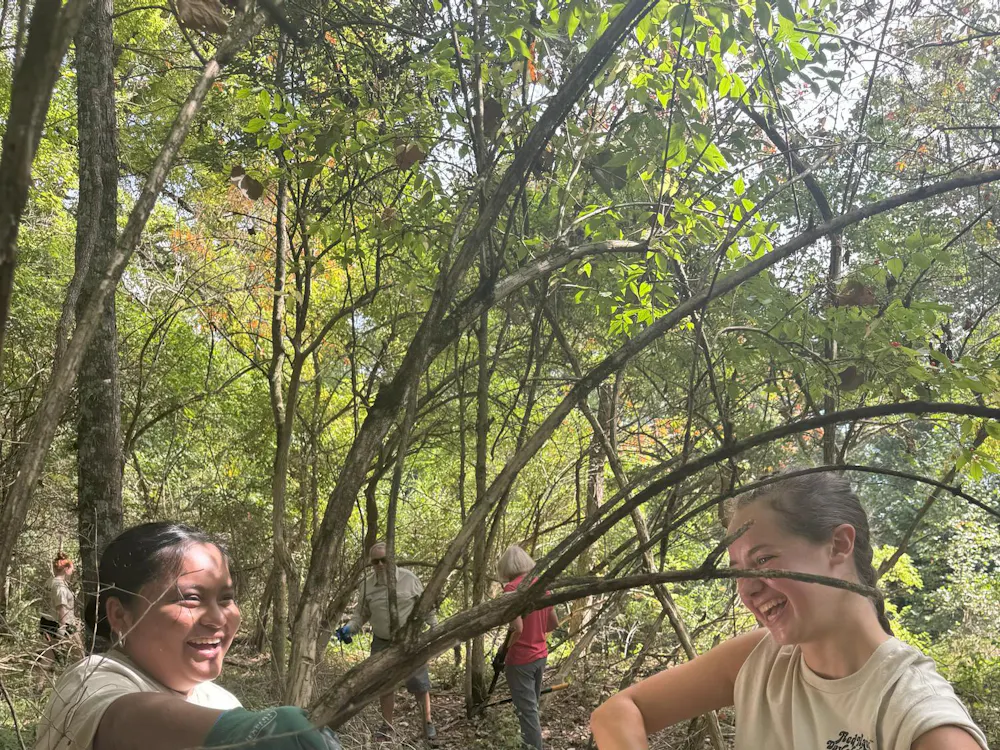
By Venezia McHenry | 13 hours agoOne thousand acres of natural areas surround Miami University’s campus and contain miles of interconnected paved and dirt trails for students to use. A small natural areas team dedicates their time every week to ensure the trails are safe and enjoyable for everyone.

One man, one year, two hundred birds
By Cameron Murray | 2 days agoAt the beginning of the year, Harrison Shupe set a goal: to observe and identify 200 unique bird species in Ohio before Dec. 31. On Aug. 31, he found his 201st.

Going long: Miami’s waste management this football season and beyond
By Julia Hall | 5 days agoAs the Miami University RedHawks kick off another football season, Miami sustainability advocates are making plays of their own.