
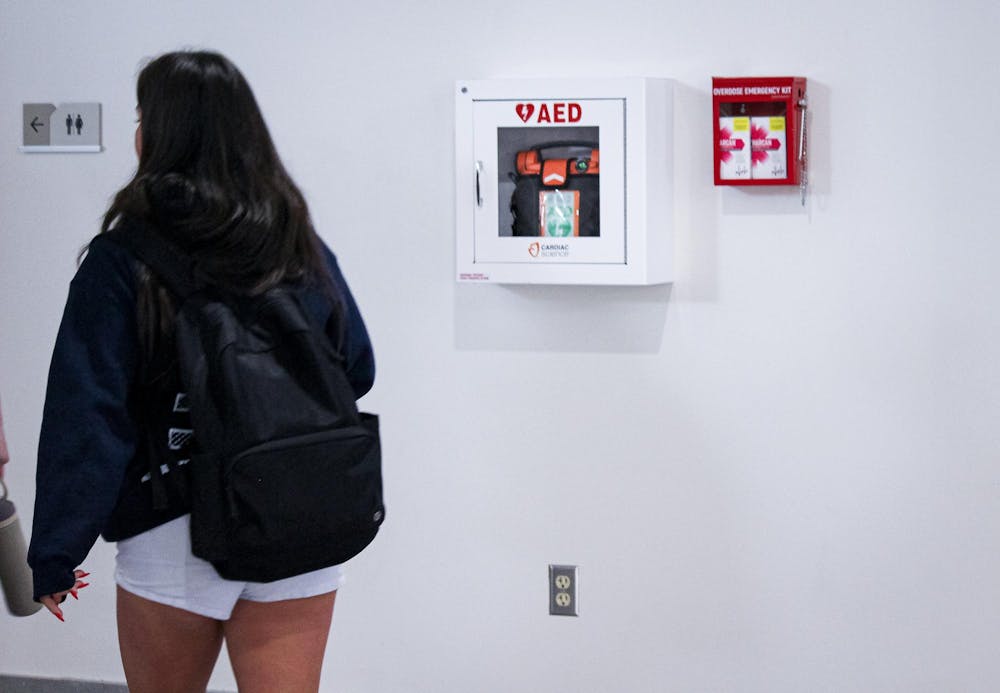
Automated External Defibrillators (AEDs) are “a portable, battery-operated device that a bystander can use,” according to the National Institute of Health. They are designed to save the lives of people who experience cardiac arrest.
You won’t find any AEDs in most residence halls at Miami University.
Jeff Johnson, the director of Environmental Health and Safety, works to promote student safety and oversees AED placement in campus buildings.
“There is no regulatory requirement for [Miami] to have AEDs in any of the buildings on campus,” Johnson said. “There are no state or federal laws that require AEDs to be in any buildings on campus.”
While there are AEDs in every police cruiser and emergency response vehicle, there are logistical challenges presented by storing AEDs in every red brick building.
“We have close to 200 buildings on campus, so it wouldn’t make sense to put AED devices in every building, but it makes sense to have AEDs in some buildings,” Johnson said.
Enjoy what you're reading?
Signup for our newsletter
Although there are no regulatory requirements mandating the availability of AEDs in buildings, Miami abides by federal guidelines established by the Department of Health and Human Services.
“There are four criteria,” Johnson said. “The first is physical activity: Whether there is going to be any strenuous work or exertion in an area.”
The first criteria recommends athletic or workout facilities such as the Recreational Sports Center and the North Quad Fitness Center be supplied with AEDs in case of cardiac emergencies.
“We also look at the facility layout because it may be hard for a first responder to find somebody in an extremely large facility,” Johnson said.
The second criteria especially recommends large buildings with high visitor traffic, like Armstrong Student Center, be equipped with AED devices.
“The third criteria is whether there’s visitors to that facility, because you’re more likely to find somebody that would be in need of an AED,” Johnson said. “The fourth criteria is demographics, the age of the population, because as you get older, you’re more likely to have an event that would require the use of an AED.”
Due to the demographics and intended use of Miami’s residence halls, they do not meet the federal guideline criteria.
“Residence halls are not an unusually large building. There are not an unusual amount of visitors,” Johnson said. “The demographic, the students, are the least at-risk demographic group. We follow a risk-based approach.”
University departments also have discretion pertaining to the quantities of AED devices that are readily available in buildings.
“The funding for the AEDs comes from within the department of wherever it’s being housed,” Johnson said.
Despite the availability of AED devices appearing to be urgently low, they are rarely ever used on campus. Johnson said no AED has been used on campus in over a year.
Yet, the infrequent use of AEDs might make an individual hesitant if they are ever in a situation where one must be used. The devices are designed to be accessible, but many students feel confused with how the devices function.
“The occupants of buildings with AEDs are offered training on how to use AEDs through courses at the Rec Center,” Johnson said. “Anyone can use an AED. We encourage people to go through training, but the training is not required.”
Many student employees opt-in to the training program, so they are confident in their ability to administer care in the event of an emergency.
AJ Waymire, a student employee at Armstrong Student Center and a former Student Orientation Undergraduate Leader (SOUL), has gone through the AED instructional program.
One thing that surprised Waymire during the AED training course is the way the device operates.
“When you open the AED and start it, the AED tells you what to do; a voice-over tells you step-by-step instructions,” Waymire said. “When you put the AED on the person, the device will test the person, and tell you whether or not you actually need to use the AED, because sometimes it’s not even necessary.”
After receiving AED training, Waymire began thinking about ways to teach other students more about AEDs, and make them more aware and confident with using the device in crisis situations.
“I think AED training would be a great thing to teach new students in the orientation modules when they come to Miami,” Waymire said. “They should watch a short video so they are aware of how AEDs actually work and that the device will talk them through the process. That training will immediately make them more comfortable.”
A virtual map of the locations of AEDs is available for all students to view, so they are knowledgeable and prepared to assist someone who may be in cardiac arrest.
Read More
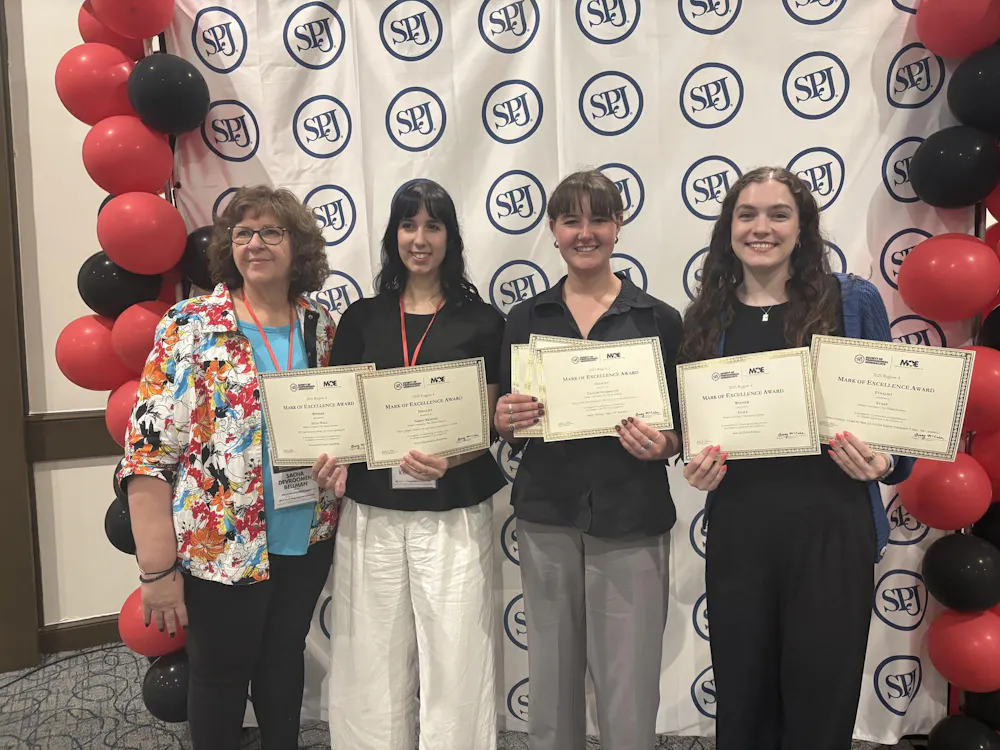
The Miami Student wins two SPJ awards, honored finalist in five others
By Elisa Rosenthal | 1 hours agoDuring the weekend of April 10-11, members of The Miami Student’s editorial staff attended the Society of Professional Journalists (SPJ) mega regional conference in Louisville, Kentucky. The conference, titled “Never Silent,” welcomed attendees from Regions 4, 5 and 12 bringing together student and professional journalists for a series of informational sessions and the presentation of the Mark of Excellence Awards for the best of collegiate journalism.

JANUS Forum panelists debate immigration policy
By Liam Clarke | YesterdaySusana Martinez, Republican former governor of New Mexico, and Ashley Allison, Democratic political strategist, shared the stage for the JANUS Forum on April 13 at Miami University.
