
Senior organizational leadership and entrepreneurship major Jack Isphording had just been elected president of Miami University’s student-run Asian American Association (AAA) when he saw Senate Bill 1 (S.B.1) passed the Ohio House of Representatives in March 2025.
Eliminating all diversity, equity and inclusion (DEI) activities at public university campuses, S.B.1 was described by state representatives as “transformational legislation” for higher education in Ohio. The bill also restricted which subjects professors could teach, specifically topics related to race, sex and other “controversial topics.”
For Ipshording and the rest of the AAA executive board, the days between S.B.1’s passage and its enactment were a confusing time.
“During my first transition meeting with my exec, [when] S.B.1 wasn’t in effect yet, I [said] ‘I have no idea what direction I can give you,’” Ipshording said. “Through the summer, we were learning what other colleges were saying to certain clubs. We didn’t know how funding was going to work. We didn’t know how partnerships with the university would work.”
The AAA wasn’t the only group worried about the changing guidelines. Bryan Marshall, chair of the department of political science, said the biggest adjustments with the new S.B.1 guidelines have been the requirements for universities to publicly post course syllabi and to teach a mandatory three-credit-hour American civic literacy course.
“I don’t have a problem with the idea; I mean, we’re a public institution,” Marshall said. “But now you have to find a software that all faculty have to figure out. There’s no one person who can do this. So things like that, we’re still in the process of implementing. We’re kind of in a holding pattern until we figure that out.”
Enjoy what you're reading?
Signup for our newsletter
As for concerns about restrictions on what professors can say in their classrooms, Marshall said his faculty have already been vigilant about creating safe spaces for students to share their own opinions on certain topics.
“S.B.1 says we have to watch our p’s and q’s about what we say and what we don't say,” Marshall said. “There’s all kinds of culture war topics, right? And you have students on one side of it, you have students on the other side of it. We have to have a classroom where there’s respectful, reasonable conversation, so we’re kind of doing that pretty well.”
Madelyn Detloff, a professor in the Department of English and the Department of Global and Intercultural Studies, focuses primarily on LGBTQ+ literature and studies and how they intersect with political issues such as justice and fairness.
Detloff said after S.B.1 passed, she and her colleagues have had to be very careful about what they say in class.
“I just think in the back of your mind, you’re always thinking, ‘Oh, is somebody going to take me out of context?’” Detloff said. “I feel like rhetoric like this from our leaders at the state and above that level, creates a kind of feeling that [people] outside of the university, have permission to sort of say and do hateful things, and I worry for the safety of myself and my students.”
While Detloff is more aware of what she says when teaching, she also opens her discussions to students so they feel free to share their beliefs.
“I’ve been remarkably impressed with the students I’ve taught at Miami University,” Detloff said. “Whatever background they come from, they’re ready to learn and think.”
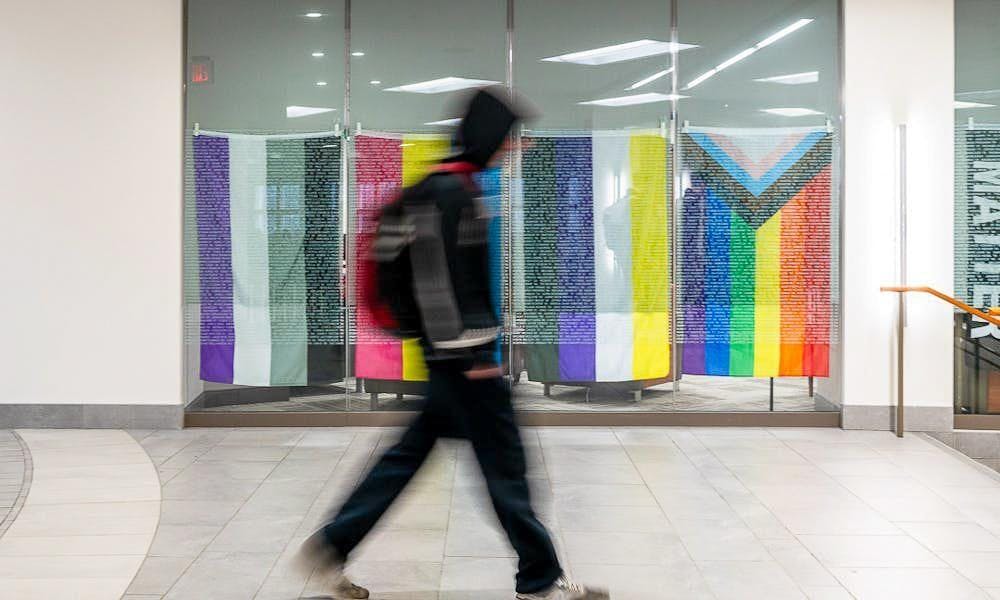
After S.B. 1 was passed, Miami eliminated several DEI programs supporting minority students, including the Center for Student Diversity and Inclusion. However, S.B.1 does not affect student-run multicultural groups. Despite this, Ipshording said he’s already seen Miami cut back its public-facing communications supporting multicultural student organizations.
“In the past, Miami filmed a reel of [the AAA] for the APIDA [Asian Pacific Islander Desi American] month,” Ipshording said. “So, we had such cool opportunities with that, but now, we don’t get any of that. And this extends, [to] Women’s International Women’s History Month, and then February was Black History Month. We’re not seeing anything like that at all.”
Despite increasing uncertainty about the support student multicultural clubs may receive in the future, Ipshording said the AAA was still going to do what it does best — supporting Asian American students and educating the Miami community about Asian heritage and identities.
“We can handle ambiguity,” Ipshording said. “We find creative ways to go about these problems and not be deterred by something coming from legislators who don’t really know what it’s really like to be a college student nowadays.”
Read More

Hammerin’ Harrison: Tommy Harrison hopes to lead the RedHawks to another MAC title
By Benjamin Luebbers | 4 hours agoRedshirt junior outfielder Tommy Harrison reflects on his strengths on the baseball team and looks to help it win the MAC tournament for the second year in a row.

Booming business: Miami’s secret side hustlers
By Zeplynn Whitmore and Evelyn Dugan | 18 hours agoJunior primary education major Georgia Palko worked at Bagel and Deli, but was looking for some extra cash. After calling her dad with a bright idea, she moved forward with her plan to sell sweet treats on Valentine's Day. With around $50 worth of strawberries, a college house kitchen and a side hustler mindset, she sold 300 strawberries to mothers and lovers.

History department’s move to Bachelor Hall forces book disposal and consolidation
By Elisa Rosenthal | YesterdayAs the 2025-26 school year closes and faculty prepares for a new year, some departments are undergoing more changes than others. The newly renovated Bachelor Hall will reopen its doors as a new hub for the humanities.