
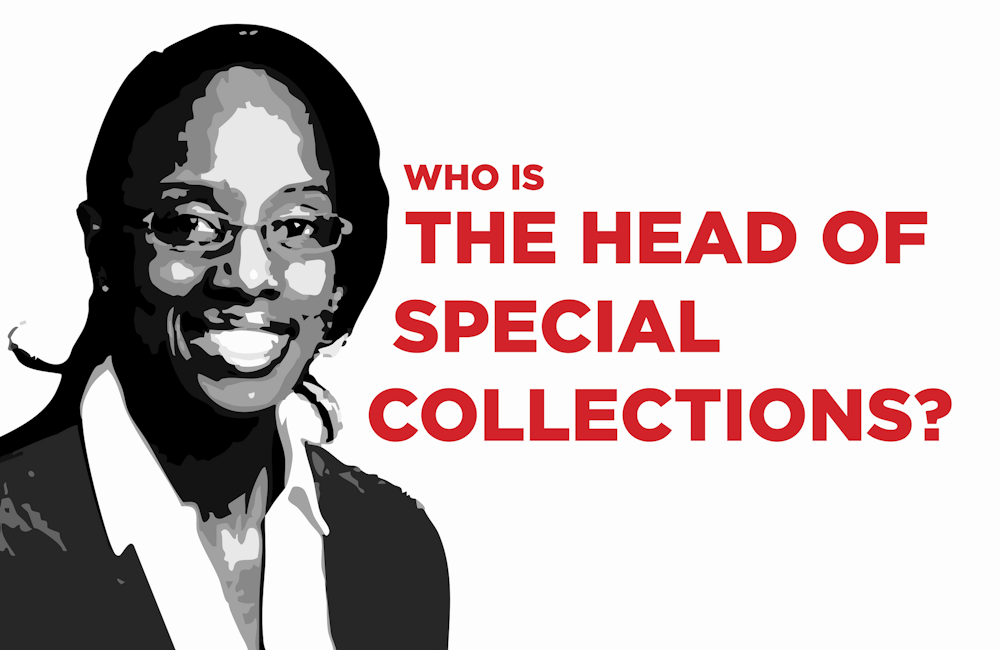
If you’ve ever wanted to learn more about Miami University’s past, research the history of Western College or find the first copy of The Miami Student, chances are you’ve ended up at the university archives, a collection of Miami’s 217-year-long history. Behind this complex collection, one woman is at the center of it all: Jacky Johnson, head of special collections and archives.
Johnson’s job encompasses everything from organizing an entire building to searching through family histories.
“Every day is something different, because we do a lot of genealogy searches,” Johnson said. “People are trying to find information about their aunt, uncle, grandmother, grandfather, others … We send that information to them.”
Working to preserve many diverse artifacts from Miami’s long history has given Johnson the chance to interact with a variety of important documents that show the origins of the institution.
“We have the collection from the first Miami president, in the original handwriting,” Johnson said. “We have the primary documents that document the history of [Miami University, Western Women’s College and the Oxford Female Institute].”
For her, working with these artifacts is a labor of love. Due to certain space restraints and limitations of the physical archives, not every item can be saved. Instead, Johnson records and digitizes artifacts, then decides which ones can be brought to the archive space. It’s a time-consuming job that requires extensive knowledge of Miami’s history and an understanding of what artifacts can help keep legacies alive.
Enjoy what you're reading?
Signup for our newsletter
“What drew me was the opportunity to continue to tell the history and to make sure that we tell the history [correctly],” Johnson said. “When you archive a collection, it's really important because you want to make sure that what you're creating is a document or a collection that people understand.”
Debbie Baker Spaeth, director of special projects for the Western Alumni Association, worked with Johnson beginning in 2020 to archive the Western College collection. The artifacts had previously been stored at Patterson Place, the former residence for presidents at the Western College, but were moved to the King Library archives, as it’s a climate-controlled space.
“My work with Jacky through that process was [that] we were basically responsible for cleaning out a four-story building,” Baker Spaeth said.
The process, from start to finish, took roughly four years. Baker Spaeth said Johnson helped to determine which items would be archived, like a silver tea set which belonged to Leila McKee, president of the Western College, and Helen Peabody’s Bible.
“She is such a visionary and just a fun person to collaborate with because she is so passionate about everything,” Baker Spaeth said.
Johnson also helped reporters for The Miami Student with research topics they wrote about for the 200th anniversary special edition. Not only do the archives contain information about buildings on campus or family history, but they also have information about the origins of clubs and organizations, including The Miami Student, formerly known as the Literary Focus.
Kassandra Batchelor, a junior English literature and women, gender and sexuality studies double major, first encountered Johnson when she began her job as assistant to the rare manuscripts librarian.
“I just heard so many good things about her,” Batchelor said. “And then I got to interact with her, and it was just so apparent how helpful and intelligent she was. I mean, I don't work [directly] with her, but she takes the time out of her day to check in with me, make sure everything's going smoothly, and make sure I'm doing OK.”
Although Johnson’s job may initially seem like solitary cataloging work, it’s the people and interactions that make the job exciting. Johnson said one of her responsibilities is assisting with class instruction. She tailors her presentation to topics the students are learning about, and even brings some archival materials with her.
“I think it's just fascinating that people still contact us, and they're really interested in history,” Johnson said. “They still want to donate items to us, and the items that we get are so fascinating. I'm always honored.”
Read More

Meet the Columnist: Karma Abboud
By Karma Abboud | 2 days ago"While I still love creative writing, creating opinion articles for The Miami Student is not just a hobby or coping mechanism: It allows me to share my thoughts confidently with the Miami community."
Agree to disagree: Debate club fosters inter-club dialogue
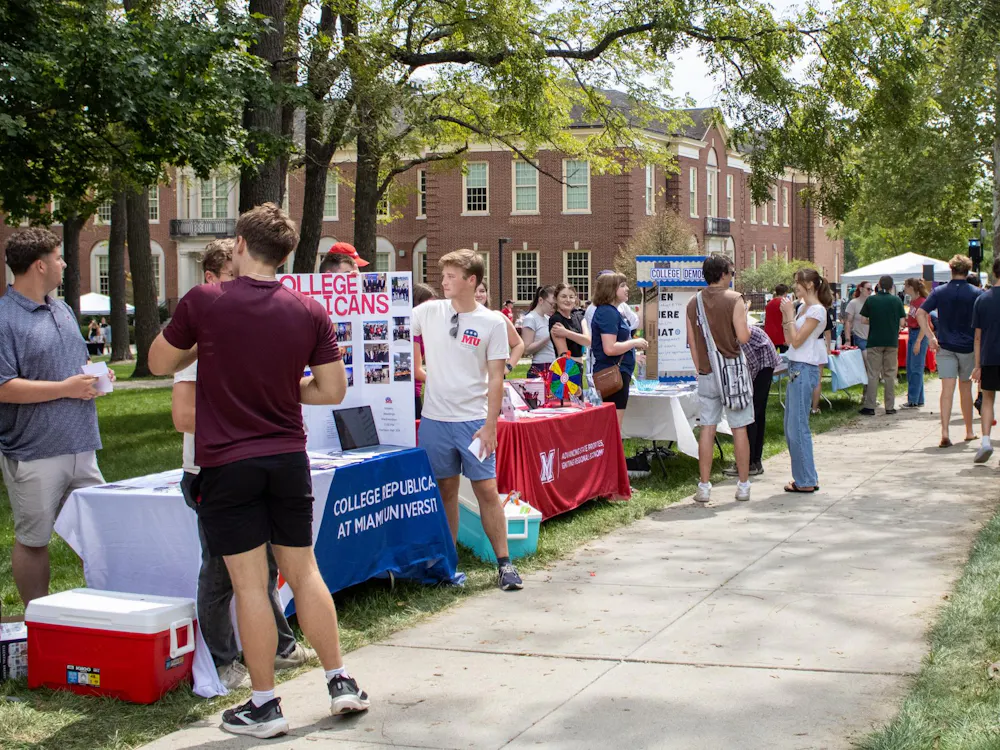
By Elisa Rosenthal | 2 days agoThe Miami University (MU) Debate Club is preparing for its second annual College Democrats and College Republicans debate. This bipartisan event drew 800 people last November, a total far exceeding the 500-seat space.
Recommendations from a reminiscing junior on having roommates
By Jada Rogers | 2 days ago"I made myself miserable as a first-year student because I refused to make other long-term friends, swayed by my own misconception that my roommate was the only person I needed. Humans crave companionship, so please go find your people."