
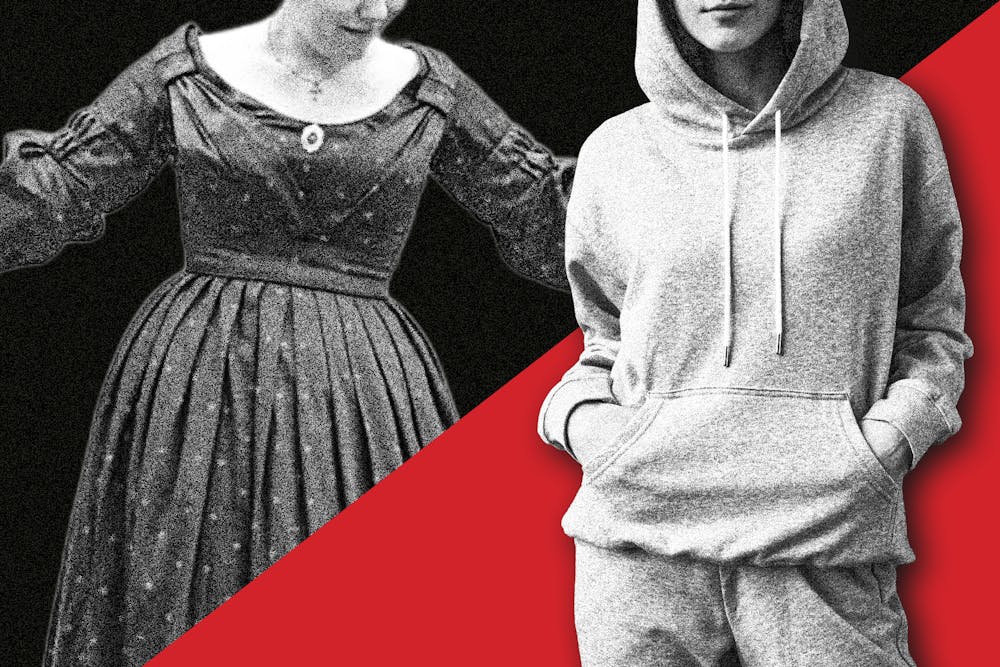
College students’ fashion today consists of hoodies, leggings, thrifted pieces and Shein packages. If you look back 200 years, fashion for young people in the 1820s consisted of tailored, mended and long-lasting clothes. Understanding 1820s fashion can show us how clothing went from a few specially-made, meaningful pieces to the fast-changing wardrobes the world knows today.
The 1820s rapidly swept away any remaining traces of Regency style and quickly transitioned to a romantic style, which aligned with the beliefs of the time period. Instead of an inherent belief that logic was more important than emotions, people leaned into imagination, emotion and individualism during this period.
According to the Stanford Encyclopedia of Philosophy, “The most characteristic romantic commitment is to the idea that the character of art and beauty and of our engagement with them should shape all aspects of human life.”
Romantic influences can be seen in various forms of artistic expression, but in fashion, it shows the complex individualism that rose with the changing style trends. People stopped trying to align their style to fit a royal-centric era.
For women’s fashion, outfit silhouettes were quickly changing. Exaggerated and heightened waistlines dropped to a natural level while skirts flared out and bunched in the back, and puffed sleeves grew larger and larger, according to a story from “Fashion History Timeline” through the Fashion Institute of Technology.
“Through the second half of the 1820s, this silhouette only became more exaggerated,” author Harper Franklin wrote. “The breadth of sleeves grew exponentially into true gigot or leg-o-mutton styles by 1827.”
Men’s fashion followed a similar silhouette change — waists were dropped and shoulders broadened.
Fashion trends in the 1820s reinforced social ideals, such as an expectation of delicate femininity for women and stiff masculinity for men. Clothing also signaled class during this time. The more elaborate clothing was reserved for the upper class, while the working class could only afford simpler versions of clothing. These trends were able to move faster than ever before because of print media and early forms of advertising.
According to Texas A&M University, “Newspaper printing was done at a faster pace and latest gossips and happenings were able to reach people much quicker. Any new information could be delivered within a matter of days of its occurrence.” Before this, new and new trends could only move as fast as humans were able to travel and pass on information directly.
Clothing used to be handmade or carefully tailored. Since clothing was so craftfully made, people typically owned a small number of pieces that were mended over the years.
Today, clothes are mass-produced and cheaply made. Earlier clothing had value built into it; designers created garments made from expensive fabric, had clever designs and were intended to be adjusted and refitted. The repair of clothes used to be normal, but now, because of the fast fashion industry, it seems to be on the outs.
Studying 1820s fashion can help us look at our own style habits. Today, we move through clothes quickly, buying cheap pieces that aren’t meant to last and are made in bad quality. Looking back at any period of fashion history shows the thought and time that went into each piece and shows how slowly trends progressed. We write history every day, changing trends with what we put on our bodies.
Enjoy what you're reading?
Signup for our newsletter
Read More

Five movies for long and hot days
By Ren Chaffee | May 13, 2026Often, summer can become too hot to bear, and the only thing that sounds good is lying in bed, making it the perfect time to indulge in binge-watching. So, here are five movies to help you pass the time.
The ultimate guide to soundtracking your summer
By Elise Hanna | May 12, 2026Summer is known for a few things, like pool parties, cookouts and bonfires. And, of course, the constant music. It blares through every water park speaker and sets a comforting ambiance as you eat burgers in the summer sun. I’ve compiled a list of the best songs to act as the only playlist you’ll need this summer.
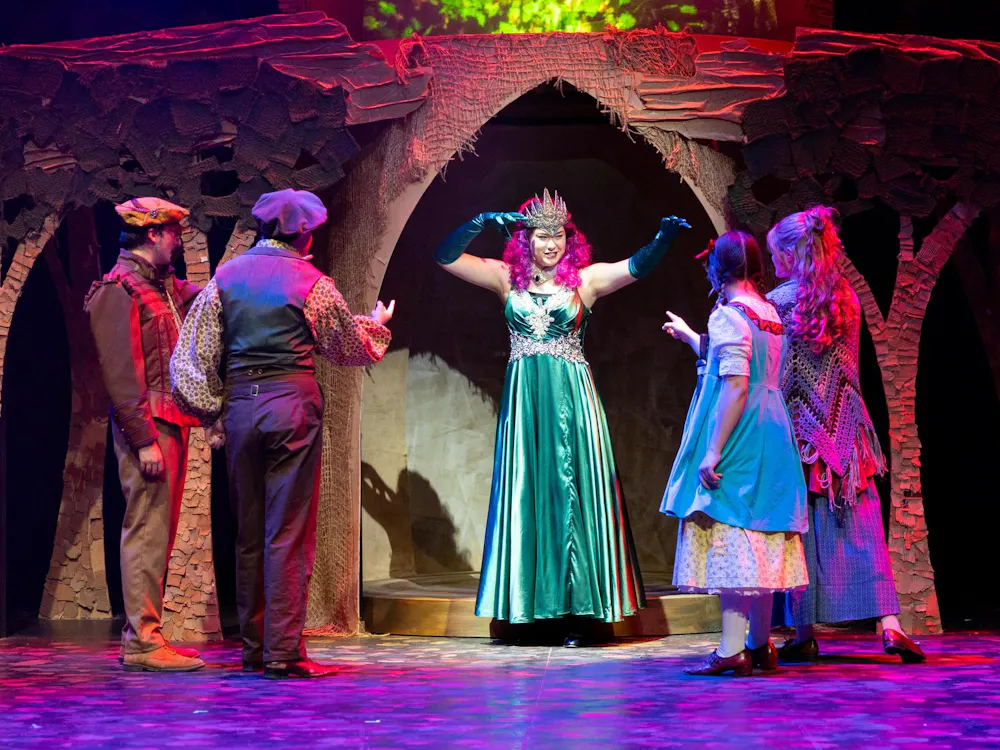
Miami University theater department presents ‘Into the Woods’
By Layla Norris | May 11, 2026Miami University’s theater department presented its annual spring musical from May 1-7. This year, students performed “Into the Woods.”“Into the Woods” follows the story of the Baker and his wife and their quest to lift the curse of the Witch in order to have a child. Other fairytale characters are featured, such as Little Red Riding Hood, Cinderella and Rapunzel. Even Jack from “Jack and the Beanstalk” make an appearance.