
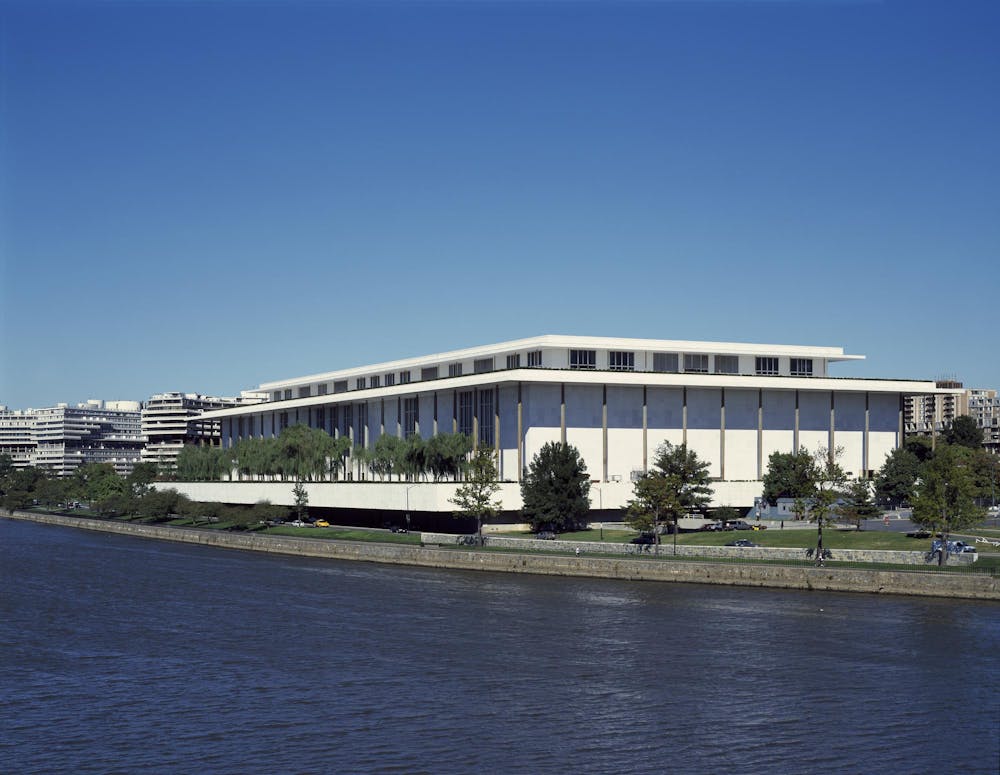
In 1958, a National Culture Center was created in our nation’s capital. In 1964, the building became a standing memorial for the assassinated president, John F. Kennedy, due to his aid in the program’s funding. This year, President Donald Trump officially closed the building for two years of “renovation.”
For decades, the John F. Kennedy Center for the Performing Arts has been an establishment that strives to promote cultural diversity in the United States: a home for opera, theater, dance and creative expressions. As a monumental institution in our nation’s capital, it defines cultural diversity through the arts.
With the prestige it holds, the Kennedy Center holds high connections with the White House and the president. However, during Trump’s first term, many “artists protested his administration and threatened to boycott” events hosted at the establishment, according to Americans for the Arts. Due to this, the president refused to attend the annual gala held by the Kennedy Center.
Trump maintains a prolonged history of disregarding the arts. During his presidency, he disbanded the President’s Committee on the Arts and the Humanities, which had originally been established by Ronald Reagan. He also removed funding for the Institute of Museum and Library Services, which has since been ruled unlawful.
In December 2025, Trump’s name was officially added to the Kennedy Center’s memorial’s title. The press said it was a unanimous vote by the board, but an ex-officio member stated her voice was silenced on the issue, and the vote was not unanimous or representative.
NPR suggests this renaming was meant to place a bipartisan label on the institution. However, more likely, the renaming is Trump’s attempt to take control over The Kennedy Center and work to censor its art. Due to the addition of his name, numerous performances have canceled their runs and artists continue to boycott their jobs at the memorial.
The U.S. currently has a president who outwardly disregards the world of the arts. U.S. culture is harmed by this, as the arts are a monumental aspect of our country’s union. Our nation was built on books, paintings, plays and music — it is a foundational part of our society and censorship directly threatens our democracy.
Not only is there censorship in the performing arts on a national and institutional level, but it also happens at the local level. In high schools around the country, musical theater performances are censored and tailored to be “appropriate.” While this makes sense for foul language or inappropriate behavior, some schools censor content that simply doesn’t align with their ideology.
At Hillsboro High School in Hillsboro, Ohio, the performance of the musical “She Kills Monsters” was canceled. The reasoning vaguely stated, “the play was not appropriate for our K-12 audience.” However, parents voiced their concerns over one LGBTQ+ character in the show, and this anger led to its cancellation.
This is a prime example of censorship in the theater world. When a performance is censored, it loses its original meaning.
These stories teach lessons, inspire and change the world.
Representation in media and art inspires young people. High school is a difficult time, where students are isolated for being even slightly different than their peers. Stories that celebrate these differences can change lives. Research has consistently shown that representation does more good than harm on queer youth. Having access to characters and stories that they can relate to is vital to their identity.
Enjoy what you're reading?
Signup for our newsletter
When performances get censored or canceled, the world misses out on a piece of art. With Trump closing the Kennedy Center for two years, he is forcing the world to lose a place of storytelling and inspiration.
Layla Norris is a first-year student double majoring in political science and journalism, with a minor in history. Alongside writing for The Miami Student, she is involved with Kappa Alpha Pi, Redhawk Radio and Model UN.
Read More
Meet the Columnist: Elisa Rosenthal
By Elisa Rosenthal | 5 hours ago"My hope is that my pieces prompt people to think and care more about the things I chose to write about."
Meet the Columnist: Maureen Wilson
By Maureen Wilson | 2 days ago"I wanted to use 'I' in my stories. I wanted to talk about the things everybody thought, but no one said."

Why food in other countries is better
By Elisa Rosenthal | 2 days ago"The biggest difference between the farmlands of Argentina and the supermarkets of the U.S. was the freshness of ingredients, especially meat."