
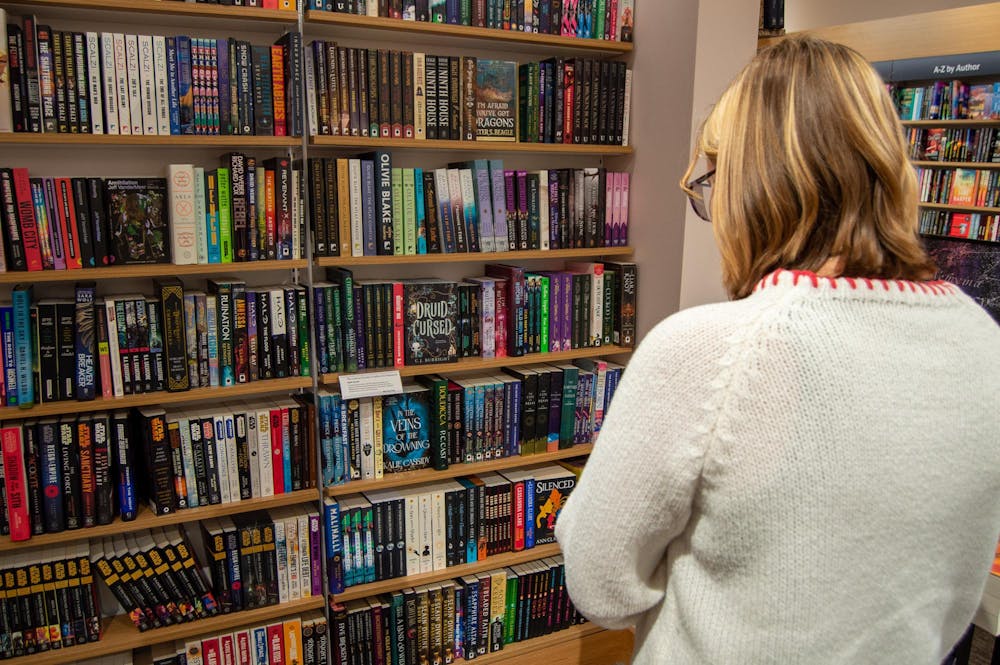
It's the mid-twentieth century; walk into any bookstore, corner store, airport or supermarket, and you will find shelves stacked high with numerous rows of short paper books promising to whisk you away to fantastic worlds.
These small, roughly 7-inch tall volumes were cheap and the perfect size to slide into a back pocket — a pocket which, instead, is now filled with a smartphone.
In December 2025, ReaderLink, which publishes 60–70% of these mass-market paperbacks, stopped printing them in response to declining sales.
Like their dime novel predecessors, mass-market paperbacks were cheap and plentiful; They allowed anyone access to information and entertainment from anywhere. Sound familiar? This format isn’t being replaced by larger trade paperbacks or even e-books; they are being replaced by the cell phone web browser and TikTok.
But you wouldn’t call watching Instagram reels, Netflix or YouTube a hobby, would you?
For many, reading used to be a pastime, something everyone did through the accessibility and portability of a mass-market paperback. Now, it’s seen as something a minority of people make large efforts to do. You aren’t just someone who reads — you are a reader.
In a 2022 poll from the National Endowment for the Arts, for the first time, fewer than 50% of adults had read a book in the past year. The trend is clear: The average United States citizen no longer reads for pleasure. But talk to many, and they won’t tell you they don't want to read – it's that they feel they don’t have time for it.
Ironically, reading is more accessible today than it ever has been. The same phones that have taken the book's place in the back pocket can — through apps like Libby — access thousands of free e-books and audiobooks from your local library.
But the devices that provide these services are designed to pull you away at every moment. Push notifications are rampant, tearing away our focus into endless feeds filled with ads that — at least as of yet — haven't been placed in e-books.
We are in the time of year when we make and fail ambitious goals. We tell ourselves that we will do the thing we think will make us better, but by the end of January, most of us find that it is easier said than done.
With the busyness and distraction of modern life, resolution doesn't always give way to action. We have to build reminders into our lives and set aside moments in our schedules.
Here are a few steps that have helped me make reading into a recurring habit.
Enjoy what you're reading?
Signup for our newsletter
Get a book you're actually interested in
So often, people start by picking up the books they feel they’re “supposed” to read, so let me tell you this: reading at all is good. Most people are just scrolling through Instagram or TikTok anyway, so don't let them force you to read something you're not interested in.
If you want to read “Atomic Habits,” go ahead; It's a fine book. But if you're more interested in romance or sci-fi rather than performing the reading of feminist literature, start there.
Still don’t know what to read? Our culture section has lots of recommendations.
Bring it with you everywhere
Once you’ve picked out your book, get a portable copy and bring it with you everywhere. Borrow an audiobook or e-book from the library or get a mass-market paperback while you still can. Next time you find yourself waiting for something or lethargically scrolling through boredom, pull out the book instead of your phone.
Set aside a little time
Find just 20 minutes a day to read, be it before bed, on the bus or in your headphones on your walk to class. With many novels being less than 10 hours long for even the slowest of readers (like myself), you could read 12 books by the end of the year.
You aren’t obligated to devote hours to reading as a hobby, but try putting down Instagram for a few minutes and returning to reading as a pastime.
The mass-market paperback stood for the idea that reading could be for everyone. You don’t need to be an academic. You aren’t required to slog through a boring self-help book because it is “good for you.”
Pick up a book that interests you and start reading.
Abe Hagood is a first-year student double majoring in emerging technology in business and design and creative writing. He is a member of the Miami University YDSA and a leadership member of the Miami University Game Design Club.
Read More

Meet the Columnist: Abe Hagood
By Abe Hagood | 14 hours ago"I am, to the frequent disgruntlement of my friends, a very opinionated person. It’s not uncommon that I’m stopped mid-rant and asked to 'shut up.'"
Meet the Columnist: Taylor Powers
By Taylor Powers | Yesterday"I joined The Miami Student in my first year, but very quickly experienced burnout. I joined the Opinion section as a creative outlet, and here I am today as the editor."

Media Matters: Wil Haygood — ‘Solo Voyager’
By Richard Campbell | March 25, 2026"I first met Haygood, a 1976 Miami University graduate, in spring 2013. He delivered Miami’s commencement address, beginning his talk with the trailer for 'The Butler.'"