
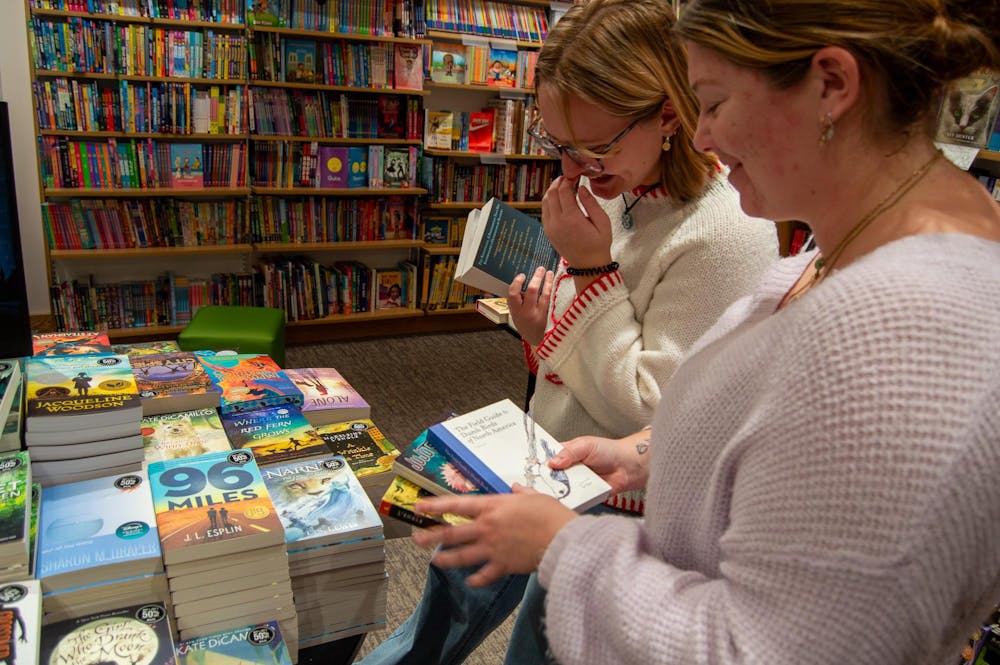
In 2003, about 28% of American adults read in their free time. Just two decades later, that number drastically dropped to 16%, according to a study from iScience. This is a decrease of over 40%. As these numbers continue to decline, Americans are letting so many essential skills slip away.
I can’t even process the numerous times I’ve heard people proudly announce that they haven’t read a book since elementary school. When did it become cool to admit that you’re willingly avoiding resources that can enhance your critical thinking?
It’s not “nerdy” or “performative” to be interested in bettering yourself through a novel. In fact, avoiding reading comes with cognitive consequences. The ability to pick up and build on knowledge over time is called crystallized intelligence. It grows gradually, through experience, and it encompasses vocabulary, general knowledge and reasoning skills. While crystallized intelligence typically intensifies with age, reading is one of the simplest and most effective ways to strengthen it early on.
Even if your education doesn’t pertain to literature, it’s shortsighted to neglect reading. As a student studying biology, I still find it to be an important activity. There is a difference between reading required scientific textbooks with numbers and experiments and another book for fun. Self-selected books are strongly tied to relaxation, which is essential for giving our brains the break they often lack.
As contradictory as it may seem, imagination can be improved by the effortless act of reading. It’s a gentle workout for your brain, activating it without requiring you to build the story from scratch. The switch on the right side of our brain flips on and allows us to develop our own perspective about the piece.
Taking an easy 20 minutes from your day to sit down and browse through a book you genuinely find interesting can do so much more for you than you may think. Even if you’re reading a fictional book about imaginary characters, there are benefits for your cognition, creativity and vocabulary.
Beyond the effects of reading on our thinking, many people also underestimate its impact on our ability to communicate effectively. When you spend time with well-written books, you’re absorbing new ways to articulate a point, add fluidity to sentences and communicate thoughts. These things matter far beyond a classroom setting; They shape how we interact with others on a day-to-day basis.
Yet, with the rise of social media (likely leading to the dip in literacy rates), attention spans have been disrupted. There is always something to scroll through, always something to look at, always something to tap on. When do we allow ourselves a moment to sit in our own thoughts and just think about something? Our brains aren’t meant to be stimulated all day long; it’s exhausting.
Picking up a book and relaxing will give you this opportunity to pause and unwind. Saying you simply “don’t have time” to read, but then have a screen time of five hours, highlights a choice rather than an actual lack of time.
Once you strip away the excuses, it’s easy to realize that books can be anything you want them to be. If you’re looking for entertainment, pick up a fiction book. If you’d like information about the world, grab an economics or philosophy book. But most importantly, if you need anything at all, you can and will find it inside those pages.
It should concern everyone that a society that doesn’t read becomes a society incapable of independent thought.
Enjoy what you're reading?
Signup for our newsletter
Carley Rapp is a first-year student majoring in biology with a co-major in prehealth studies. She also writes for TMS humor, is a supplemental instructor (SI), and is an active member of MEDlife and Nu Rho Psi.
Read More

Meet the Columnist: Karma Abboud
By Karma Abboud | 5 days ago"While I still love creative writing, creating opinion articles for The Miami Student is not just a hobby or coping mechanism: It allows me to share my thoughts confidently with the Miami community."

Recommendations from a reminiscing junior on having roommates
By Jada Rogers | 5 days ago"I made myself miserable as a first-year student because I refused to make other long-term friends, swayed by my own misconception that my roommate was the only person I needed. Humans crave companionship, so please go find your people."

Rejecting minimalism: It’s okay to hold on to sentimental things
By Layla Norris | 6 days ago"Yet a huge difference lies between maximalism and messiness. Maximalism is about intentional clutter: Filling a space with colors, patterns and memories cultivates a personalized place of belonging."