
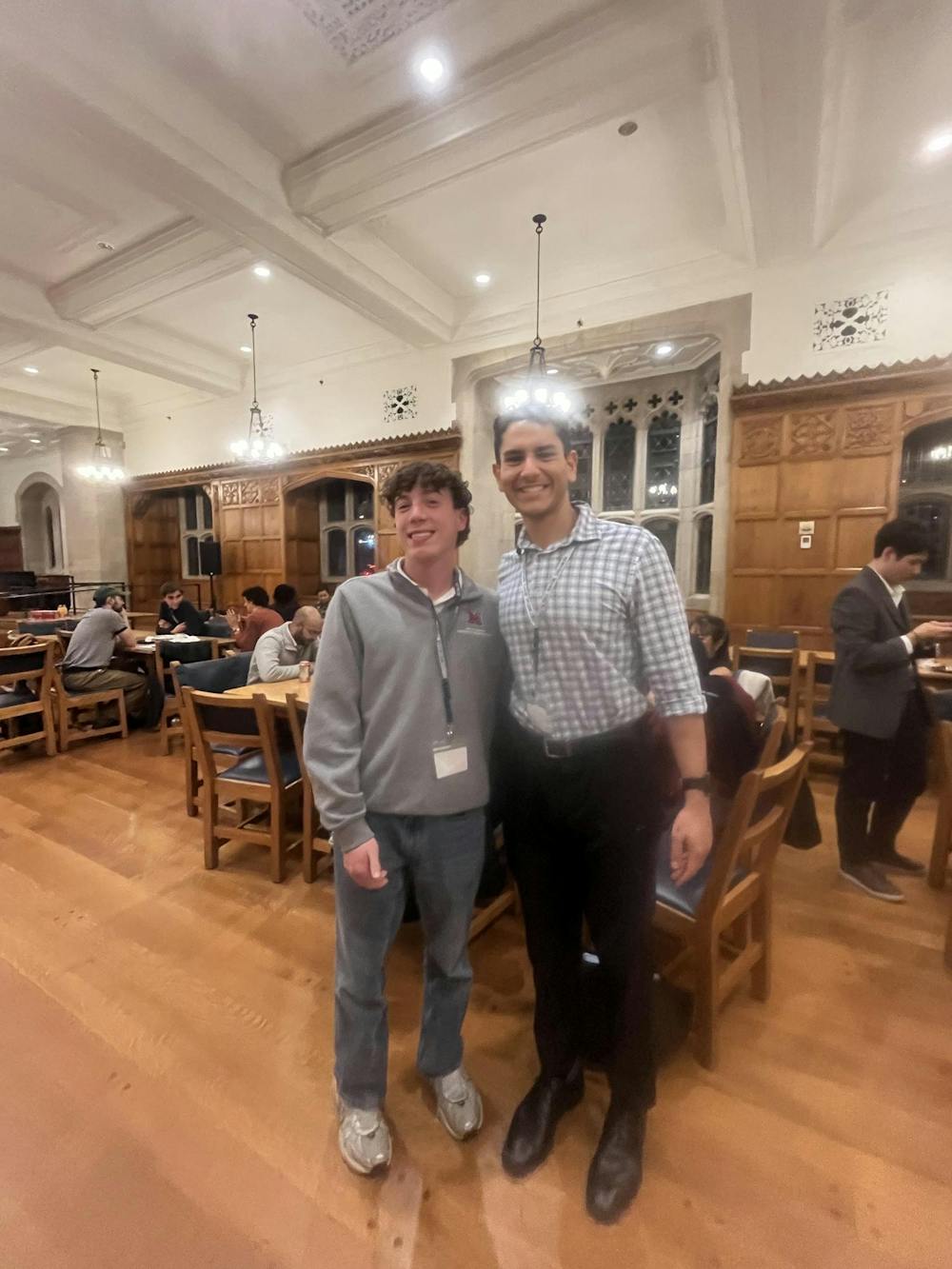
There are colleges around the world where post-graduate wealth is an expectation, not an anomaly. One institution, storied and respected, sent more than 90% of its graduates into six-figure salaries with a reliability that reads more as systematic precision than meritocratic principles. Last month, I spent a lot of time at this one. It had beautiful 19th‑century architecture and was a renowned university known regionally for its prestige and charm.
Its name was not Miami University.
I was at Yale University for Class Action’s Reimagining Elite Higher Education Conference, where students and scholars debated how universities have abandoned their duty to serve the public good. Speakers warned about “career funneling,” the way elite schools push graduates into consulting and finance, and about how cutting the humanities undermines the future of our society.
It struck me that Miami is following the same path — but without the payoff.
Since 2023, Miami has cut or consolidated nearly 20 humanities majors, including American studies, religion and art history. At the same time, the Farmer School of Business dominates the campus and its culture. With five business fraternities and dozens of clubs, students in Farmer endure multiple rounds of interviews for a shot at “prestige.”
Farmer boasts an almost 97% job placement rate and average starting salaries of around $73,000. This sounds good on paper, yet around 30% of graduates end up in regional banking, insurance or sales. These jobs pay about the same as social impact careers, but without the meaning.
At the conference, Raj Vinnakota, president of the Institute for Citizens & Scholars, said, “Where you’re taking and spending your finite resources is where your priorities truly lie.”
Miami’s priorities are clear: business pipelines over the humanities.
The result is a student body sold on prestige Miami can’t really provide, while those who might pursue teaching, public service or the arts see their programs starved of support.
The irony is that these corporate jobs are not that good. Research presented at the conference showed that many consultants and corporate employees report burnout, depression and regret despite high pay. Amy Binder, a sociology professor at Johns Hopkins University, summed it up perfectly: “Good jobs fail to deliver good lives.”
Miami students chasing prestige through business fraternities and banking clubs are buying into a system that confuses conviction with work, leaving them anxious and disillusioned.
Miami’s liberal arts identity once promised something different. The humanities cultivate curiosity, empathy and civic duty. These are the very qualities the Class Action conference argued universities must reclaim – cutting them undermines Miami’s promise to educate students for meaningful lives, the promise etched into the back of Upham Hall: “Ye shall know the truth and the truth shall make you free.”
Enjoy what you're reading?
Signup for our newsletter
As a Miami student, I see this tension every day. Friends in Farmer chase prestige through endless interviews and applications, while humanities majors, faced with budget cuts, wonder if their programs will survive. The administration tells us this is about enrollment numbers, but the real issue is vision. Miami is choosing short‑term job stats over long‑term civic health.
“This is not charity work, this is for us too,” Zane Khiry, a masters’ student at Princeton University, said at the conference. Universities must serve their communities, not just corporate recruiters. Miami’s administration should listen.
Reinvest in the humanities. Broaden career pipelines. And, most importantly, redefine success beyond salary.
If the conference was about reimagining elite higher education, Miami needs to reimagine itself, too. Otherwise, we risk breaking our own social contract. The danger here is not just that humanities programs will disappear, but talented students will be turned away from meaning, trading passion for profit as they rot away in harshly-lit cubicles, drained of curiosity and purpose with little more than a paycheck to show for it.
This is not the life higher education should prepare us for.
Owen Martin is a first year majoring in political science. He is an Assistant Campus and Community Editor for The Student and treasurer of the Miami Political Review. He is also involved with the Government Relations Network and recently represented Miami at the Class Action Reimaging Elite Higher Education Conference, which is what this story was written about.
Read More

Meet the Columnist: Abe Hagood
By Abe Hagood | 10 hours ago"I am, to the frequent disgruntlement of my friends, a very opinionated person. It’s not uncommon that I’m stopped mid-rant and asked to 'shut up.'"

Meet the Columnist: Taylor Powers
By Taylor Powers | Yesterday"I joined The Miami Student in my first year, but very quickly experienced burnout. I joined the Opinion section as a creative outlet, and here I am today as the editor."

Media Matters: Wil Haygood — ‘Solo Voyager’
By Richard Campbell | March 25, 2026"I first met Haygood, a 1976 Miami University graduate, in spring 2013. He delivered Miami’s commencement address, beginning his talk with the trailer for 'The Butler.'"