
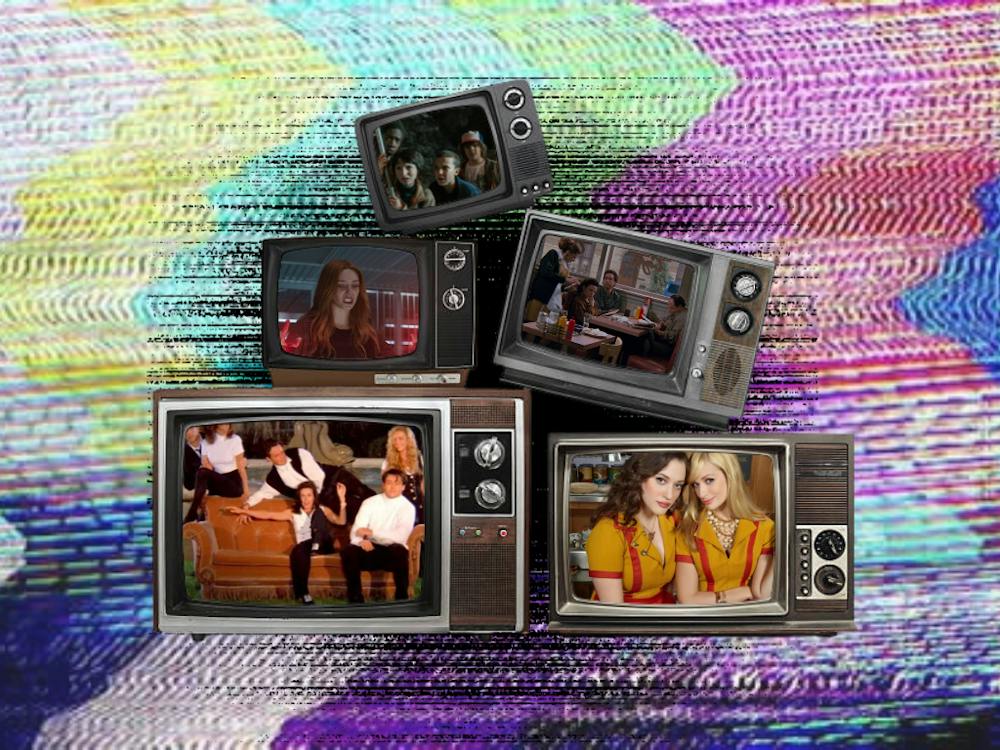
Eight episodes. That’s all most of your favorite modern shows will get per season. Maybe, if they’re lucky, they’ll get 10. Long gone are the days of a 22-episode sitcom, made for networks to air reruns 24/7.
Why were shows that long to begin with? According to Business Insider, the original goal for any TV show was to hit the golden number of episodes: 100. Upon reaching around 100 episodes, a show could be syndicated. In other words, any TV show that reached 100 episodes could be sold to another network or TV station, so it could be aired on multiple stations at once.
This was largely profitable for both the original network that developed the show and the networks that purchased the show for syndication. Just think of the last time you watched cable TV and just how many reruns of shows like “Friends,” “Seinfeld,” “2 Broke Girls” or “The King of Queens” you’ve seen.
With modern streaming giants like Netflix or Disney+ taking the place of cable, there’s no need for syndication anymore. Due to this, shows naturally don’t need to be as long.
However, the lack of a need for syndication is not the only factor that plays into modern TV shows having much shorter seasons. Modern TV shows are much more expensive than the TV shows you and your parents grew up with.
One of the most popular shows to come out in the last decade is by far “Stranger Things.” According to Cosmopolitan, “Stranger Things” spent around $50-60 million per episode on its fifth and final season. This season only had eight episodes, but with that price tag, they spent around $400-480 million across the entire season.
The fifth season of “Stranger Things” alone beats out all but three of the most expensive movies made in the 21st century in terms of cost.
“Stranger Things” isn’t the only modern show to have an extremely large budget. Several Disney+ shows like ”Secret Invasion,” ”Andor” or ”WandaVision” have also had extremely large budgets.
According to Variety, back in the early 2000s, when the final season of “Friends” was airing, the cost per episode was $10 million. $6 million of that budget was spent solely on the main six cast members portraying the titular characters. At the time, “Friends” was among the most expensive shows ever made, but it pales in comparison to modern shows like “Stranger Things.”
This, again, falls back to the rise of streaming services. Networks would make their money off of ads per episode, but because streaming services have to make money via subscriptions to their platform, they increase episode budgets to make shows feel more cinematic and movie-like.
The 22-episode season has slowly become a relic of a far different era of television. It may make sense practically for companies producing these shows, but that doesn’t mean the viewers enjoy it. Personally, I can’t be happy after waiting years for a new season just to get only eight episodes. I’d be more than happy to go back to 22 episodes a season, even if not all of them were good.
Enjoy what you're reading?
Signup for our newsletter
Casey Bertsch is a first-year public administration major. In his free time, he enjoys reading comics, watching NASCAR, watching movies and playing golf.
Read More

Why do women need to be perfect?
By Veronica Dallas | 3558 minutes ago"However you look at this trend, women are getting more and more negative feedback no matter what they do or who they cater toward."

David McComb’s journey to the starting quarterback job for the RedHawks
By Alyssa Vazquez | 22 hours agoMcComb was impressive through his first four games with the RedHawks before suffering a season-ending injury in week four against the University of Connecticut.

What is the Good Samaritan Policy?
By Owen Martin | 22 hours agoThe Good Samaritan Policy is a limited medical amnesty policy that is meant to prevent students who call for assistance for another student on campus from administrative consequences if they themselves are also under the influence of drugs or alcohol.