
On June 23, the National Collegiate Athletic Association (NCAA) introduced a new format for student-athlete aged-based eligibility, dubbed the five-for-five rule. It gives athletes five years to complete five seasons of their sport. A student athlete’s five years begin either when they first enroll in classes at an accredited institution or on their 19th birthday, whichever comes first.
This ruling was intended to begin with the high school graduating class of 2023, meaning students currently in their fourth year of college sports would be granted a fifth year automatically. However, a group of lawyers sought the 2022 high school graduating class to be eligible for this new rule as well. Their argument was that the ruling violated antitrust laws and limited their clients’ ability to make monetary gains.
The aged-based eligibility rule offers very few exceptions to the rule. With the new eligibility standards redshirting will become obsolete.
“There are very few exemptions. Mission trips, pregnancy and military [service] are a few that come to mind,” said Robbie Trittschuh, assistant athletic director of compliance.
The new eligibility rule is included in the Save College Sports Act. The bill passed through the senate and will move to the house for further deliberation.
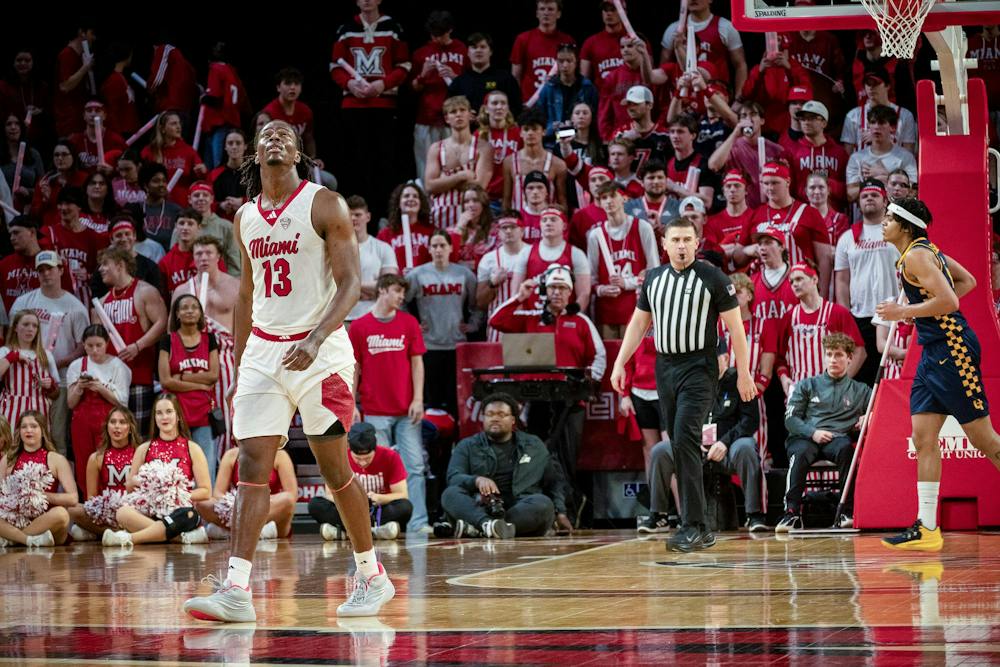
One of the players who is attempting to be grandfathered in is Miami University men’s basketball standout forward Antwone Woolfolk. Woolfolk, who averaged 10 points and five rebounds per game last year, exhausted his college eligibility at the end of last season, but is now attempting to return to Oxford for the 2026-27 season.
His decision to return came after a July 31 ruling by Colorado District Judge Charlotte Sweeney, which granted a preliminary injunction nationwide. This gave every player in the 2022 high school class that had exhausted their eligibility the ability to return to college for a fifth year.
On Aug. 21, the 10th circuit board of appeals ruled in favor of the NCAA and issued a stay on the order, which put a pause on the legal processes. As of now, Woolfolk is able to be enrolled in the university and practice with the team, but would not be allowed to play in any games the RedHawks play this winter.
On top of the national ruling, many state-by-state cases appear in different courts.
Woolfolk was included in a case out of Cincinnati that initially gave 15 to 20 men’s basketball players the option to return to college for another year of play.
This adds another level of confusion in the process: Players may be deemed eligible on the state level but ineligible nationally, and vice versa. Despite the confusion, the athletes’ well-being remains a top priority at Miami.
Over the summer, during the court proceedings, Woolfolk was finishing his degree. He reached out to men’s basketball head coach Travis Steele about the opportunity to return to Oxford for a fifth year.
Enjoy what you're reading?
Signup for our newsletter
“We have to do right by Antwone,” Steele said. “He’s a great person. I wanted him to get his degree, a Miami degree.”
Woolfolk is set to finish his program this winter, regardless of any court ruling.
The Ohio five-for-five case was heard on Sept. 22, and the judge presiding over the case said there would be a “timely ruling,” per Paul Fritschner of Cincy Crown. At the time of this publication, that ruling is still pending.
Miami and Woolfolk are just one example of hundreds of programs and athletes being impacted by the recent confusion in the courts. Mid-American Conference (MAC) rivals, such as the University of Akron, are awaiting a decision on some of their top players. National brands like Louisiana State University have rosters where a majority of players are awaiting eligibility rulings.
The situation does not affect only men’s basketball. Trittschuh said that due to the timing of the rulings, a number of soccer players at Miami were able to play at the beginning of the season but are now deemed ineligible.
Another component of this situation is the potential of professional athletes opting to return to college after being on professional rosters. The Big Ten conference and Southeastern conference have both released statements determining that professional athletes are not able to return to the college ranks. The MAC has yet to do so.
Regardless of whether Woolfolk suits up this season, the RedHawks have a deep and talented frontcourt. They return sophomores Tyler Robbins and Kyle Waltz and senior Almar Atlason. They also add freshmen Alan Horton and sophomore transfer Preston Copeland to the frontcourt.
“We have great depth. We have several good front court guys with a lot of size that we will need in order to get to where we ultimately want to go,” Steele said.
With practices officially underway and the regular season only a month away, it is imperative that a ruling, in whichever direction, comes soon — for Steele and other coaches’ sakes, and more importantly, for Antwone Woolfolk’s sake.
Read More

Get the guidebook without pictures
By Abe Hagood | 2 hours ago"Had I spent hours flipping — or scrolling — through photos of Bruges beforehand, the experience wouldn’t have been as magical. My awe at its storybook wonder was replaced, instead, with a satisfactory achievement of my expectations."

Surviving in the age of digital mistrust
By Ren Chaffee | 2 hours agoThe dead internet theory is the idea that online activity and the internet mainly consist of bots and automated content generated to manipulate algorithmic tactics.

What is a university’s promise of safety worth?
By Eleanor Jones | 17 hours ago"Cornell has policies. What it owes its students is something more difficult: evidence that all of those things actually work when someone needs them."