
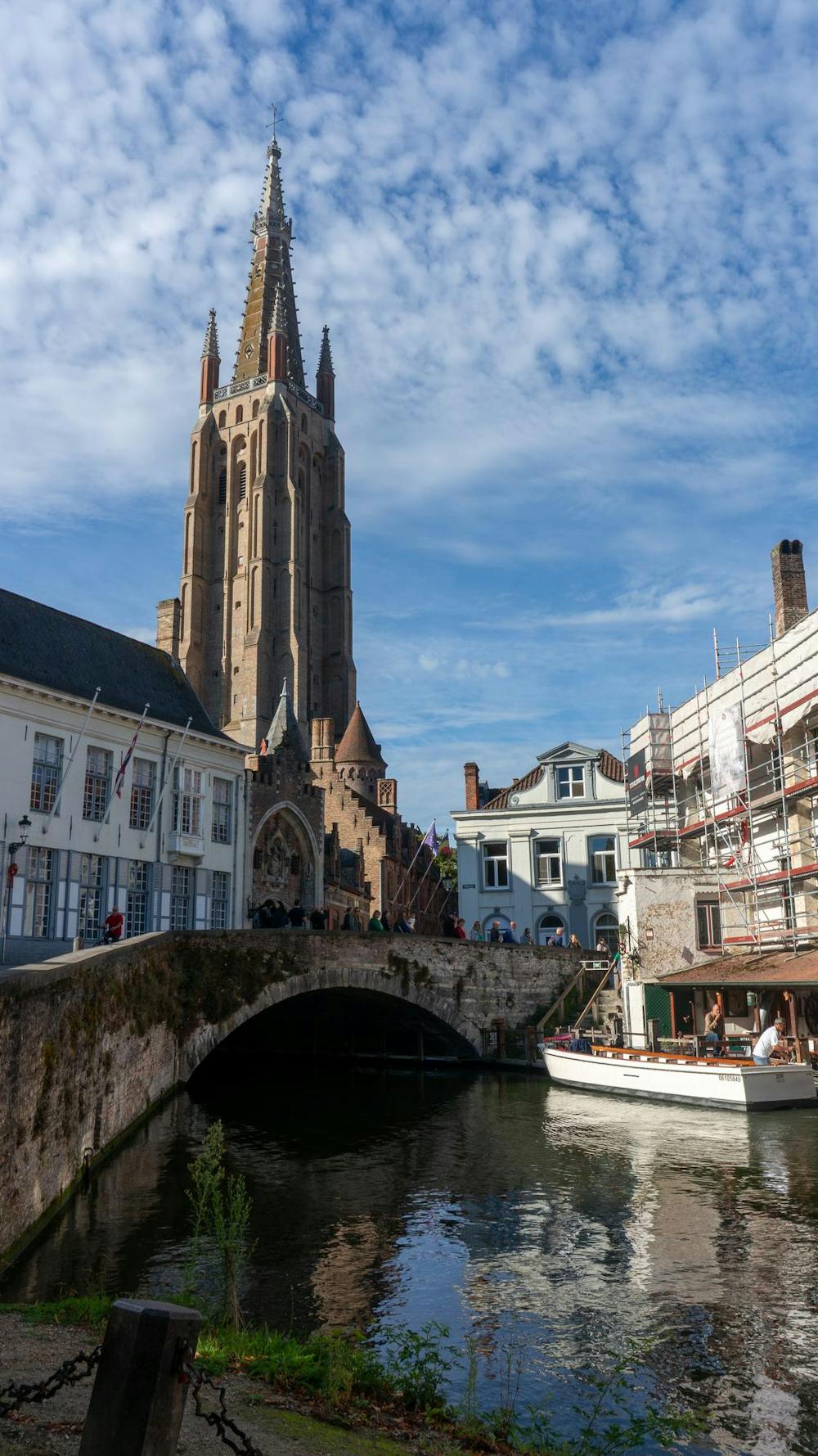
We arrived in Bruges at night. Darkness had rolled over the Belgian countryside as the train approached the city. I found my way, by bus, to the hostel I was staying at as quickly as possible, falling asleep soon after touching the bed.
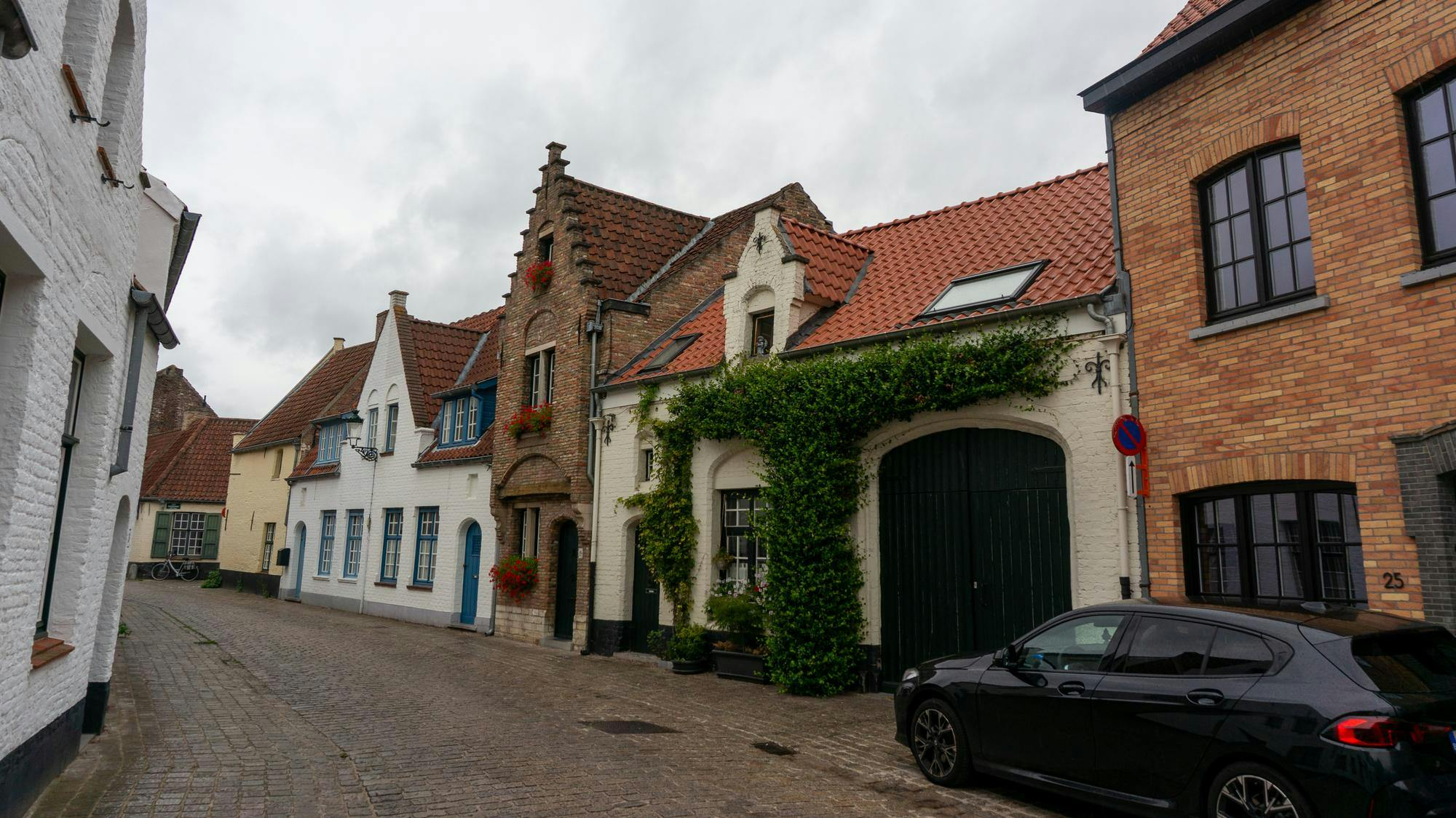
When I awoke and emerged into the city, it was as if my dreams had guided me into another century. Every street in Bruges looks out of a postcard.
The cobbles weave themselves through the city with complete disregard for the modernities of gridded urban planning. Around each turn ancient cafes, monolithic churches and well-worn bridges peek through. Cars are outnumbered by pedestrians, cyclists, canal boats and horse-drawn carriages.
I had expected this; the guidebook described it as “one of Western Europe’s most beautiful cities, with its jangle of ancient houses overlooking a cobweb of picturesque canals.” It was a whole other thing to experience it: to wander a city so well preserved in appearance and culture, submerged in the sounds of bells ringing from towering churches, the sights of ornate Flemish architecture and the scents of dense Belgian waffles.
Had I spent hours flipping — or scrolling — through photos of Bruges beforehand, the experience wouldn’t have been as magical. My awe at its storybook wonder was replaced, instead, with a satisfactory achievement of my expectations.
Of course, I am not saying one should go without planning. In preparation for studying abroad this semester in Luxembourg, I read Rick Steve’s “Europe Through the Back Door” and parts of “The Rough Guide to Belgium and Luxembourg,” including the chapter on Bruges, but I had mostly avoided pictures.
When preparing for a trip, there is a balance between leaving room for spontaneity and planning ahead to avoid common pitfalls. Many tours, for example, require you to book ahead, and museums allow you to skip the line if you get your tickets online.
Finding this balance is different for each traveler and destination, but I find that guidebooks strike a well-balanced medium. Unlike much algorithmic and ad-ridden content online, guidebooks allow authors to curate the experiences and advice they think is most pertinent and allow you to be prepared, but not overburdened with information.
I’m not one to travel with a heavily researched itinerary notated down to the minute, but if I hadn’t at a minimum skimmed the guidebook, I wouldn’t have known that the Groeninge Museum contains a Last Judgment by Hieronymus Bosch, the extremely talented painter whose otherworldly landscapes, full of tiny single-brush-stroke details, look out of an 80s fantasy magazine rather than the Renaissance. Nor would we have found ourselves in the Café Vlissinghe, the city’s oldest cafe, where we had a 10-euro lunch in a building dating back to 1515.
A good guidebook is filled with important information, from notes on tipping culture to ideas for lesser-known attractions and a small collection of useful phrases in the local language, but it’s light on images.
When we focus on images from tourist advertisements and social media posts, we risk the destinations of our travels becoming merely backgrounds for Instagram selfies rather than the preservation of a century of European culture for us to explore.
Enjoy what you're reading?
Signup for our newsletter
So, when you find yourself planning your next adventure, skip Google, go to a bookstore and buy whichever guidebook has the least pictures. Just as you might avoid trailers for a film you know you will watch, preserve some of that surprise for when you wake up in a foreign city.
Abe Hagood is a sophomore double majoring in creative writing and emerging technology in business and design. He is the assistant Opinion editor for The Student, a steering member of the Miami University Young Democratic Socialists of America and a leadership member of the Game Design Club.
Read More

Surviving in the age of digital mistrust
By Ren Chaffee | 2623 minutes agoThe dead internet theory is the idea that online activity and the internet mainly consist of bots and automated content generated to manipulate algorithmic tactics.

What is a university’s promise of safety worth?
By Eleanor Jones | 15 hours ago"Cornell has policies. What it owes its students is something more difficult: evidence that all of those things actually work when someone needs them."

Neutrality is not the same as innocence
By Eleanor Jones | Yesterday"Nobody is suggesting that Sheeran secretly sat in a back room and personally drafted the eviction notice. The point is more uncomfortable than that. You can be deeply involved in the circumstances surrounding a decision without being the person who officially makes it."