
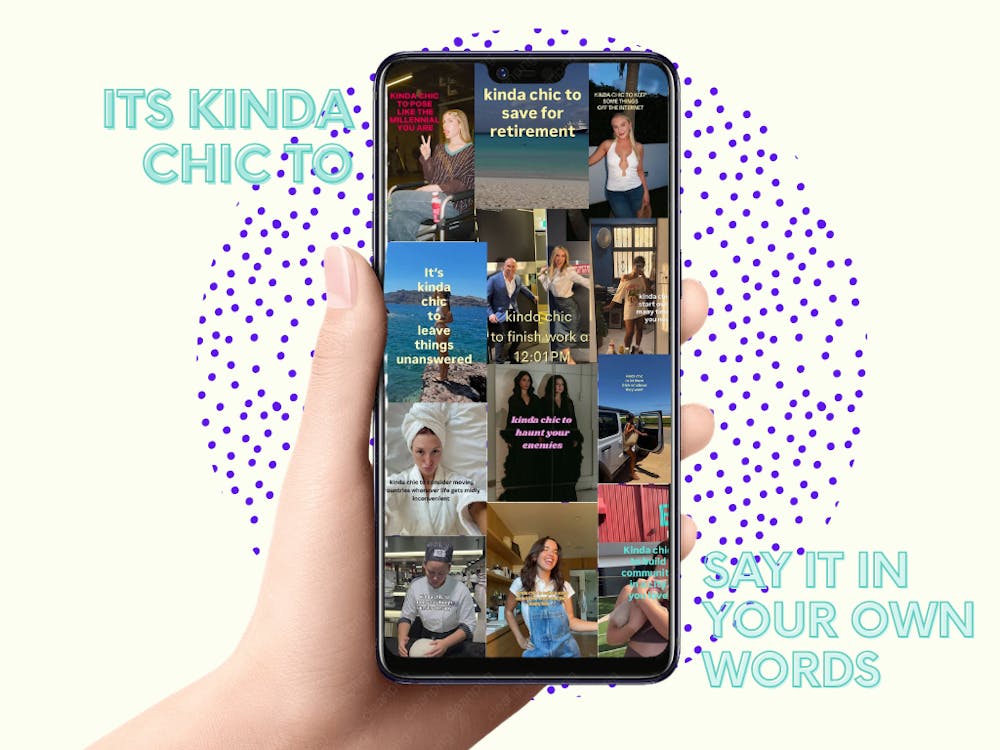
It is entirely natural for language to evolve. New slang, words and vocabulary are added to everyday dialogue, especially by younger generations.
A particularly interesting part of social media linguistics (the study of how people use language on social media) is that much of it is created by younger generations to build a group identity separate from older generations. Everyone wants to be individual, but we do it together.
However, the negative of using fast-changing “viral” slang is that the meaning of the words that have been altered becomes watered down. The best example of this is “it’s kinda chic to…,” a new phrase popularized by a TikTok trend. The word chic originally was used to mean elegant.
There’s nothing wrong with using chic as a way to embrace your different traits that might be frowned upon, but once everyone is chic, no one is.
Social media algorithms are especially great at creating short-term linguistic trends. Between viral content loops, set algorithms and human desire for a fast group identity, new words and phrases pop up almost too fast to keep up with.
Using these new terms consistently can dilute what the word was originally supposed to convey. Another example of this is the term “bedrot.” This is a new way of saying that lying in bed all day is a way to avoid burnout. It’s being fully inactive while awake. The use of this term turned the personal habit of excessive rest into a public and romanticized way of coping with burnout.
Using this term can conceal the underlying meaning of the word. “Bedrotting” can also be a sign of something more serious when not used in a viral and romanticized context. It can be a sign of feeling stuck, depressed or deteriorated in your own life.
There are many new social media terms of this ilk. Assimilating and using these words without understanding the underlying meanings can eventually lead to our communication feeling arbitrary.
Using these superficial sayings can drastically change how you think, how you are perceived and how you present yourself.
While using certain terms might identify you with a certain age group, it is not always your authentic personality. These borrowed terms from the internet remove the need to think about how you would actually describe a situation. Using these words is like borrowing a personality you have not built yourself. Your own personal diction is hidden behind generalized terms.
These terms can also be devoid of meaning, as they are used as widely as possible to become as viral as possible. Because these pieces of slang blow up so quickly, they also fade out of our minds just as quickly as they infiltrated them.
Enjoy what you're reading?
Signup for our newsletter
Ren Chaffee is a sophomore strategic communication major with a minor in rhetoric/writing and has a passion for writing and music. In her free time, she enjoys reading, writing, spending time in nature and hanging out with her dog.
Read More

Starting a new hobby can be expensive, but it doesn’t have to be
By Anthony Caprara | 3415 minutes ago"Though it may be daunting to begin a creative project because of the costs associated with it, Miami does a great job of providing students access to the tools they need to get crafty."


Private charity isn’t enough: The state is failing our children with cancer
By Jacob Van Riper | Yesterday"College students have to raise money for these causes because oftentimes, those in power do not help enough. These campaigns seek to spread awareness and raise money for people affected."