

A version of this column was originally published by the Oxford Free Press in print on Sept. 4.
As the 2026-27 school year began, more than 3,000 lawsuits had been filed by individuals, families, schools, states and federal courts across the U.S. that argued the algorithms used by companies like Meta, which owns Facebook and Instagram, were addictive and dangerous.
At one trial, a former Meta engineering director testified the company “consistently prioritized profits over safety in designing its products, focusing on how often and for how long people used them, even if it was detrimental to their well-being,” according to an Associated Press article.
The New York Times reported that most of these lawsuits “accused the companies of knowingly creating sites that were as addictive as cigarettes, taking a page from a strategy used against Big Tobacco in the 1990s.”
For years, Facebook, Instagram and other social media have hidden behind Section 230 of the Communications Decency Act, legislation passed in 1996, when fewer than 25% of us were even on the internet. That law once protected social media companies from liability for any content their users posted. Not anymore.
On Aug. 10, a federal appeals court ruled that “Meta, Google, TikTok, and Snapchat cannot use Section 230 to escape lawsuits over their addictive app designs,” according to the Social Media Victims Law Center.
So Meta caved, settling a consolidated lawsuit “with 47 states, the District of Columbia and U.S. territories, agreeing to pay up to $17.1 billion in penalties and make major changes to its products over claims it endangered children with addictive social media platforms,” the New York Times reported.
Meta also settled a similar but separate case for $1 billion with Texas. New Mexico had already won two settlements earlier this year, totaling nearly $1 billion.
Florida’s attorney general believes the settlement isn’t large enough, given the damage done by social media addiction, and continues to litigate. Meta still faces lawsuits from families and school districts, many over invasion of privacy issues.
The state settlements will be disbursed over a 10-year period based on a state’s population. Ohio is included and will receive $319 million. The money is intended primarily for teen mental health initiatives and youth online safety programs.
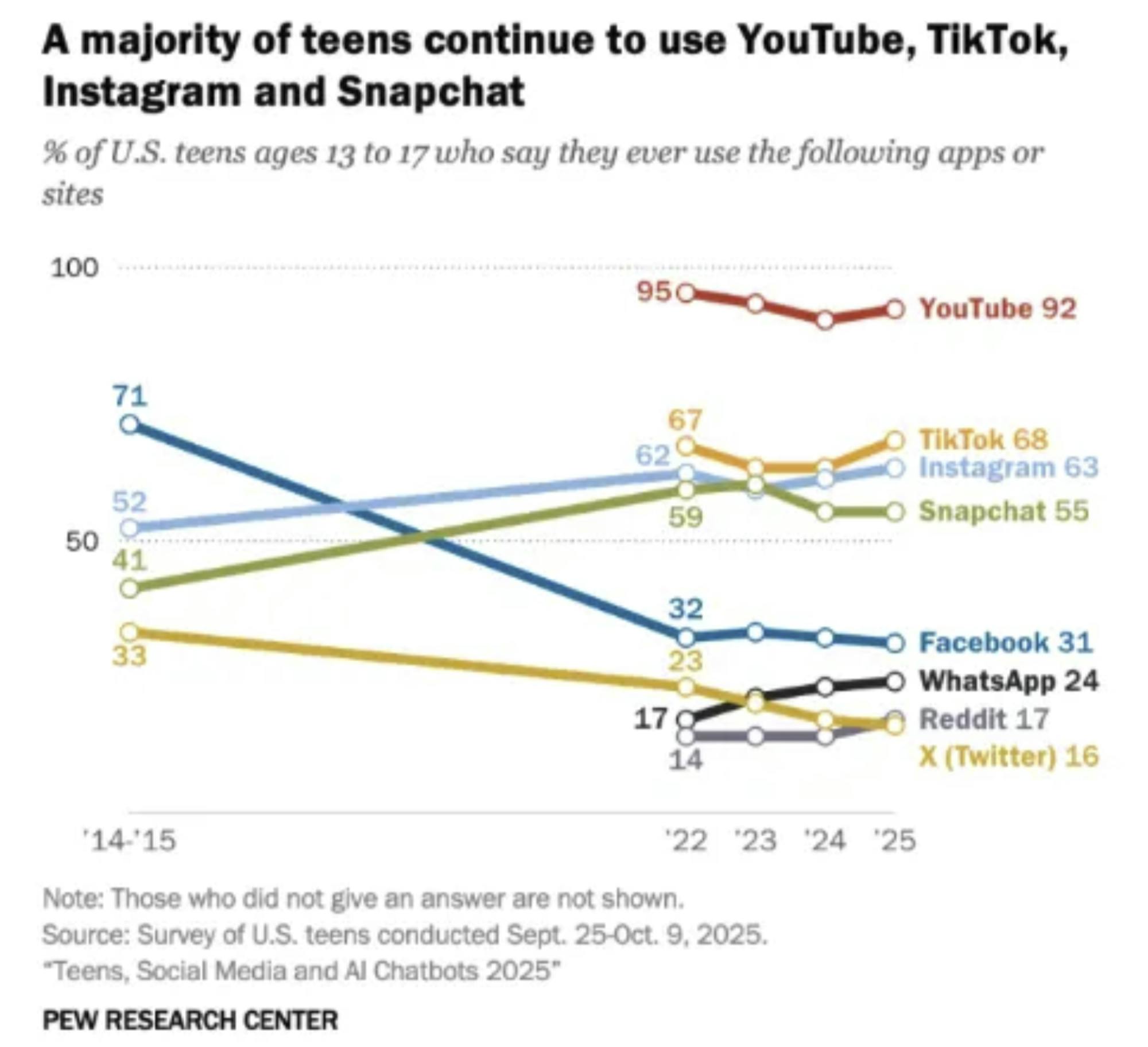
The settlement has forced Meta to make major product changes that will interrupt “endless scrolling” and impose time limits on Instagram and Facebook visits. Meta will also limit use between midnight and 6 a.m., and silence notifications during school hours — although many U.S. school systems already ban cell phones in classrooms.
Enjoy what you're reading?
Signup for our newsletter
The Times also reports that the company will “limit features that psychologists link to negative social comparisons, such as beauty filters and a tallying of the ‘like’ button clicks.”
Meta also said it would contribute an additional $5 billion if Snapchat, TikTok and YouTube also settle with the states in a similar manner. Meta wants to ensure the safety measures it puts in place become industry-wide standards that other social media sites must also implement, so no company would have a competitive advantage.
After Meta settled the lawsuit, its stock price rose. In the last quarter alone, Meta earned $60 billion in revenue.
Meanwhile, YouTube, which Google bought in 2006 for $1.65 billion, remains by far the most popular of all social media sites. It is also named in over 3,000 lawsuits. So far, YouTube has lost one major lawsuit filed by an individual and is still settling others case by case.
Charges against YouTube by both individual families and school districts cite the platform’s “recommendation engine, autoplay, and engagement-driven design … calibrated to keep minors watching, and that compulsive use contributed to sleep deprivation, anxiety, depression, and academic harm,” according to a post on Lawsuit Informer. Google earned $120 billion in the last quarter, including $11 billion in ad revenue from YouTube.
In rare bipartisan actions, more than 20 states have legislation targeting social media companies at various stages. Some states are requiring parental consent for minors under 16 or 18 to create social media accounts. Others are proposing to restrict algorithms that promote addictive behaviors. Some are considering holding social media accountable for mental health problems related to their platforms. Other state lawmakers have proposed funding studies to better understand the effects of social media on youth mental health.
At the federal level, U.S. Senators Marsha Blackburn (R-Tenn.) and Richard Blumenthal (D-Conn.) released the following statement on Meta’s capitulation: “This massive settlement shows how terrified Meta and Mark Zuckerberg are of accountability in open court. We applaud the bipartisan coalition of state Attorneys General for forcing Meta to start paying a real price for the harm its products have caused an entire generation of young people. The product design changes imposed under this settlement are a first step toward giving kids and parents the tools they need to take back control of their online lives, but they can be strengthened. Meta notes that these terms are only required to stay in place for 10 years—we must ensure permanent change. We also need safeguards that apply across the board—to all social media companies—not just Instagram and Facebook.”
Blackburn and Blumenthal are the lead sponsors of the bipartisan Kids Online Safety Act, “which would provide kids and parents with better tools to protect themselves online, hold Big Tech accountable for harms to kids, and provide transparency,” according to the same statement.
This legislation has 76 Senate co-sponsors and passed in the last Congress with a 91-3 vote.
Richard Campbell is a professor emeritus and former chair of the Department of Media, Journalism, and Film at Miami University. He is also a co-founder of the Oxford Free Press.
Read More

A love letter to Almaty: Memoirs from Kazakhstan
By Olivia Rush | Yesterday"I achieved my goal, surpassing my anticipated milestones in all testing categories of reading, speaking, listening and phonetics. Yet, I accomplished these feats in a much different way than I had anticipated."

More than supplemental readings: Students aren’t meant to teach themselves
By Kenzi Perkins | Yesterday"Don’t get me wrong, I understand the importance of supplementary readings — they’re an extremely helpful resource to add deeper context to a professor’s instruction — but it’s a different story if the chapters alone are the source of our education."

Fan base vs. fandom: The gendered difference
By Layla Norris | 2 days ago"Why can men slip free from societal judgement, but every movement of young women is scrutinized? These girls are not ridiculous or hysterical — at least, not any more than their male counterparts are."