
A Nike shoebox, painted black and covered with various stickers (mainly Harry Styles-themed ones), sits on the top shelf of my closet in my childhood home.
It’s filled to the brim with movie tickets, Post-it notes with long-ended tic-tac-toe games, birthday party streamers and even my fake corsage from a high school homecoming dance. I call it my memory box. Every single thing that crosses my path and I believe is sentimental goes in this box.
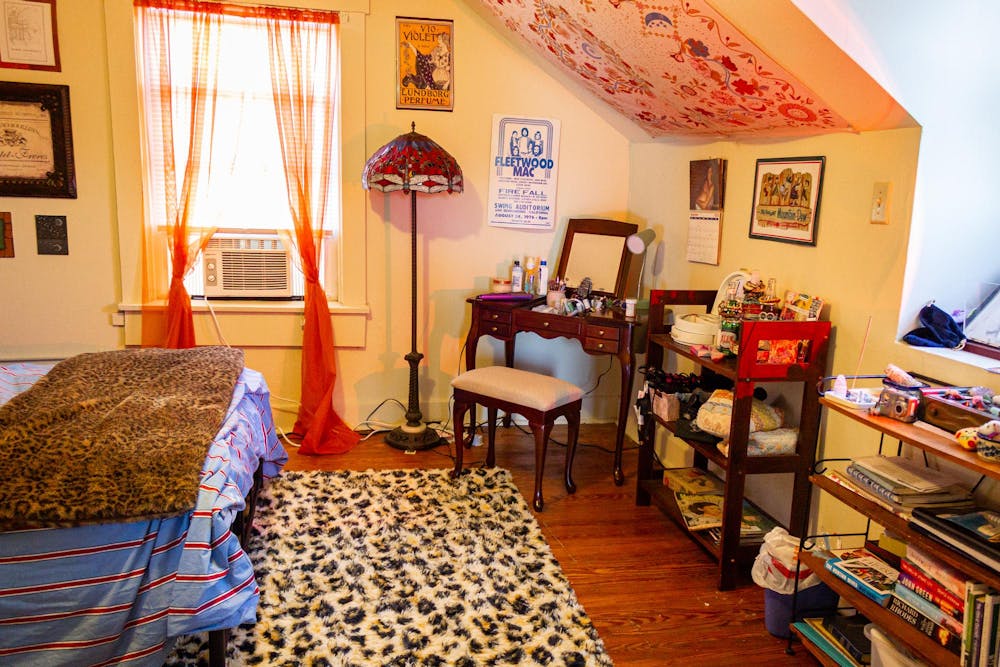
Before the box, though, I pinned these sentimental artifacts to my bedroom walls. Posters, tapestries, photo strips and polaroids still cover all four walls from floor to ceiling.
I surround myself with reminders of my life’s sweeter moments. Every item taped to my wall or tucked in that shoebox reminds me of a fond memory. In a world where everything seems negative, especially online, these reminders are vital.
Lately, I cannot be on social media for more than 10 minutes without seeing a post about the “clean girl aesthetic” or “minimalism.” This consists of neutral colors, “no-makeup” makeup, extreme organization, slicked-back hair and an overall polished look with absolutely zero clutter.
Now, I don’t want to bash anybody’s lifestyle — everyone is entitled to live the life they desire. All I’m saying is Kesha would be extremely disappointed in us. Our generation grew up watching celebrities with big hair and messy eyeliner cause crazy online scandals. Now, people steer away from this and have lost touch with their carefree side.
The minimalist lifestyle seems sad and boring. I understand it allows for breathing room — the cluttered maximalist life can stress some people out. Yet a huge difference lies between maximalism and messiness. Maximalism is about intentional clutter: Filling a space with colors, patterns and memories cultivates a personalized place of belonging.
Psychological studies show colors can impact mood, and warmer hues, usually associated with maximalism, are proven to stimulate energy and happiness.
Self-expression sits at the very root of maximalism. This lifestyle allows for freedom and joy. Rules do not exist, and anything goes. Collecting items that have meaning and remind you of the happy parts of life can bring immense joy.
However, a line must be drawn to place limits on the maximalist lifestyle. It can be a slippery slope, one that could quickly descend into hoarding. I am in no way advocating for this. Clutter can exist without becoming dirty and a hazard.
Maximalism also does not call for overconsumerism. Holding onto sentimental items and collecting meaningful clutter is okay. Numerous ethical ways to decorate maximally exist: Visit thrift stores, estate sales, auctions or yard sales. Keep a decoration a friend or family member intends to throw away.
Maximalism isn’t buying the newest viral product that will end up in a landfill in five years anyway.
Enjoy what you're reading?
Signup for our newsletter
In the past few years, a revolution occurred online, and everybody now strives to be clean, shiny and aesthetically pleasing. So much effort is put into trying to seem effortless, but we should allow ourselves to be messy.
Keep things that have meaning. Pin them on every wall, tuck them into journals or boxes or slide them in a wallet. Life should be filled with reminders of the happy moments.
Layla Norris is a sophomore double majoring in political science and professional writing, with minors in history and human capital management and leadership. Alongside writing for The Miami Student, she is involved with Kappa Alpha Pi and RedHawk Radio.
Read More

TMS Culture Class Outfits
By Layla Norris | 3400 minutes agoThe most stressful part of a day can be deciding what to wear. You need something practical while still looking put together and somewhat stylish.


Desire paths: distracting or something deeper?
By Maureen Wilson | Yesterday"There’s a certain allure to human-made trails, especially if you already see other students using them. It’s not too dissimilar from why we jaywalk so frequently: We have somewhere to be, and if that means breaking out of conventions a bit, so be it."