
Imagine a world where Miami University’s six-week long winter break didn’t fall in the winter at all, and was instead placed in September. Instead of having a project due in the fall, your professor schedules an important presentation on December 25.
How does this impact your holiday plans? Will your family gather without you?
Maybe you’re an out-of-state student or international student. Will you get accommodations to miss the presentation? How does that affect your ability to study?
For many students on Miami’s campus, this isn’t a hypothetical line of questioning. For students of non-Christian faiths, this is a reality that is addressed every school year.
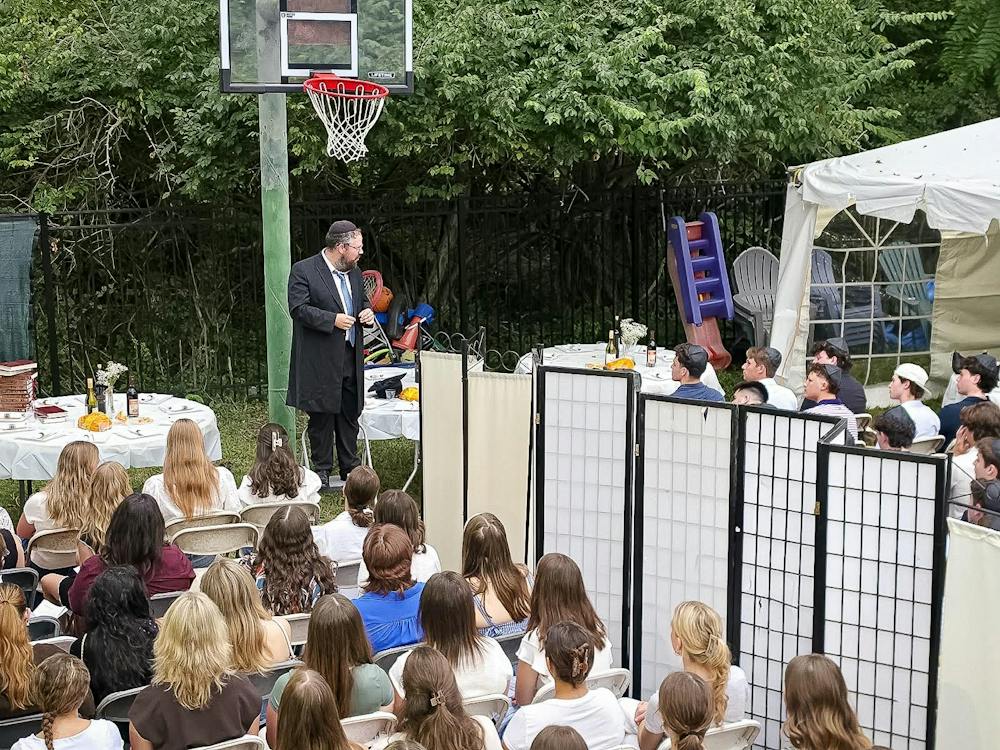
Abby Zahl is a senior social work and women’s studies major. She’s also Jewish and a co-president of the Chabad Student Board. Chabad is a Jewish-faith organization on campus. She said coming to Miami was somewhat of a culture shock.
“I’m from New York, and we had off on Jewish holidays, public schools had off,” Zahl said. “I never had school on Rosh Hashanah or Yom Kippur, but that’s not the case here. We do have classes, and it’s definitely difficult, especially on Yom Kippur.”
Enjoy what you're reading?
Signup for our newsletter
Yom Kippur is a High Holiday in Judaism, often considered the holiest day of the year and a time for atonement. Part of that atonement is a fast, where practicing Jews do not eat or drink for roughly 26 hours.
While difficult, Zahl said that teachers are usually very respectful about the day and let students take it off.
Other religions also have holidays that include fasting. In Islam, the holy month of Ramadan is observed with a fasting period that lasts from sunrise to sunset over the course of 29 to 30 days.
Mohsin Chheena is a cybersecurity management major and the president of the Muslim Students Association (MSA).
“[Ramadan] is always a struggle because part of it is we’re waking up early to have our last meal before we fast for the rest of the day … often before 6 or 7 a.m,” Chheena said. “Your day starts an hour before it should, and you have to be awake the whole time.”
Chheena is originally from Pakistan, and he said that while he attended school there, he would be let out from classes around 11 a.m. He could then sleep before breaking his fast after the sun went down.
Beyond the physical demands of certain holidays, students of non-Christian faiths must also navigate the emotional toll that comes with being apart from their families or simply living in a place where their religious experience is not the majority.
“Family is a huge part of all the holidays we celebrate, and we try our best to make sure that our [MSA] community feels like a family, but of course, it’ll never replicate the actual families that these people have,” Chheena said. “Personally, I’d say it affects me mentally as well, but it’s almost like the fact you have school masks it a bit. It forces you to think that there isn’t anything too different happening.”
Zahl had a similar experience, but said she does enjoy attending religious services at Miami.
“We can’t just go home, and that’s very difficult, but coming to services here feels like home,” Zahl said. “I personally enjoy services here more than I do at home. They’re a lot more fun here, and [Chabad] always makes it so elaborate and enjoyable.”
Some students, like Harshini Ramesh, a senior pre-med psychology major and member of the Hindu community, don’t notice the difference at all.
“I’m from California, so I wouldn’t have gone home anyways,” Ramesh said. “I’m not going to fly home for the holiday in particular.”
She said that while she was used to having Diwali, a multi-faith festival of lights, off as a public holiday, she doesn’t really notice a difference here because Miami doesn’t give off for other traditional public holidays, like Presidents’ or Indigenous Peoples’ Day.
If a student wants to take off for religious purposes, they are allowed to do so per Miami’s official attendance policy. It requires a written notice at least one week before the requested absence.
All students interviewed said they had no problems with this policy, but that doesn’t mean they all take it.
“I find it just like it’s not worth it for me [to take off] because the only reason I would take it off is if [I were fasting],” Ramesh said. “My parents never encouraged me to take the days off because we have more holidays than just Diwali.”
For Chheena, it’s more of a practicality issue.
“They’re required to give you the days off, but I always felt like it is putting me at a disadvantage because you know the people are going to be in class and I won’t be, and if that’s the case, then that implies that I’m going to be missing something,” Chheena said. “I appreciate the fact that [accommodations are] there and they’re a lifesaver for a lot of people. But you still feel almost excluded to an extent because you know everyone else is in class and you’re not.”
Regardless of when the holidays are, all students recognized the importance of celebrating as a community.
“On Eid, we partnered with MU Dining to have an Eid event at Western Dining Hall,” Cheena said. “All the Muslim students got to eat for free, and they got to try local dishes.”
Other MSA events included organizing daily prayers and Iftar, the time to break fast during Ramadan.
The Indian Students Association, which Ramesh is the president of, organizes festivals that include the diverse faiths of Indian students, encompassing Hindu, Sikh, Jain and Buddhist traditions, to name a few.
Chabad, and other Jewish organizations on campus, help provide a sense of community during the holidays through both religious and secular means.
For Alex Blitzer, a senior marketing major and vice president of the Chabad Student Board, it’s all about remembering what’s important on the holidays, despite the rush of school.
“No work done on the holidays is good work. You know, you’re supposed to take off. … That’s what my grandparents always told me, at least,” Blitzer said. “You know, you’re not supposed to work on Shabbos. Not supposed to work on the holidays. That won’t be productive work, and yeah, I really believe that, and I really, really appreciate Miami’s inclusion of all of us, and just love for everyone from all walks of life to enjoy the holidays.”
Read More

Game day diets: foods and sports associations
By Ren Chaffee | 3 hours agoEating food and watching sports go hand in hand. While you are sitting back watching athletes work up their appetites, you might as well join in and get a snack.

A rivalry close to home: Grant Lyons reflects on Battle for the Victory Bell
By Jacob Light | YesterdayFor Miami University senior defensive lineman Grant Lyons, the Battle for the Victory Bell has always been close to home.

Oxford police respond to overdose, racial slur vandalism and fake IDs
By Austin Smith | YesterdayBetween Sept. 7 and Sept. 14, police officers responded to 23 incidents, according to the Oxford Police Department report.