
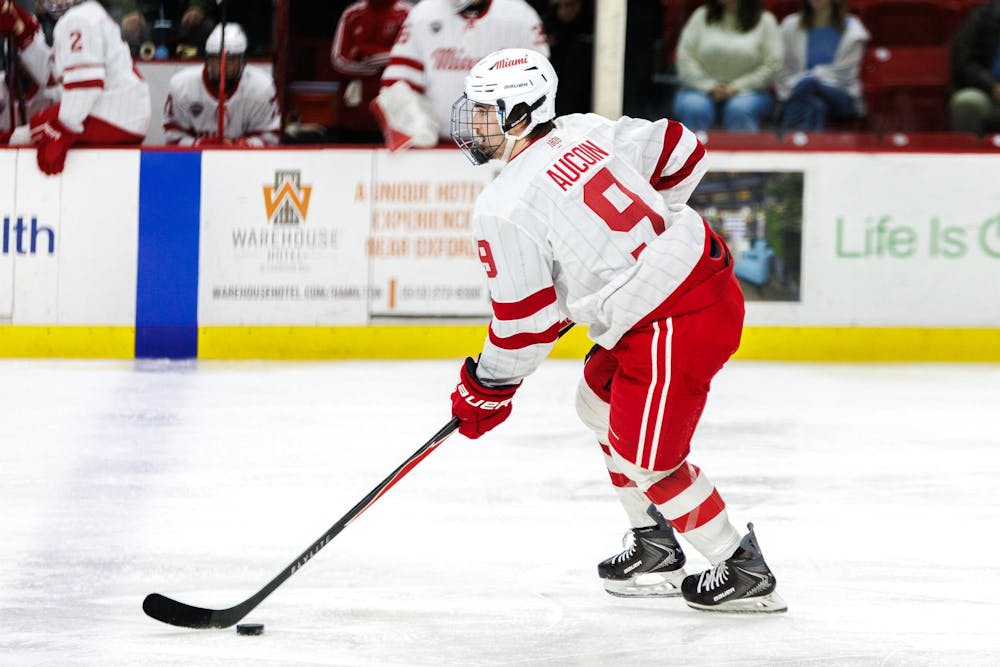
Kyle Aucoin’s mental health story piqued with the pop of a shoulder. But it was long before that when issues began. During his time in the United States Hockey League (USHL), Aucoin struggled to move away from home and begin his future with a brand new set of faces surrounding him.
At the same time, there was the other side of the equation: his head coach, Anthony Noreen, needed to find a way to help Aucoin while also staying focused on leading a team of kids toward winning a championship. When Aucoin walked into his office to deliver the news that he wanted to be traded, it was already too late for Noreen to change his mind.
“[The trade request] caught me from left field,” Noreen said. “Having said that, you want players who want to be there. I thought the world of Kyle. I think there are certain times when you move a guy and you don’t want to see him again or there’s a falling out, but it was never that way between Kyle and I.”
Noreen’s regret came from wishing he had handled the situation better as the adult in the room. After all, Kyle was just 18.
But while he didn’t keep in touch with Kyle in the USHL or in college, he always kept tabs on him, believing their paths would converge once more.
After playing 19 games with the Storm and tallying three points, Kyle packed his bags and headed back to Chicago. He left Kearney and his teammates behind while he waited for a new home to continue his career. He practiced with his brother’s team for around a week before the trade request was processed, sending him to the Muskegon Lumberjacks. There, he would get to know plenty of future college hockey players, including future Harvard teammate John Faranacci.
At the time of the trade, the Lumberjacks were playing in Chicago against the city’s USHL team, the Chicago Steel. Instead of a nervous bus or plane ride to an out-of-the-way destination, it was an anxious car ride to the rink, which reminded him of his playing days with the Chicago Mission.
Even after his first game with the team, it still didn’t feel real that he was no longer with the Storm. He tried to settle in as best he could over the rest of the season, but that felt impossible for a kid who still had lots to learn.
“It was just so much for me,” Aucoin said. “I was with a new squad, and it all happened so fast. It was a pretty crazy experience.”
In the final 28 games, he recorded one goal and nine assists for his new squad — the best per-game production of his entire USHL career. He also played four postseason games with the Lumberjacks, registering an assist, which concluded his time in junior hockey. The experience was formative for him, but also one that he looks back on with a tinge of regret.
After his production jumped with Muskegon, it was time for Aucoin to finally head to Cambridge, a place he had dreamed of playing at ever since committing there four years prior. Surrounded by Harvard attendees — those with success in fields like law, banking and technology — he realized something important: He had the same kind of passion inside him, but for hockey. He knew that was where he wanted his life to lead him.
While his first two seasons at Harvard were filled with more ups than downs, the end of the road for Aucoin in the Ivy League was not as glamorous.
Enjoy what you're reading?
Signup for our newsletter
Aucoin’s freshman season was one of realization and adjustment. He played in almost every game, but there was still the wow factor of playing Division I college hockey for the nation's most prestigious Ivy League school. The game’s speed and skill were like nothing he had experienced before, and those ran parallel to adjustments he had to make in the classroom.
After an offseason of training, Kyle knew his goals for the upcoming season and accomplished them to the best of his ability. He played a consistent role, attended NHL development camps and did his best to put himself on the radar of those in professional hockey. But everything came to a halt when, before the postseason of his sophomore year, Aucoin experienced the first physical and mental setback of his college hockey career.
It was like any other day, heading to the rink for practice. Kyle put on his pads and skates, followed by his jersey, helmet and gloves. He exited the locker room and grabbed his stick, marked with white tape on the handle and the blade, and hit the ice.
After warming up with some shots and a couple of exercises, a drill began, pitting teammates against each other. Heading into the boards during the drill, Kyle felt his skate come out from under him, and he hit the deck and the boards hard. His ankle took the brunt of the force, requiring him to exit the ice in a heap of pain.
The news was not good: Kyle had busted his ankle and would be out the rest of the year.
Not only did the injury keep him out of the lineup for the most important games of the season, but it also put him behind in offseason training. Considering the mass exodus of NHL draft picks from the roster, the injury didn’t help.
Matt Coronato, Faranacci, Sean Farrell, Alex Lafferiere, Joe Miller, Ian Moore and team captain Henry Thrun were the top seven scorers on the team in the 2022-23 season. But by the start of the next season, five of the seven had left to play professionally, leaving a massive hole for other players to fill and for the program to recover from.
“We could have been down 3-1 going into the third [my sophomore year], it could have been against a good team, but we were probably still going to win, and I think that affected us negatively when we lost all those guys,” Aucoin said. “We could get away with it, but now, we needed to play a whole different style of game.”
The changes in the program coincided with the beginning of negative shifts in Kyle’s mental health. Thoughts began to creep in that weren’t there before. Feelings started to manifest in his body in ways that didn’t allow him to sleep or study well. So, after some deep thought and conversations, he figured it was time to seek outside help and began talking to an old acquaintance he had made with his father in his days with the Mission — Matt Calderoni.
Calderoni was never with the Mission specifically, but he had run into Kyle before he moved to play juniors. He, his brother Chris and their company, Molliteum, were the Steel’s “resilience coaches” and still are the go-to for the program. As soon as Aucoin began working with Matt Calderoni, he knew there were significant pieces of his life and routine that needed to change.
Aucoin returned to the ice from his ankle injury in the summer between his sophomore and junior years with a new spark. Physically, he felt strong, and mentally, he was overjoyed to be back skating again. However, a required groin surgery set back his timetable once again, and the frustration began to seep back in.
Nonetheless, the first seven games of Aucoin’s junior season went by as normal as any other year, even with a slightly later start due to recovering from his busted ankle. He registered an assist and his only point of the season in a game on November 24 against the University of Massachusetts. He earned a 6-5 loss for the Crimson and would play one more game against third-ranked Boston College on November 26 at Bright-Landry Hockey Center before his season-ending injury at Clarkson on Dec. 1.
That night in Potsdam, he exited the ice sweaty and in a world of pain. He waited for the X-ray and test results in silence, hoping for any sort of good news, but his shoulder screamed at him to think differently. But there wasn’t any. He was told he wouldn’t play the rest of the season.
He wept.
He wept until there were no more tears to cry. He soaked the shoulder of his trainer, Andrei Tarsici, and didn’t know what else to do but shower in pain and get dressed back in his street clothes to see his family after the final buzzer finally sounded.
He had hit rock bottom.
Read More
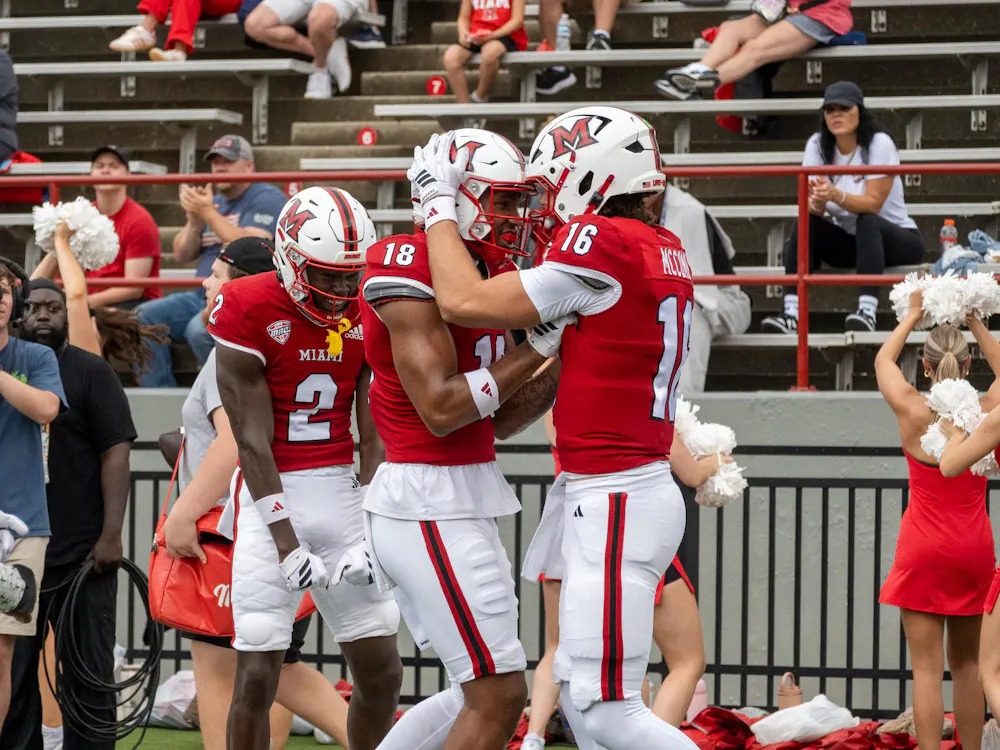
Miami dominates Holy Cross for first with of the 2026 campaign
By Cooper Meneghetti | 6 hours agoThe Miami University football team (1-1) defeated the College of the Holy Cross Crusaders (0-3) in a convincing 45-7 fashion.

Meet the Columnist: Karma Abboud
By Karma Abboud | 3 days ago"While I still love creative writing, creating opinion articles for The Miami Student is not just a hobby or coping mechanism: It allows me to share my thoughts confidently with the Miami community."
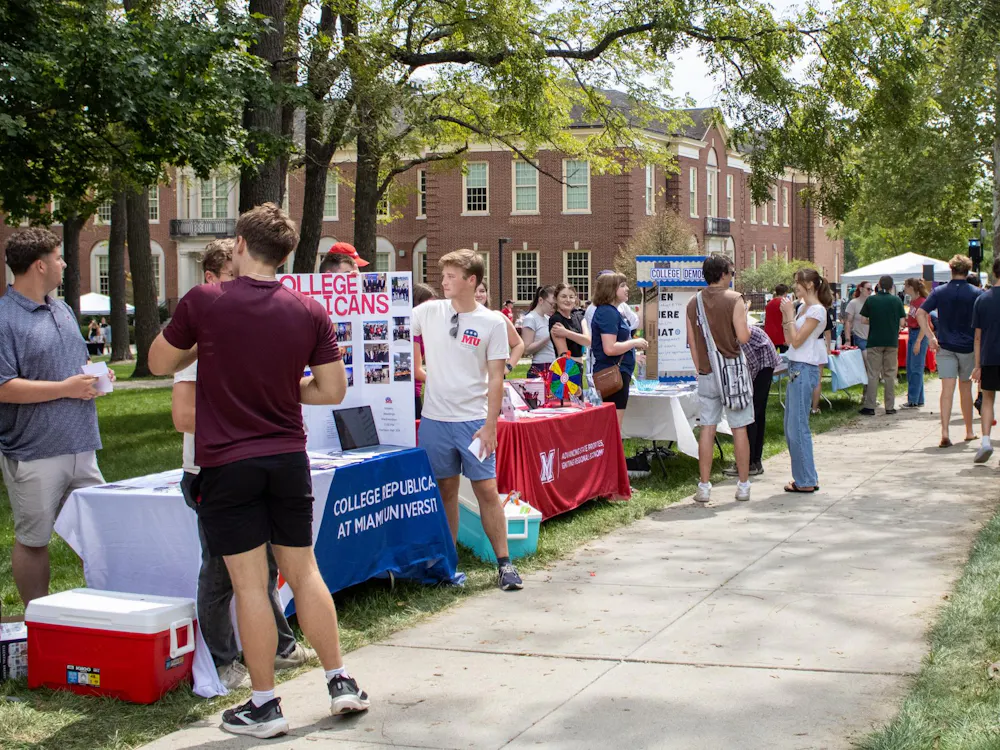
Agree to disagree: Debate club fosters inter-club dialogue
By Elisa Rosenthal | 3 days agoThe Miami University (MU) Debate Club is preparing for its second annual College Democrats and College Republicans debate. This bipartisan event drew 800 people last November, a total far exceeding the 500-seat space.