
Imagine yourself after a long day of classes worn out and wanting nothing more than a shower to wash the day away. Towel slung over your shoulder, you grab your caddy and flip-flop down the hall to the communal bathroom. To your delight, it’s empty.
You pull the curtain back, excited to have first dibs. The joy only lasts a moment, though, as you’re met with patches of black mold clinging to the walls as a sort of morbid wallpaper. You won’t feel very clean after this shower.
Miami University requires full-time first and second-year students to live on campus as a way to provide a sense of community and a comfortable and safe environment as they familiarize themselves with their new home. As someone who knew no one on campus for some time, this was a welcome directive, and I was eager to experience dorm living.
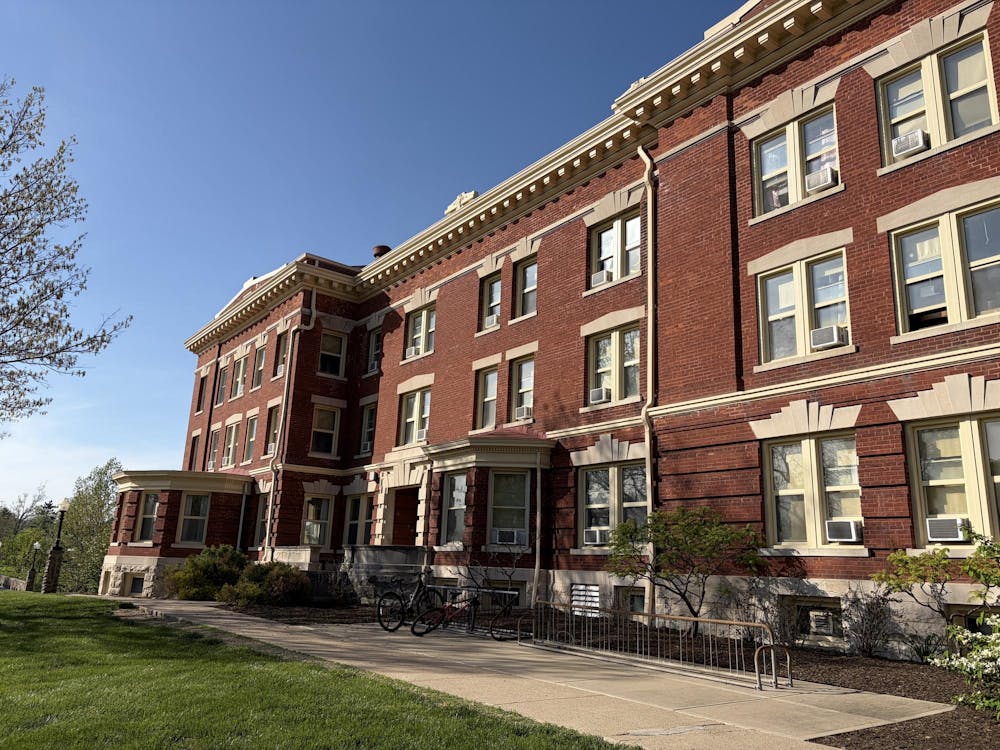
Sharing a bedroom with a stranger and a bathroom with 20 other random girls was something I’d expected, but there was one uninvited guest that completely caught me off guard: the mold living in our showers. For my first couple of months living at Hahne Hall, things were great — or as good as dorm living can be, anyway. In October, things took a turn for the worst when my hallmates and I began to notice black splotches spattered around our bathroom. By January of this semester, both the showers in our wing were rife with mold.
I can understand there are a lot of bathrooms to keep clean across campus; I can deal with hair in the drain and miscellaneous bottles of shampoo littering the ground. But mold is something no one should have to live with.
If you were to ask students around campus if they’d like to take a moldy shower, the answers would almost certainly all be no, and understandably so; it feels dirty, and no matter how much soap you use, you’re probably not going to feel fresh. Showering with mold is uncomfortable, but the grimy green substance can do so much more than just make you feel unclean.
According to the CDC, living with mold can cause all sorts of damage to your health: coughing and respiratory issues, weight loss, itchy and watery eyes, rashes and so much more. I’m not the only one coexisting with mold, and it’s showing up in more places than the nooks and crannies of showers in Hahne Hall. Alana Molnar, a fellow first-year student and business major, fell victim to mold that developed in her air conditioning unit.
“We have air conditioner units [at McKee], and we noticed a few months into last semester that there was mold inside of ours,” Molnar said. “My roommate and I had been constantly sick for like two months.”
She and her roommate, both of whom have preexisting health issues, were extremely concerned and hoped to amend the situation as soon as possible. Unfortunately, Molnar said it was another four weeks before anyone was able to replace the unit.
No student should have to experience the symptoms of mold sickness, especially in a place that signifies a safe and new beginning. This begs the question: If Miami University is going to require students to live in their housing and pay thousands of dollars to do so, why aren’t they making the housing livable — or at the very least, mold-free?
Enjoy what you're reading?
Signup for our newsletter
Kenzi Perkins is a first-year journalism major with a fashion minor from Somerset, Ohio. She is a staff writer for The Miami Student in both the Opinion and Culture sections. She is also an active member of the Miami University Chapter of Delight Ministries.
Read More

The Berry Bar is shaking things up on High Street
By Kaitlin McDowell | 1 hours agoIt's a high 70-degree Sunday in Oxford, one of the first of the spring season, and I find myself craving something cold, refreshing and, most importantly, nutritional. Historically, this would’ve been hard to find for students around Oxford, where Uptown is known for its assortment of bars, sandwich shops and other fast-casual restaurants.However, on April 11, a new kind of bar opened on High Street — The Berry Bar.

‘No fear. No hate. No ICE in our state’: Miami’s YSDA march for a sanctuary campus
By Taylor Stumbaugh | 21 hours agoThe group of roughly 25 Miami University students and faculty marched from Cook Field to Roudebush Hall April 24 as part of their sanctuary campus campaign to protect students, faculty and staff if ICE were to come to campus.
Creating community as a minority at Miami
By Zoee Robinson | 21 hours agoOn a quiet campus Tuesday evening, Shideler Hall room 237 is anything but quiet. It’s busy with the bustle of people bouncing from table to table, excitedly catching up with friends. The room smells of cookies and Koolaide while the sound of lively gospel music fills the room.