

In eighth grade, after years of dead-end diagnoses, I was finally given a concrete list of food sensitivities to avoid. In my avoidance of these seven things, my lifelong stomach problems disappeared.
Since that fateful diagnosis, I’ve come to understand how to avoid those sensitive ingredients to ensure the intense bouts of nausea won’t hit me like they so frequently used to. Of the seven foods, corn has been the most prevalent, the hardest to avoid and has evoked the worst reactions.
I know most people aren’t avid ingredient list readers like myself, but I hope most Americans are aware of the laundry list of unpronounceable ingredients in our food and the looming threat at the top of every list: High-fructose corn syrup.
Coca-Cola, cough syrup, most cereals, ketchup, every gummy candy known to man and literally everything enjoyable in this world has high-fructose corn syrup in it. I have been a Coke Zero girl for years, and although I do enjoy the soda, I feel high-maintenance, and sometimes I just want to drink the regular version.
When I traveled to Argentina for a month-long study abroad, I worried about what I would be able to eat. You can imagine my excitement when I checked the Coca-Cola bottle on my first day there to find only pure cane sugar was used to sweeten the beverage. I drank it throughout the trip and felt less afraid and had less of an urge to constantly check ingredient labels.
The trip passed with little to no issue, but upon return, I experienced stomach pain when encountering the harsh American processed ingredients I had gone a month without. When the group of students I traveled with got together for the first time after our trip, I realized I wasn’t the only one experiencing stomach pains.
The small town called Colonia Almada, where we stayed for the majority of the trip, was surrounded by fields as far as the eye can see. Majesta Johnson, a sophomore international studies major, said the food was essentially “farm-to-table,” and it was an adjustment when she got back.
“I was sick for like maybe three days,” Johnson said. “[I] did not get out of bed. It was very bad.”
The biggest difference between the farmlands of Argentina and the supermarkets of the U.S. was the freshness of ingredients, especially meat. Gaby Hanzlicek, a junior business economics major, noticed the stark difference between deli meats that sat on shelves for days and fresh meats that were locally sourced.
“[My host family] would [get meat] that had been killed that day, it had been just freshly sliced,” Hanzlicek said. “Here I'm going to the store, getting this little box of turkey. I don't know how many preservatives there [are].”
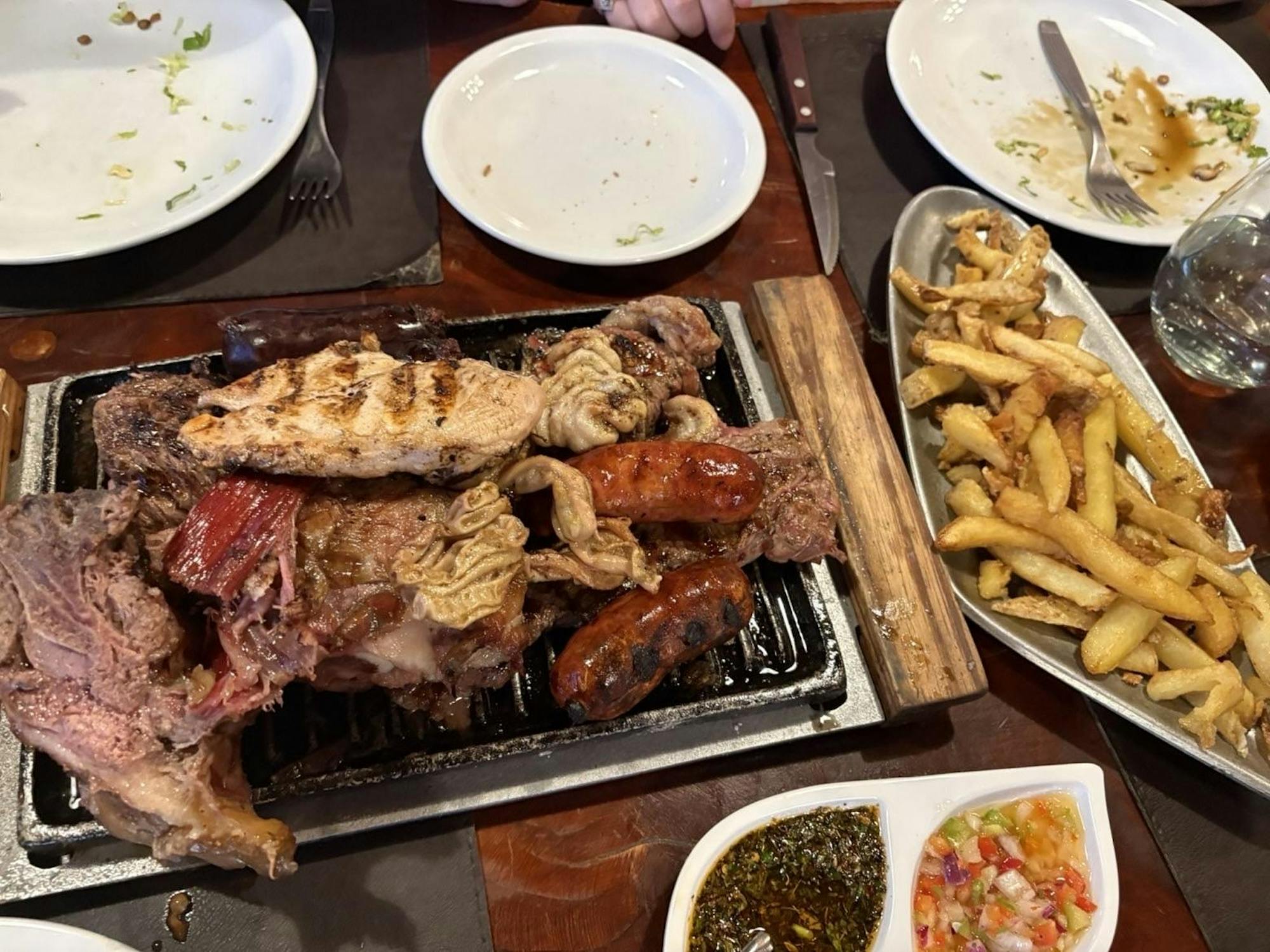
Even processed foods like snacks, cookies and chips had cleaner ingredients than the same products from the same brands in America. Liam McKernan, a sophomore psychology major, said he was surprised at the difference when he tried Doritos during the trip.
Enjoy what you're reading?
Signup for our newsletter
“It was like actual cheese flavored, not nacho cheese flavored, and the texture was different,” McKernan said. “I could tell that this chip was significantly different than the Dorito of America.”
The junk food items, like Doritos, even had warning labels printed largely on the top of the packaging. Excess amounts of sodium, sugar or calories were marked unignorably on any food with high content of these nutrients.
The warning labels are common in many other countries, not just Argentina, but are obviously missing from American products that sometimes contain even higher amounts of sodium or sugar.
The Pan American Health Organization (PAHO) governs most of the countries in the Americas, and product warning labels are a high-value issue within the organization. The U.S. is one of the only major countries in the organization that does not impose warning label requirements.
The labels have proven to cause a significant decrease in the appeal of unhealthy products and reduced purchase intentions when products are labeled to have dangerously high nutrient contents. One study from the PAHO proved consumers become 84-90% less likely to buy sugary products when they include high sugar content labels.
Argentina has also passed laws regulating the amounts of certain nutrients in food products, especially sodium. Another study from the PAHO shows sodium content in most products has decreased significantly. Only 5.8% of products exceeded the limits of the national Sodium Reduction Law.
I believe that, though the current administration has made efforts towards reducing the inclusion of several harmful processed ingredients, it would benefit the health of many Americans to see more transparency about the healthiness of our food products in a more physical way.
Warning labels ensure people know exactly what they’re putting in their bodies and allow Americans to make conscious health choices of their own autonomy. Though it won’t fix the issue of what ingredients are being included, it’s certainly a good starting point, and it encourages people to think more carefully about what lurks in those lengthy ingredient lists.
Elisa Rosenthal is a senior Spanish education major with a passion for writing and storytelling. She’s originally from Georgia and writes sports for The Student, honoring a long family love for college sports.
Read More

What happens when the world stops coming to campus?
By Vedika Kaushal | 1 hours ago"People have been traveling across borders to learn languages, study different intellectual traditions and bring new ideas back with them for centuries. That exchange is not new, and I don’t think it’s something we should lose sight of now."

Starting a new hobby can be expensive, but it doesn’t have to be
By Anthony Caprara | 3 days ago"Though it may be daunting to begin a creative project because of the costs associated with it, Miami does a great job of providing students access to the tools they need to get crafty."

Private charity isn’t enough: The state is failing our children with cancer
By Jacob Van Riper | 4 days ago"College students have to raise money for these causes because oftentimes, those in power do not help enough. These campaigns seek to spread awareness and raise money for people affected."