
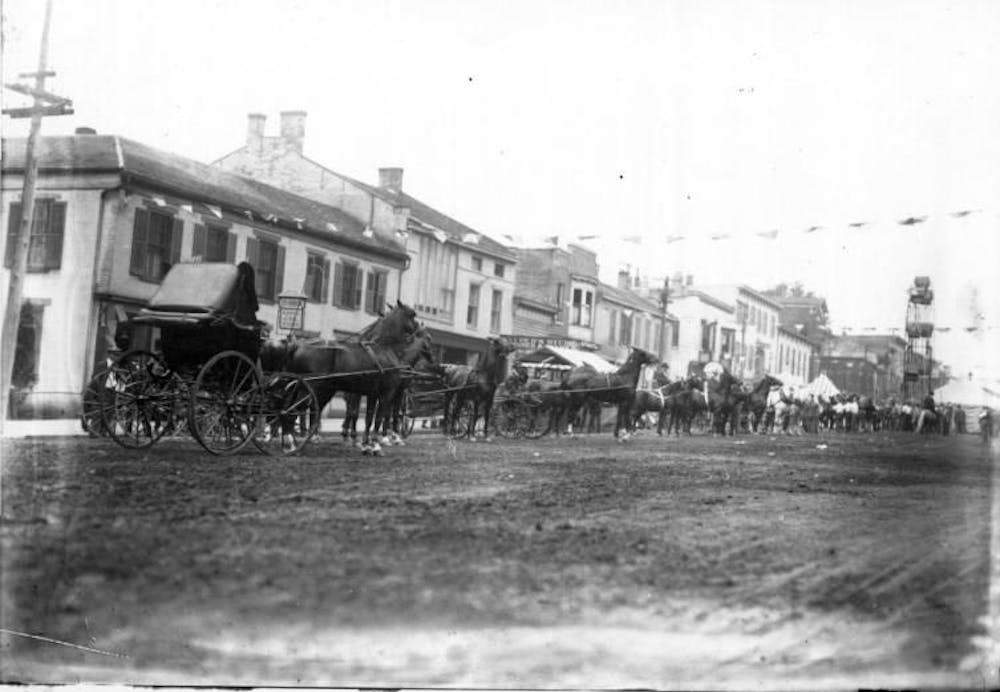
Oxford is constantly welcoming new restaurants. Between Ohana Island Grille, Sushi King and Paseano’s Pasta House, we seem to have it all. But there was a time when there were no coffee shops or late-night pizza spots. Historical information about these early buildings and businesses comes from records compiled by the Oxford Historic and Architectural Preservation Commission.
In the early 1800s, when Oxford was first established as a college town, restaurants did not exist the way they do today, and most places to dine were at inns or taverns.
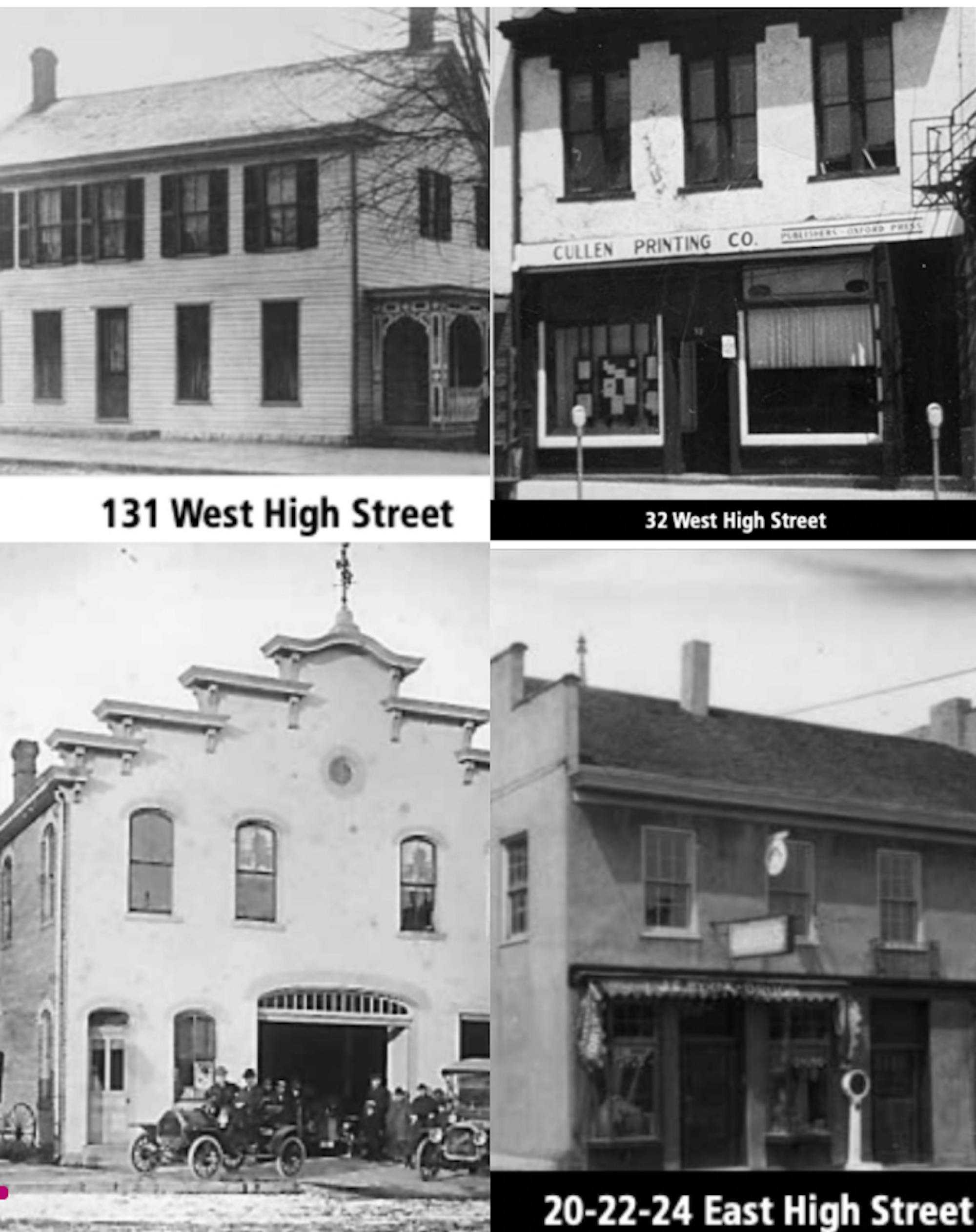
One of the most well-known early food spots was at 131 W. High St., near the corner of High Street and College Avenue. Built in 1827, this two-story building was first known as the Temperance Tavern. Later, it became Dr. Scott’s Boarding House and even hosted the 1853 wedding of Caroline Scott and Benjamin Harrison, who would become the 23rd president of the United States. Today, that historic location is occupied byCalendula, a Mexican restaurant and late-night lounge.
Another important early building was the McCullough Block at 20–22–24 East High Street. Constructed around 1818, it is Oxford’s oldest commercial building. Over the years, it housed a tavern, a hotel and a rooming house. For more than a century, drug stores occupied the building’s first floor, and at different points, it also included an art store. While it was not always strictly a “restaurant,” it was a community place where people could stay, gather and eat.
Back then, restaurants didn't have much variety and were more about practicality. Taverns served hearty, simple meals to fill people up after long days of work or travel. In the 1820s, dining out was not a social occasion like it is now. There were no shareable appetizers, no carefully-crafted cocktails and no meals chosen just because they looked good in a photo. Eating at a restaurant was about necessity, not atmosphere.
By the late 1800s and early 1900s, Oxford’s downtown began to look more like the business district students recognize today. The building at 32 W. High St. which is now Happy Kitchen, a chinese restaurant, built around 1890, gradually shifted from general businesses to dining spaces. Kofenya Coffee, 38 W. High St., was once connected to Oxford’s early horse-trading economy and later became a place for retail and food services. The building at 12 S. Beech St.,which is currently vacant and for sale, originally was Oxford’s post office and other local businesses before the DiPaolo family opened a restaurant there in 1976.
Today, Miami students can experience cuisines from around the world without ever leaving High Street. Oxford’s growing food scene allows students to explore different cultures through food and all within walking distance of campus. Oxford has restaurants like Tous Les Jours featuring French-Asian fusion pastries andChop Bento, a popular Japanese restaurant known for its popular Bento Boxes.. We even have a Chocolate Euphoria Crepe Cafe, known for its chocolate milkshakes and crepes.
Oxford started as a place with taverns and inns, but has grown to a place with over 80 restaurants and eateries, according to RestaurantsListsHQ. While the Temperance Tavern and early inns are long gone, their influence remains in the way food still brings the Oxford community together.
Enjoy what you're reading?
Signup for our newsletter
Read More

Ayla’s Adventures: Walking around medieval Bruges
By Ayla Peden | 3 days agoOn Aug. 19, the Miami University John E. Dolibois European Center (MUDEC) welcomed its Fall 2026 class. New and familiar faces huddled in a group outside the arrival gates, waiting to get a shuttle either to their new apartment or the Differdange Chateau where classes are held each week. I was among this sea of students, impatiently waiting to settle into my home for the next four months.

Dorm room digest: How to not starve this semester
By Elise Hanna | 4 days agoAs the honeymoon phase of campus life begins to wrap up, it might be hitting you that you’re reliant on the dining hall for sustenance this entire year.

Comfortable and professional: What to wear to class
By Layla Norris | 5 days agoThe most stressful part of a day can be deciding what to wear. You need something practical while still looking put together and somewhat stylish.