
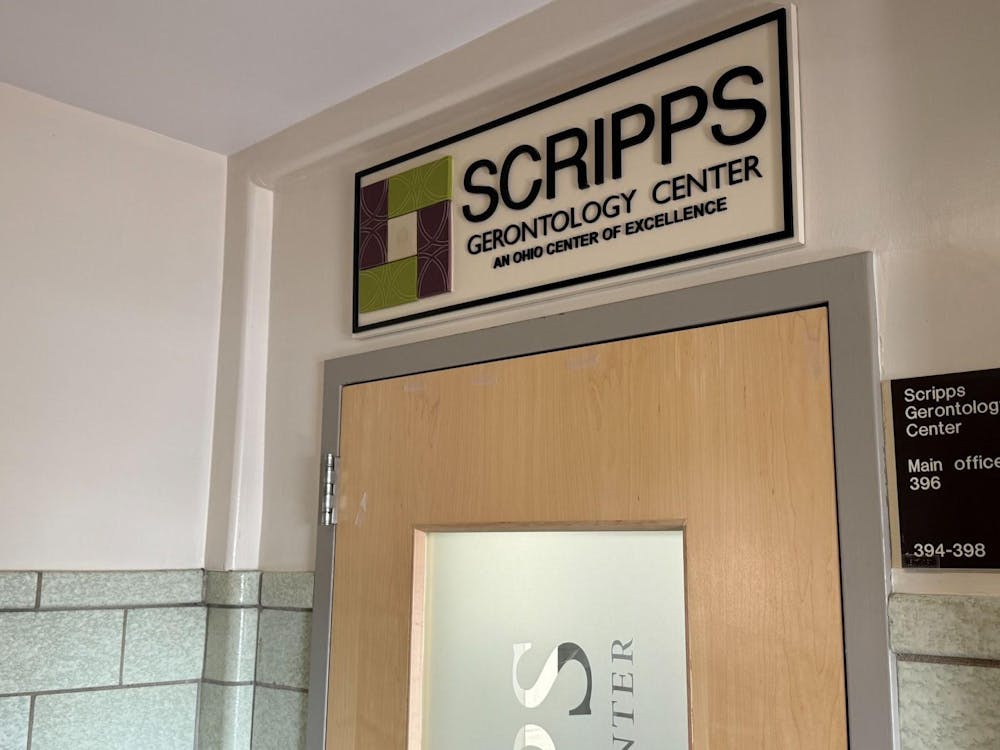
An increasing number of older adults has created a growing demand for research and professionals who not only provide care, but also understand the complex needs of older adults. Miami University’s Scripps Gerontology Center offers opportunities for students to connect their education to the captivating world of aging.
E.W. Scripps founded the Scripps Foundation for Research in Population Problems at Miami University in 1922. By 1972, with expanding expertise, the Scripps Gerontology Center was born. The organization now has 27 staff members and 19 affiliated faculty who take part in Miami's research on aging.
Katherine Abbott, executive director of the Scripps Gerontology Center, earned her master’s degree in gerontological studies from Miami. She went on to complete her doctorate of philosophy before returning to Miami in 2014 as an assistant professor of gerontology.
Abbott focuses on the importance of applied research, emphasizing the need to move beyond simply acquiring knowledge. She said she challenges the negative stigmas associated with aging and hopes to shift the perspective of what growing older means. She believes that society can expand opportunities and recalibrate systems meant to support the aging population.
“I think, at the end of the day, we could do better,” Abbott said. “There is a no-do gap. We know this is a better practice, but we’re not doing it. You can thrive in old age and have amazing old age experiences.”
She said implementation can bring the gap between knowing and doing closer together. She teaches the importance of asking questions and being pragmatic.
Enjoy what you're reading?
Signup for our newsletter
“We are trying to determine what makes our department stand out,” she said. “We want our graduates to develop curiosity paired with empathy. We have cultivated a system that is collaborative and does positive work.”
Stephan Lippman, professor and chair of the Department of Sociology and Gerontology, started working at Miami in 2005 after earning his doctorate of philosophy. Although his primary focus at Miami is in sociology, Lippman recognizes the strength of gerontology in the department.
“Miami’s gerontology department is a really distinguished one,” Lippman said. “It’s one of the best in the nation, if not the world.”
Miami no longer offers gerontology as a major due to low student enrollment, Lippman said, but the undergraduate minor and graduate program remain strong.
“I think Miami's real mark of distinction is in its graduate programs,” Lippman said. “We have one of the oldest master’s degrees in gerontological studies in the country.”
Lippman also said that the doctorate of philosophy program in social gerontology has led many students to successful careers after graduation.
Aiden Bryant, a junior biology major, said taking a gerontology course has helped him become a more well-rounded student. His “Global Aging” course introduced him to perspectives he would not have encountered otherwise.
Not only does the course offer information about aging, Bryant said, but it opens up an understanding of the global economy and how the field of gerontology affects every individual.
“There are layers to gerontology that are relevant not only to my major,” Bryant said, “but to life in general.”
Read More
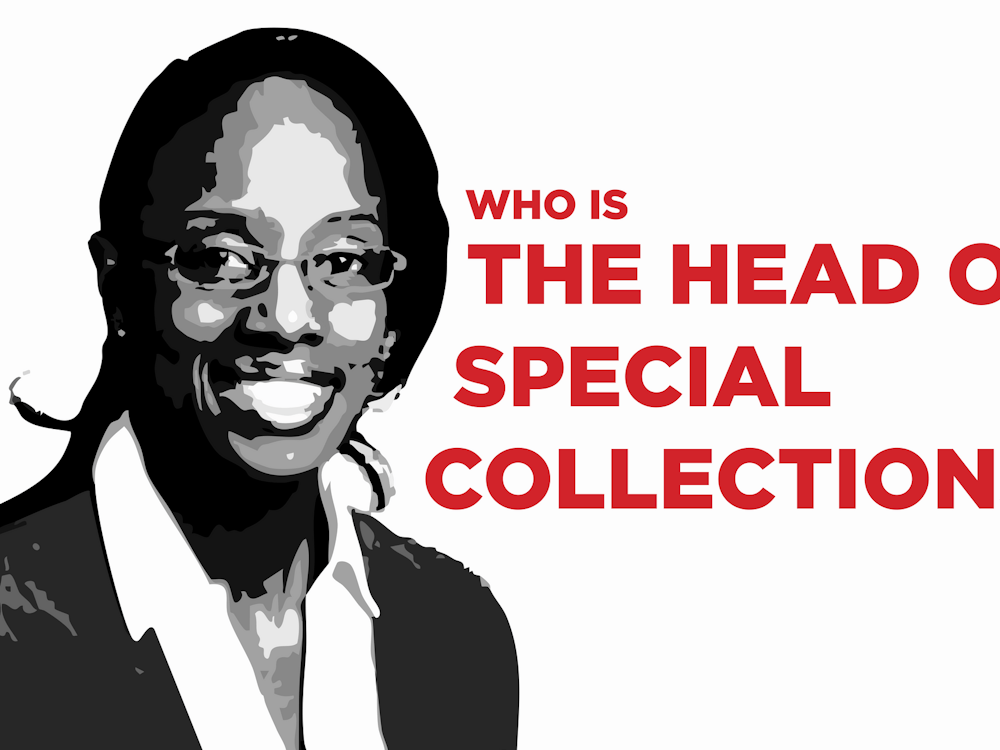
Who’s who at MU: Head of special collections
By Shannon Mahoney | YesterdayIf you’ve ever wanted to learn more about Miami University’s past, research the history of Western College or find the first copy of The Miami Student, chances are you’ve ended up at the university archives, a collection of Miami’s 217-year-long history. Behind this complex collection, one woman is at the center of it all: Jacky Johnson, head of special collections and archives.
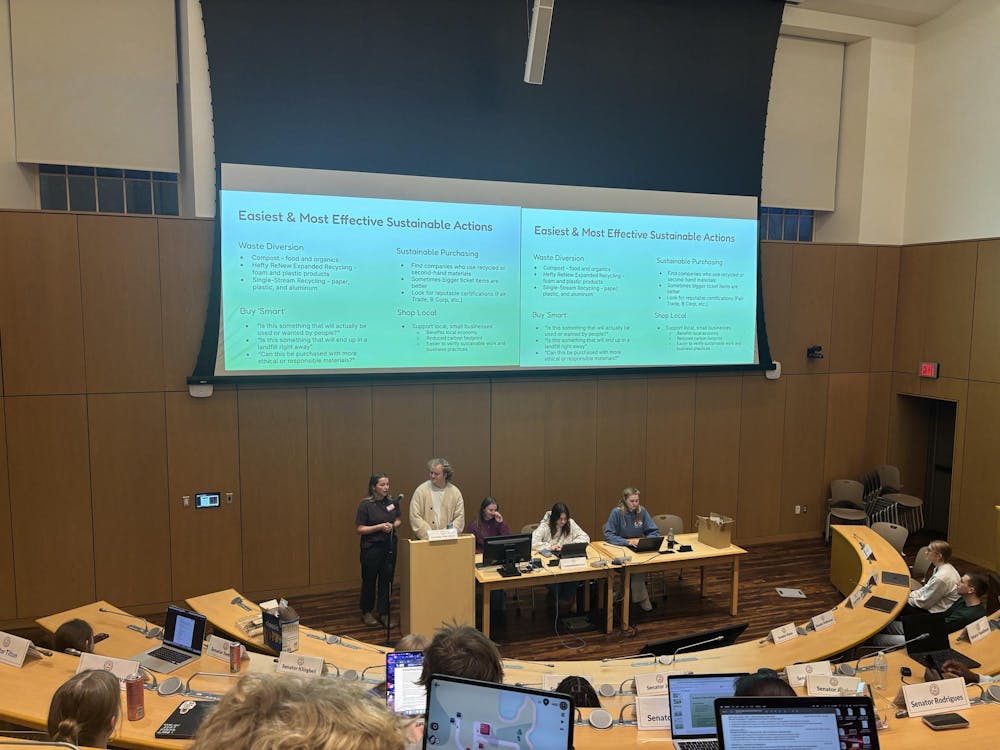
ASG condemns antisemitism in Sense of the Senate
By Shannon Mahoney | YesterdayThe Associated Student Government passed a bill titled “Sense of the Senate: A resolution to condemn antisemitism” at its meeting Tuesday evening.

From pitch to publication: The history of the production process
By Sydney Mulford | 2 days agoWhile The Miami Student has always published a physical newspaper for the past 200 years, a lot of the steps within the publication process have undergone changes.