
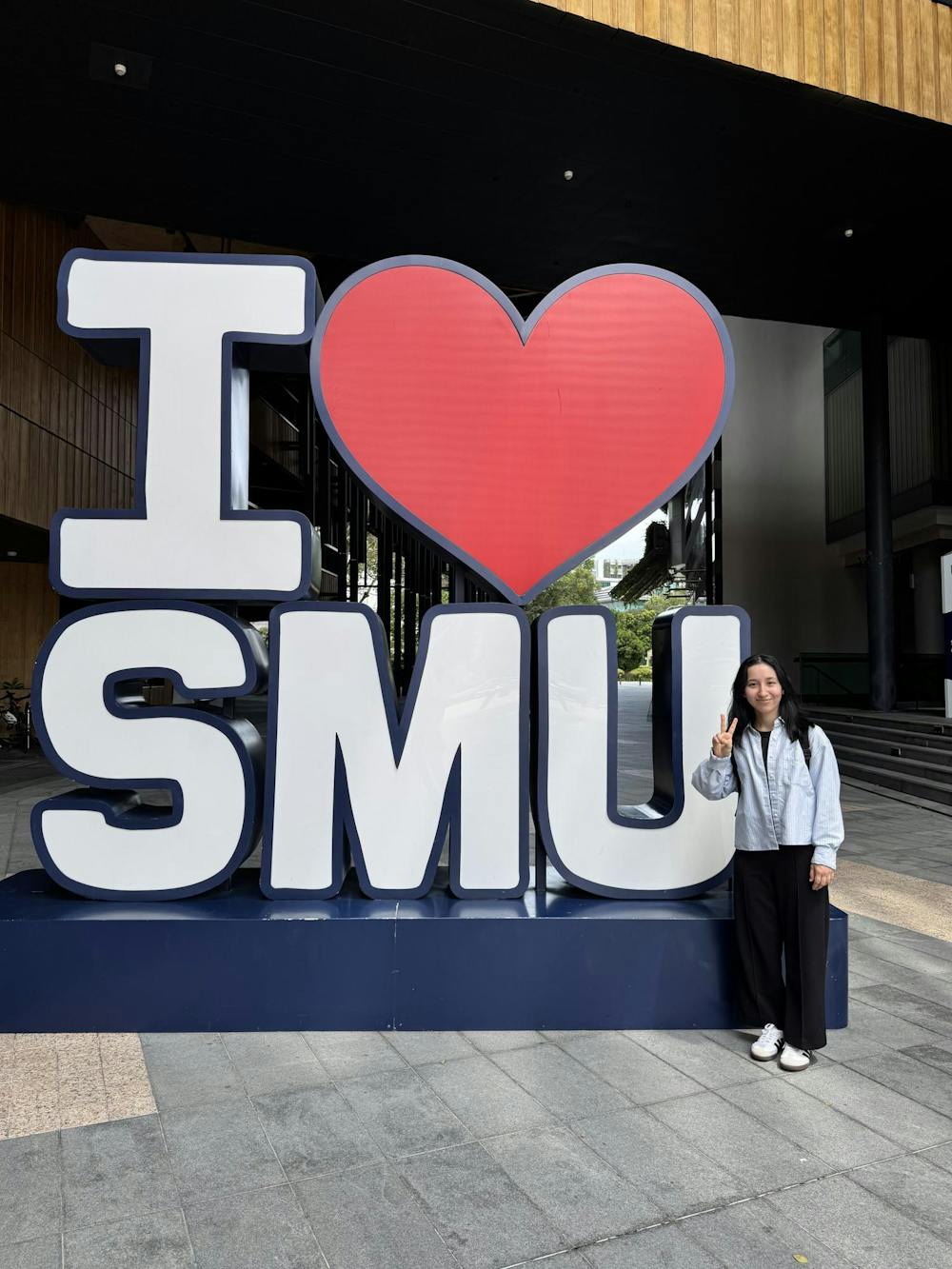
For a long time, I thought studying abroad was something students with fewer financial and academic constraints did. Being a first-gen student, I didn’t even know that studying in another country during college was an option. Also being a nursing major, I thought my schedule was too packed, and the cost was too high to be a reality.
But this winter, I got the wonderful opportunity to study abroad in Singapore. Thus, I would like to disclaim the myth that studying abroad is totally out of reach.
When students talk about studying abroad, it's usually about the same places, as well as the assumption that you need thousands of dollars up front. Thus, for low-income, first-gen and those balancing jobs, it can feel financially unrealistic to even consider.
However, many study abroad programs can be realistic when you know where to look and what funding exists for you. The problem isn’t that students don’t want to go; many of us just haven’t heard we can.
The Benjamin A. Gilman Scholarship international was my opportunity to make it possible.
One of the biggest reasons why I was able to study abroad was because of this scholarship: a program specifically designed to help Pell Grant-eligible students study abroad, meant to reduce financial barriers for students. Before starting the process, I assumed scholarships were rare, very competitive and only for those with perfect scores. Thus, I was happy to hear Gilman's values of both merit and giving students from all kinds of backgrounds access to global education.
I chose Singapore to push me out of my comfort zone — a country that is not a “typical” study abroad destination. I wanted new perspectives in the place I studied. For example, Singapore is a multicultural country.
During my visit, I visited neighborhoods like Little India, Chinatown, Arab St/Haji Lane and the Malay quarters, which all had their own architectures, bustling streets and distinct cultural identities. I also got to see early preparations for Lunar New Year, which was illuminating. Each day, I was learning about Chinese beliefs, Tamil holidays and the history between Singapore and Malaysia.
As a nursing major, I learned about entrepreneurship. I learned about how ideas can become products/services. Entrepreneurship isn’t just about innovation, but also research, thinking about feasibility and finding a niche market of something people truly need in their lives.
We had guest speakers who were local entrepreneurs, many in-class discussions, a visit to the Chinese Chamber of Commerce and a final pitch deck of our ideas. All these things showed us how long, tedious and complex creating something new can be.
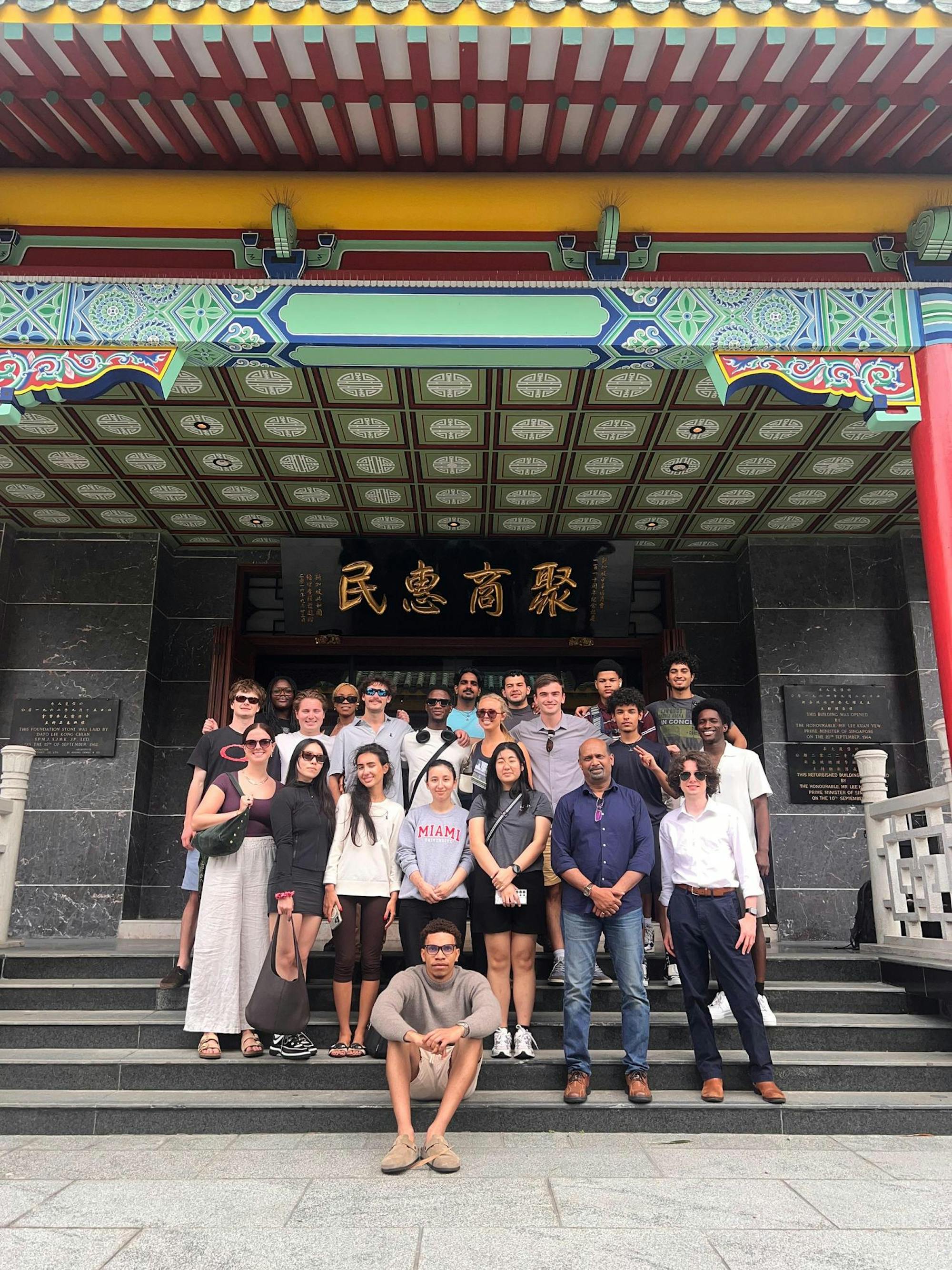
Pitching entrepreneurial healthcare products, I learned more about the legal and pharmaceutical sides of healthcare. Thus, I was able to see how policy shapes the emergence of new products. My peers were from all over the United States, bringing many different ways of thinking to the table. Working with them, I become a more flexible teammate.
Enjoy what you're reading?
Signup for our newsletter
One thing I was really surprised by was the emphasis Singapore had on sustainability and climate change. All over the country, they had green rooftops, open green spaces and planning that took climate change into consideration. It allowed me to see how the government can prioritize long-term environmental health, and many citizens were very climate-conscious as well. Many things were very intentionally designed, such as city streets and building layouts.
So, if you’re thinking that studying abroad feels too expensive and complicated, I would like you to know that many resources exist. For example, talk to the study abroad office early. I talked to one of the advisors, who was able to answer all my questions and showed me different applications available.
There are many funding options like Boren Awards, Fund for Education Abroad, Gilman and even our own Miami Family Fund (which helped with a portion of my study abroad). You can ask about these scholarships and others you may be eligible for at the education abroad office at MacMillan Hall.
Don’t assume your major will prevent you from studying abroad. There are many different programs that can fit tight schedules, such as J-term. Also, consider less chosen destinations as you can find different opportunities!
Studying abroad has made me feel capable in a new way. I was able to navigate unfamiliar systems, pitch myself for scholarships and learn in a new environment. I’ve gained a new understanding of multiculturalism, sustainability and entrepreneurship.
Study abroad is not reserved for only a few; with the right support, it can be a wonderful experience for any student.
Mahfiza Ashurova is a senior majoring in nursing. She is an undergraduate researcher studying stigmatization in healthcare and conducting theoretical work to improve nursing education and curriculum design. She’s also the president of the Student Organization for Undergraduate Research and Career Exploration (SOURCE).
Read More

Meet the Columnist: Abe Hagood
By Abe Hagood | 17 hours ago"I am, to the frequent disgruntlement of my friends, a very opinionated person. It’s not uncommon that I’m stopped mid-rant and asked to 'shut up.'"
Meet the Columnist: Taylor Powers
By Taylor Powers | Yesterday"I joined The Miami Student in my first year, but very quickly experienced burnout. I joined the Opinion section as a creative outlet, and here I am today as the editor."

Media Matters: Wil Haygood — ‘Solo Voyager’
By Richard Campbell | March 25, 2026"I first met Haygood, a 1976 Miami University graduate, in spring 2013. He delivered Miami’s commencement address, beginning his talk with the trailer for 'The Butler.'"