
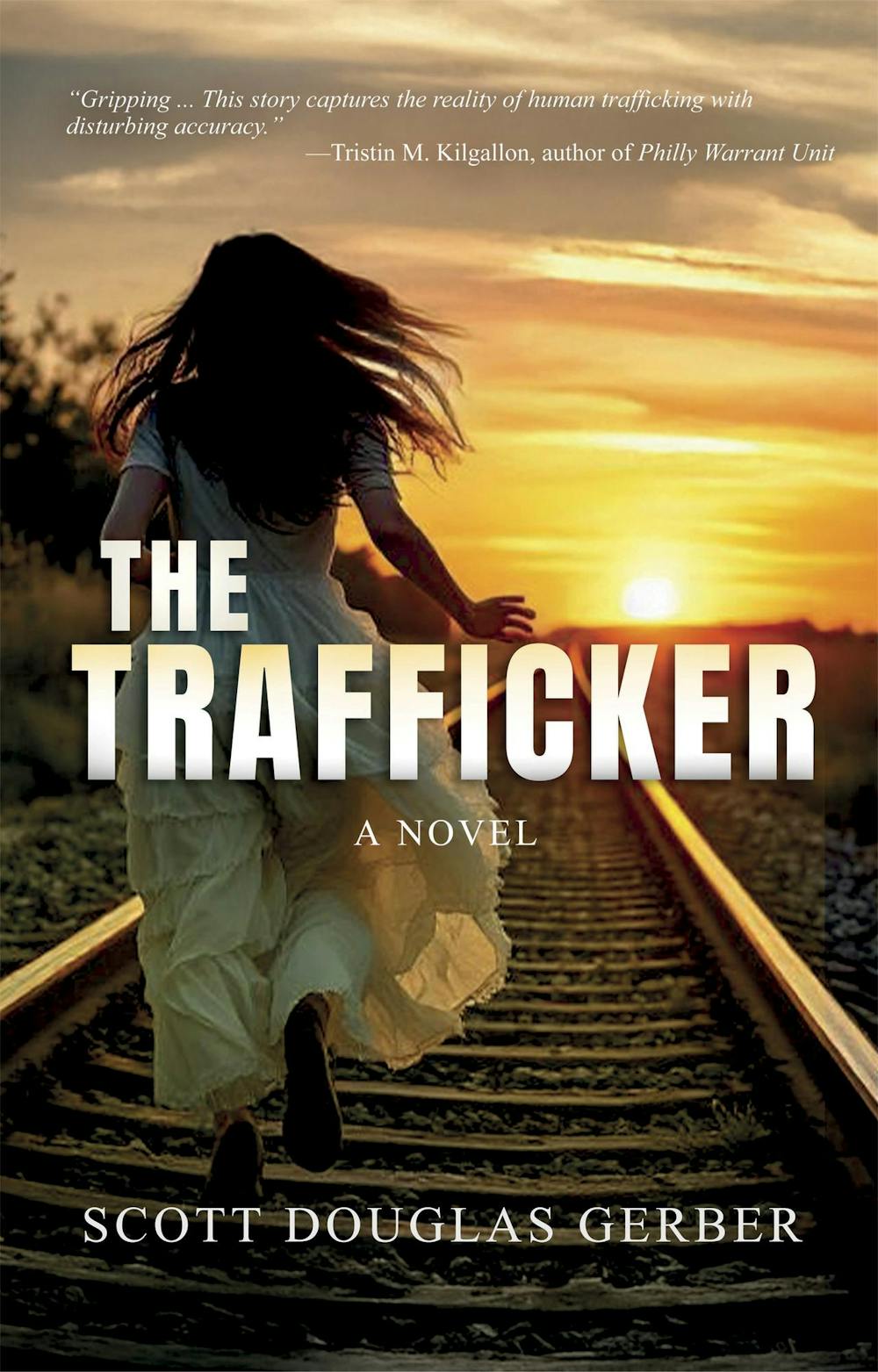
Every year since 2010, the president of the United States has dedicated January as National Human Trafficking Prevention Month. In 2015, the Ohio Advisory Committee to the U.S. Commission on Civil Rights, on which I serve, issued a report on human trafficking in Ohio. The testimony of one particular human trafficking victim has haunted me ever since.
Indeed, her heart-wrenching account touched me so deeply that I felt compelled to write a novel about the awful subject. That novel is “The Trafficker,” and it was published on Jan. 13.
I chose to write a novel — a legal thriller, in terms of genre — rather than an academic book about human trafficking because I strongly believe that fiction can often educate in a more compelling fashion than nonfiction. “To Kill a Mockingbird” is the classic example of how fiction can teach.
In the incisive words of historian Joseph Crespino, “In the twentieth century, To Kill a Mockingbird is probably the most widely read book dealing with race in America, and its main character, Atticus Finch, the most enduring fictional image of racial heroism.”
Although I am neither foolish enough nor arrogant enough to suggest that “The Trafficker” is a twenty-first century “To Kill a Mockingbird,” like Harper Lee before me I wanted to reach people at an emotional level to wake them up; in my case, about the horrors of the hidden world of human trafficking. The novel is not graphic in the physical sense of that word, but it is upsetting as, unfortunately, it has to be.
The novel is set primarily in Toledo, Ohio — a city that I was shocked to learn during the Ohio Advisory Committee’s investigation is a hub for human trafficking. The story is told from three alternating points of view: that of Cameron Warren, a law professor appointed by a court to serve as the trafficked girl’s guardian ad litem; that of “Jane Doe,” the traumatized teen victim who refuses to reveal her name; and that of “the middle-aged man,” the anonymous trafficker after whom the novel is named.
Cameron Warren, a happily married man with three wonderful children, has dedicated his life to eradicating human trafficking. He went so far in his professional life as to draft, and help get enacted into law, a federal statute punishing human trafficking. In his personal life, he frequently volunteers as a court-appointed guardian ad litem to try to save one child at a time.
Jane Doe has grown up in an abusive family environment, as many trafficking victims have, and that has led her to a series of terrible choices from which she is trying to extricate herself. She does not trust anyone, including Cameron Warren, who has more than earned her trust.
Every legal thriller needs an antagonist, and “the middle-aged man” serves that role in “The Trafficker.” He is driven by money, as most traffickers are, especially the large sums of money that some depraved people are willing to pay for the so-called premium product: a thirteen-or fourteen-year-old girl.
Although “The Trafficker” is a work of fiction, it is based in fact: the Ohio Advisory Committee to the U.S. Commission on Civil Rights’s report on human trafficking, information provided by anti-trafficking groups and law enforcement officials and material I discovered when researching the book, like a January 2024 — National Human Trafficking Prevention Month — Rolling Stone article on the subject that a friend sent me.
Does the novel have a happy ending? I will leave it to readers to find out for themselves. In the meantime, I hope as many people as possible will take National Human Trafficking Prevention Month to heart and help end what the lawyer who chaired the Ohio Advisory Committee called “an insidious scourge unfolding inside seemingly ordinary homes and neighborhoods.”
Enjoy what you're reading?
Signup for our newsletter
Scott Douglas Gerber is the author of "The Trafficker: A Novel."
Read More

Meet the Columnist: Abe Hagood
By Abe Hagood | 9 hours ago"I am, to the frequent disgruntlement of my friends, a very opinionated person. It’s not uncommon that I’m stopped mid-rant and asked to 'shut up.'"

Meet the Columnist: Taylor Powers
By Taylor Powers | Yesterday"I joined The Miami Student in my first year, but very quickly experienced burnout. I joined the Opinion section as a creative outlet, and here I am today as the editor."

Media Matters: Wil Haygood — ‘Solo Voyager’
By Richard Campbell | March 25, 2026"I first met Haygood, a 1976 Miami University graduate, in spring 2013. He delivered Miami’s commencement address, beginning his talk with the trailer for 'The Butler.'"