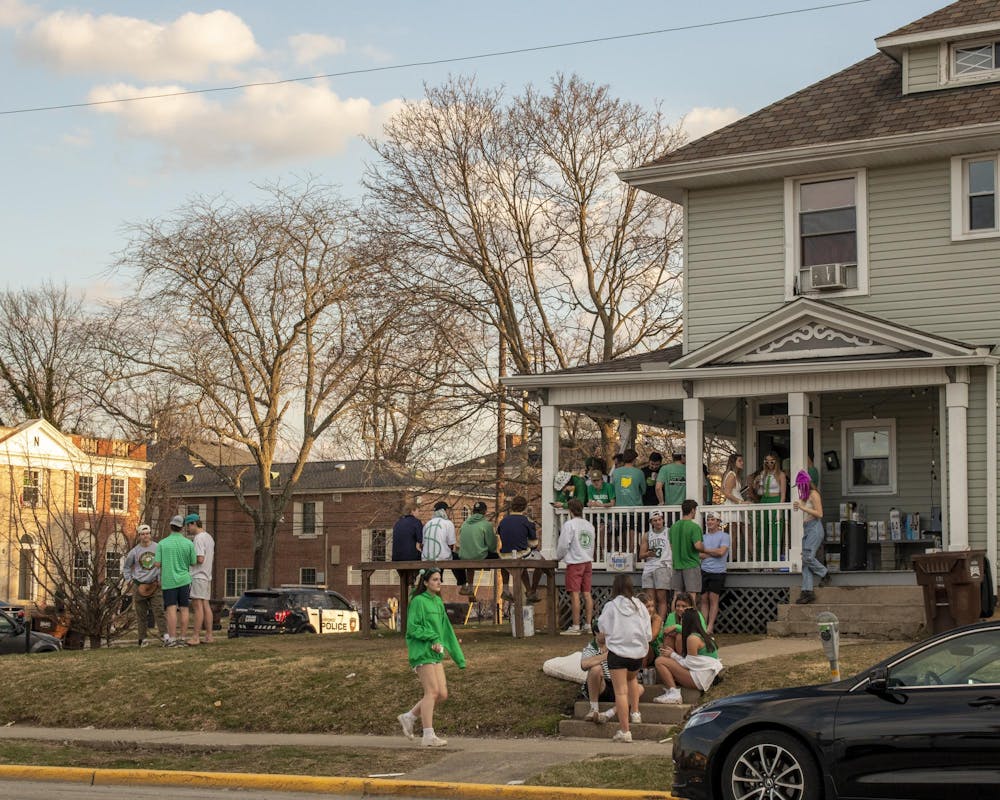
After classes end for the week, it’s not uncommon to see Miami University students put on their “going-out” outfits and make their way Uptown to bars and off-campus house parties.
It’s these parties, however, that cause problems for the Oxford Police Department (OPD); they often violate the City of Oxford's litter and noise statutes. Lieutenant Adam Price said officers patrolling on the weekend have no hesitation in issuing citations for infractions they observe.
“It's just regular enforcement for us,” Price said. “It doesn't have any bearing whether or not they're a student. We're just enforcing laws that are on the books.”
Those who receive citations from OPD often have to pay hefty fines, ranging from $150 to $500, depending on the severity of the violation.
In an attempt to hold Miami students accountable for their actions, the University established the Good Neighbor Policy. Essentially, any citation a student receives from the City of Oxford for violating the noise restriction, littering and allowing litter to remain upon property, a nuisance party or violating outdoor furniture laws will be forwarded to Miami’s Community Standards Office.
Community Standards Director Alex Fields said the main goal of the Good Neighbor Policy is to help students learn how to balance having fun and being responsible.
Enjoy what you're reading?
Signup for our newsletter
“[This policy is] a partnership with the City of Oxford, where our intent is to help folks who live off campus recognize that they're part of a larger community, and try to help folks be good citizens – essentially, good community members,” Fields said.
Once a week, the Community Standards office receives a report from an OPD representative forwarding all the student citations issued. Once Community Standards receives this list, they will begin reaching out to students about citations.
There are three levels of citations in Community Standards. For the first citation of the semester, students receive a co-authored letter from the City of Oxford and Miami about the importance of being a good community member. For the second citation of the semester, another letter is sent acknowledging the repetitive action. For the third citation of the semester, students are asked to come to the Community Standards office for a problem-solving conversation. If more citations are issued, disciplinary action is considered.
“When I've met with students for these types of conversations, I've asked them, [for example], ‘If your repeated issue was litter, what kind of a difference would it make if you put a trash can outside?’” Fields said. “There's no clear-cut black and white [consequence], it really just depends on what the circumstances are.”
In the fall semester, the Community Standards office handled roughly 127 Good Neighbor violation cases. However, whenever an organization – such as a fraternity – receives a citation, every member is cited, which contributes to the Community Standards' high case count.
Tyreke Farquharson, the Associated Student Government secretary of community engagement, works closely with Community Standards, OPD and the City of Oxford, as well as fraternity and sorority organizations, who tend to make up the bulk of the Good Neighbor violations, to see what can be done to limit the number of citations and reduce the fines.
“I used to be the president of a fraternity,” Farquharson said. “I've had to deal with police officers giving tickets. They're good people, but the students that are having fun at these parties – they're good people too. We have to find a balance between the two that allows students to enjoy the Miami culture without the fear of getting shut down.”
This spring semester, Farquharson is crafting a campaign to inform students about the Good Neighbor policy, so they can still throw parties, but in a more thoughtful manner. He’s even come up with a motto for students to remember.
“‘Stay safe, stay smart, stay off the radar,’” Farquharson said. “If the city knows your house, then you're on their radar. They're going to be frequently coming to see what's going on with your house. Being good neighbors is part of that.”
For students who may be worried about receiving citations for their parties, Fields said the best way to avoid them is to know the local ordinances and know what the Good Neighbor policy entails. While these citations and expectations are not going away, Fields said the Community Standards office is still evolving in how it manages cases.
“I'm completely open to students if they have suggestions [on] how we can handle it better,” Fields said. “I want to hear it, and I definitely want students to know that, because their voices are very important to me and to this office and to the university.”
Read More

‘ICE OUT’: Demonstration against U.S. Immigration and Customs Enforcement takes place at Miami
By Evelyn Dugan | 22 hours agoOn Friday, protestors against President Donald Trump’s Immigration and Customs Enforcement (ICE) crackdown climbed through a foot of snow while holding resistance signs in their gloved hands to reach the Miami University seal, located in Academic Quad. These demonstrators demanded for ICE to leave Ohio and had the goal of standing in solidarity with protestors in Minneapolis following the recent fatal shootings of Renee Good and Alex Pretti.