
On Aug. 18, the Oxford City Council voted 6-1 to terminate the city’s contract with Flock Safety and end its use of the company’s automated license plate recognition cameras, 14 of which have been operating since 2024, according to reporting by the Oxford Free Press. The decision came as a surprise, after the Oxford Police Department had proposed a series of six new oversight recommendations and maintained that the cameras were valuable to their efforts. Most of the councilors’ reasoning for voting to end the city’s contract with Flock boiled down to trusting the local police, but not the company nor the amount of data it collects.
What comes next is less clear. While the contract has been terminated and will officially end in February 2027, the cameras themselves might stay in place until Flock removes them. This could take months, as the company has historically dragged its feet on removing its hardware, and even illegally reinstalled cameras in an Illinois community, according to an article from the Evanston Roundtable in March.
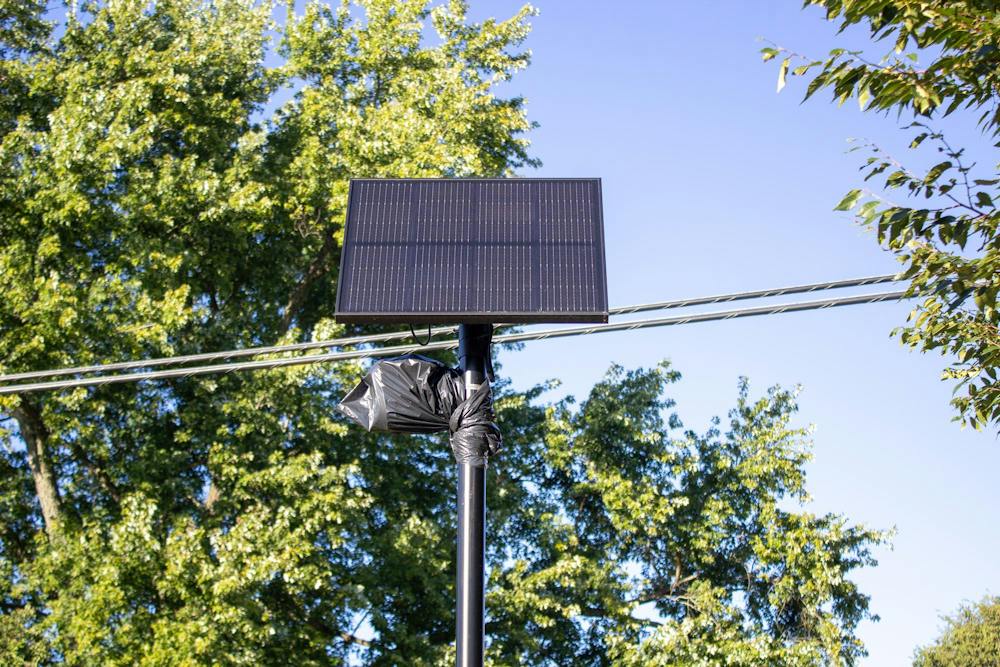
Oxford has already followed in the footsteps of other communities around the country and placed bags over some of the cameras to halt operations until they are properly removed. Since they are only leased, the cameras are still owned by Flock; they are considered private property, meaning the city cannot remove them itself.
But the important thing is the cameras are coming down, and the Oxford City Council has listened to its people. It’s something I have to commend.
It is not hard to see why Oxford was one of the latest to terminate its contract. Flock has, rightfully, been extremely controversial. With the growing public awareness and hatred, some citizens have taken measures into their own hands and begun tearing down the cameras, which has happened in Oregon, Virginia and California, to name a few specific incidents. While their actions are illegal, their frustration is understandable.
The effectiveness of the cameras has always been in doubt, for starters. Despite the company’s marketing and supporters purporting an 11% reduction in car theft, a number taken from a University of South Carolina research paper that Flock quickly jumped on, the nonprofit Institute for Justice investigated the paper further and found that, taking into account other factors, there was no statistically significant change in car theft rates after Flock cameras were installed.
Of course this is just one specific study and one specific type of crime, but it does illustrate that Flock is not some miracle fix to all crime. In reality, it is a dangerously flawed system that has famously and continuously gotten things wrong. The Institute for Justice also created a database to track the failures and abuses of Flock cameras. The database has over 200 incidents recorded, and a note that it cannot possibly document all the issues within the system.
But even if the cameras did somehow miraculously work exactly as intended and never produced a false hit, they would still be morally wrong.
The issue with Flock isn’t the arrogant name brand, nor is it just the critical security flaws in every aspect of their system. The real issue with Flock is the fact that it allows warrantless tracking of citizens, for no other reason than the whim of a police officer. The underlying technology is the real danger, not how it has been implemented. The technology does not have a moral use case, certainly not in the era of techbro billionaire oligarchs.
Because of this, a lot of the backlash and removals of Flock cameras fall flat. Denver was one city that famously removed their Flock cameras, following severe community backlash over the realization that the system was being used for federal immigration actions. However, they were also a city that approved a contract to replace the cameras with those of a competitor named Axon.
Axon cameras are arguably much worse, designed to blend into the streetscape more easily than those of Flock. In addition, the company is already far better established and connected with police departments, seeing as they provide body cameras and other related technologies. They also directly hold contracts with several federal agencies, as an NPR interview noted.
I hope the Oxford City Council makes the smart and moral decision and takes the win. They have followed the will of the people and terminated the contract. They have made a good decision.
Enjoy what you're reading?
Signup for our newsletter
Oxford does not need mass surveillance.
Charley Babb is a junior majoring in professional writing. He is an Opinion writer for The Miami Student and a fencer in the Miami Medieval Club. He likes reading and creative writing in his free time.
Read More

In the editor’s rotation: Revisiting old and discovering new
By Stella Powers | 2430 minutes agoI have converted to my over-ear headphones, which somehow makes the music sound even better. So when you read these recommendations, imagine them sounding absolutely fabulous through my headphones. It adds to the effect.

ASG passes bill to make EV charging more affordable at Miami
By Shannon Mahoney | 10 hours agoThe Associated Student Government (ASG) discussed problems with Bell Tower dining and passed a bill to reform electric vehicle (EV) charging rates at Miami University.

We’re applying 18th-century worldview to today’s society
By Ethan Foster | Yesterday"This creates a real problem because originalists attempt to solve these debates through worldviews contemporary to the time they were written. These perceptions are oftentimes completely different than the ones we have today."