

During one of the first weeks of my American politics class, my professor had us take a series of polls to determine where we fell politically. As the results came up, people seemed to concentrate toward particular ends of the political spectrum.
I looked at my own answers and thought, “I feel like I’m nowhere.”
It’s not because I don’t have political opinions. I have spent years reading about politics, history and international affairs, and I came to college expecting to have plenty of conversations about them. But seeing my classmates’ answers grouped into recognizable political positions made me realize how difficult it can be to neatly place myself in one.
According to the Pew Research Center, 35% of registered voters in 2024 identified as independent or something other than Democrat or Republican, although most of them leaned toward one of the parties. Pew also found that 25% of voters identify with or lean toward the Democratic Party while describing their views as conservative or moderate, while 14% identify with or lean toward the Republican Party while describing their views as moderate or liberal.
The idea behind the quiz exercise was not just to figure out where we fell on a political spectrum; it was to see what happens when people with different political views end up in the same classroom.
In college, it can feel easy to find people who share your interests, background or political beliefs. It is much harder to avoid disagreement entirely. Your classmates come from different experiences; eventually, someone is going to say something that makes you stop and think, “I have never looked at it that way.”
That happened repeatedly in my politics class.
Political disagreement is not unusual, but the broader political environment in the U.S. can make it feel more significant than it needs to be. Pew Research Center found that deeply negative views of the opposing political party have increased substantially over time. In 1994, only 17% of Republicans and 16% of Democrats viewed the opposing party very unfavorably. By 2016, those numbers had risen to 58% and 55%, respectively.
Sitting in a classroom where people openly disagree with each other feels very different from seeing political arguments online. There is no comment to leave, no post to scroll past and no algorithm deciding what comes next. Someone makes an argument, and you hear it.
Sometimes, I agree. Sometimes, I do not. Sometimes, I understand why someone reached a conclusion that I would never have reached myself. Occasionally, I realize I had never really thought about a question from that perspective before.
That is what I have found most interesting about the class. I am not leaving every discussion with a completely different set of beliefs. Instead, I am becoming more aware of why I hold the views I do, especially when someone gives me a reason to question them.
The poll from the beginning of the semester made me realize I might not fit neatly into one political category. The discussions that followed have made me more comfortable with that. Maybe I don’t need to find exactly where I fall on the political spectrum. Maybe it is more useful to know what I believe, why I believe it and what could make me reconsider it.
Enjoy what you're reading?
Signup for our newsletter
That is one of the things I did not expect from college. I knew I would meet people who were different from me. I did not realize how often those differences would make me rethink things I had taken for granted.
College is one of the few places where you can end up sitting next to someone with a completely different perspective and then spend an hour discussing the same question. You do not have to leave the room agreeing with them. But you should leave having actually heard them.
You cannot expect to go to college and never have your beliefs challenged. Honestly, you should not want to.
Vedika Kaushal is a first-year student studying political science and economics. She is an aspiring journalist and international relations researcher. She spends time reading research on the politics of India and the Middle East. Beyond academics, she enjoys reading poetry, playing chess and finds joy in the kitchen.
Read More
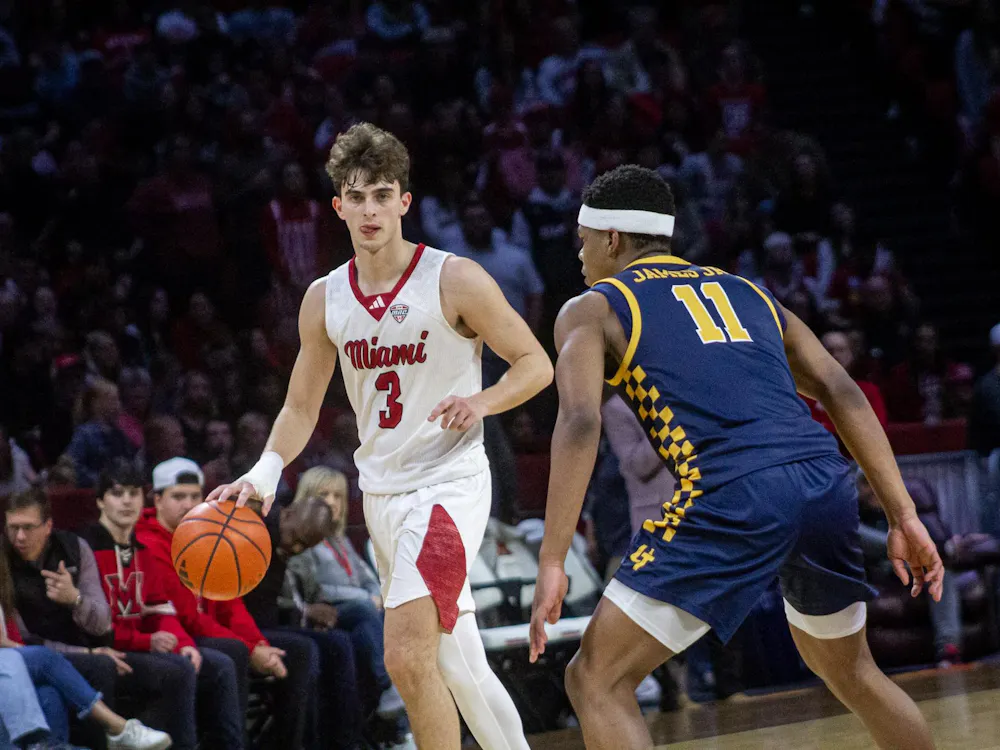
Miami Men's basketball schedule review
By Timmy Swearingen | 5 hours agoThe Miami University men’s basketball schedule has officially been released. Coming off an undefeated regular season last year, the RedHawks look to replicate the success of a magical 2025-26 season.

The residents just might be evil
By August Humphrey | 7 hours agoIf there’s one type of entertainment I’ll sit down and watch almost every day, much to my parents’ dismay, it would be horror, action-horror or something along those lines. So imagine my delight when I found out the new “Resident Evil” movie would be playing in a theater near me.
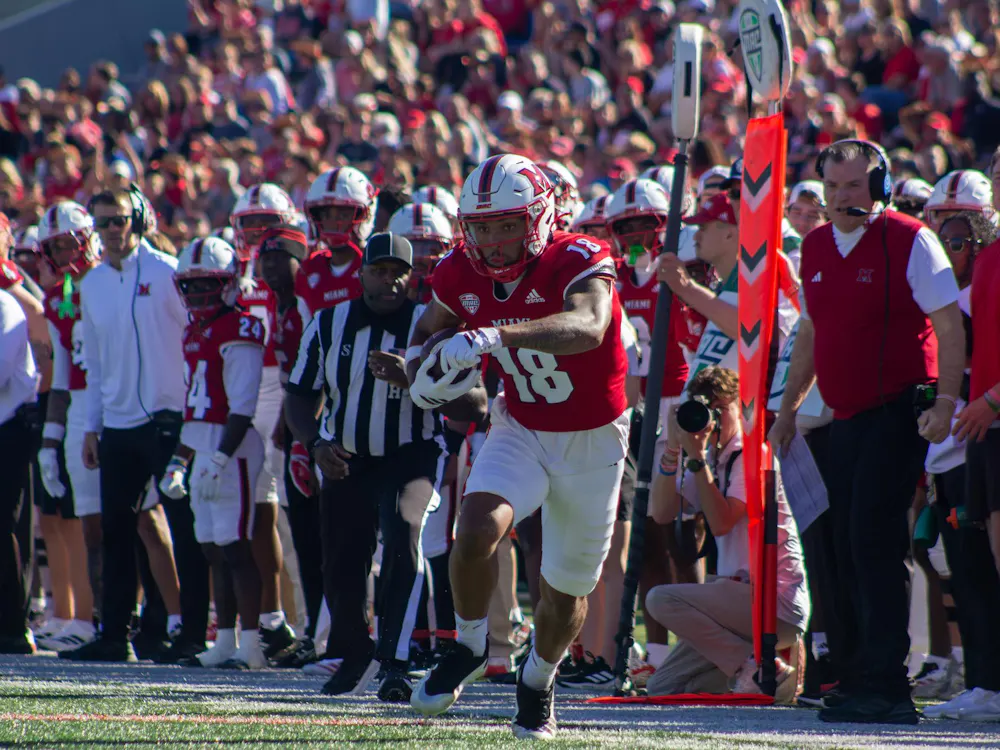
Preview: Miami football begins conference play against Bowling Green
By Jacob Light | YesterdayThe Miami University RedHawks (2-2) will face the Bowling Green State University Falcons (0-4) at 3:30 p.m. on Saturday, Oct. 3 at Yager Stadium.