
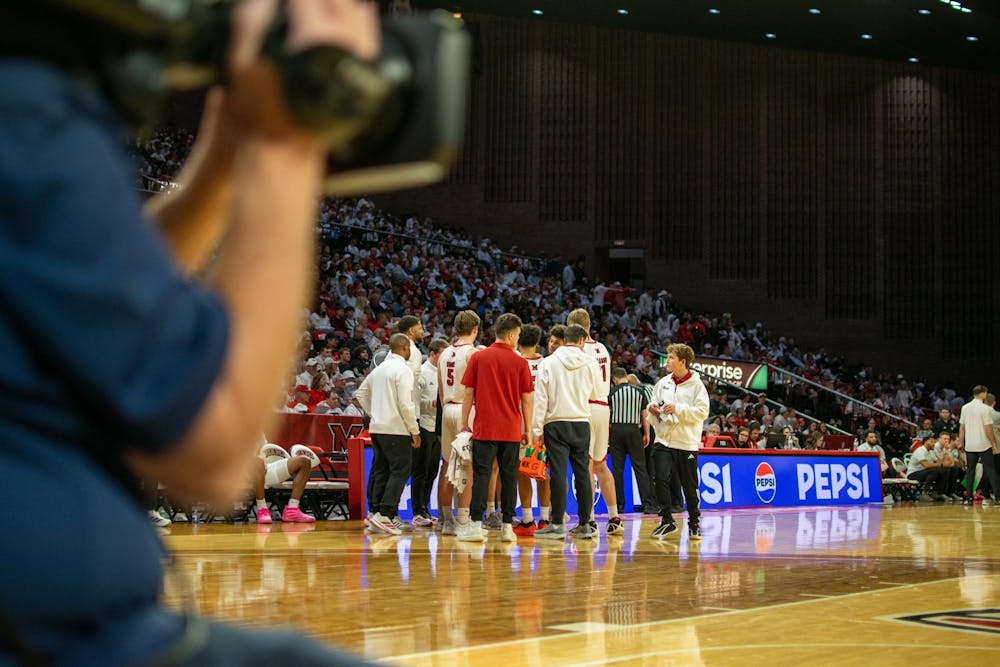
After his sophomore season at Bellarmine University, guard Peter Suder entered the transfer portal with hopes of playing for a winning team. Suder signed with the Miami University RedHawks for the 2024-25 season and would later lead the team to a record-breaking 32-2 record in the 2025-26 season and be named the Mid-American Conference Player of the Year.
The transfer portal is a system that allows collegiate athletes to transfer and be recruited by other schools. It has become one of the main ways schools add talent to their rosters outside of high school recruits. Miami is no exception.
Websites like 247 Sports and Verbal Commits update regularly to show a player’s status as soon as they enter the portal, which allows schools to act fast.
Suder said the process itself was quick. He started getting calls instantly, and even visited Wright State University before he committed to Miami.
“It was craziness to be honest,” Suder said, “but obviously I landed at a great spot.”
The RedHawks lost rising junior forwards Eian Elmer, Brant Byers and rising sophomore guard Trey Perry to the portal in April after the RedHawks fell to the University of Tennessee in the first round of the NCAA Tournament. Miami added three transfers from the portal in response.
Head coach Travis Steele said Miami primarily recruits high school athletes and supplements with the portal when they need to, but a lot of teams look straight to the portal.
“We recruit portal only on a need basis,” Steele said. “I think most people are recruiting exclusively out of the portal.”
Rising senior point guard Evan Ipsaro, a RedHawk since his freshman year, said program loyalty means a lot to him, and he has no interest in leaving.
“I think it says so much more to guys that stay four years at a school,” Ipsaro said. “[College] is a short window, so I’m gonna make the most of it.”
Collegiate athletes can use their name, image and likeness (NIL) to receive compensation from third parties. It can include brand deals, instagram posts and other promotions. Schools use NIL to entice athletes in the portal.
“I think it’s a good thing that our athletes get paid,” Steele said. “There’s really no rules around [NIL] right now, which makes it a little wild.”
Enjoy what you're reading?
Signup for our newsletter
Suder said it’s tough for mid-major schools to compete with high majors that provide bigger NIL opportunities and suggested a salary cap that limits the amount of money schools are allowed to spend could even the playing field.
“Kids in college are getting an absurd amount of money, and you can’t blame [them] for going to take that money,” Suder said. “NIL is the number one reason why kids transfer.”
Steele said he will always encourage his players to do what is best for them, even if it’s not what is best for the team. No matter what happens, the RedHawks know their identity.
“I only want people who want to be here,” Steele said. “Whether you want to get a great degree, you want to have a great college experience, you want to reach the NBA, you want to play in the NCAA Tournament, all those things can happen right here at Miami.”"
Suder is a prime example of what can be accomplished at Miami. He is one of 73 players selected to participate in the 2026 NBA draft combine.
“Miami gave me a lot of freedom,” Suder said. “I think that ultimately prepared me for the next level.”
Read More

The MAC is devaluing itself
By Cooper Meneghetti | 12 hours agoThe MAC has made a series of questionable decisions. Here is what they can do to right the wrongs.
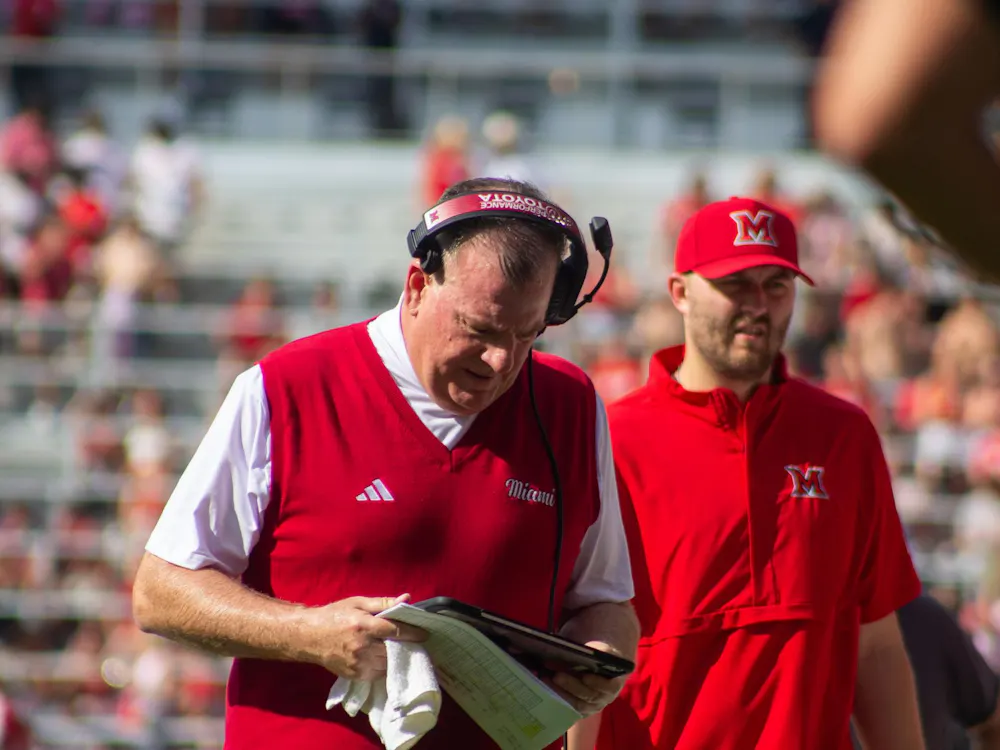
Miami football adapts to NIL era
By Colin McDonald | YesterdayAs Miami continues to increase its investment in football, the RedHawks will have to prove that their new approach to NIL can keep them competitive without becoming financially unsustainable in the coming years.

More than a Midwest school: Miami attracts students from across the nation
By Sofie Terlesky | YesterdayMiami University brings together students from all different backgrounds. For some, it’s a 45-minute drive from home; for others, it’s a six-hour plane ride. Regardless of the distance, many students come to see Miami as their home away from home.