
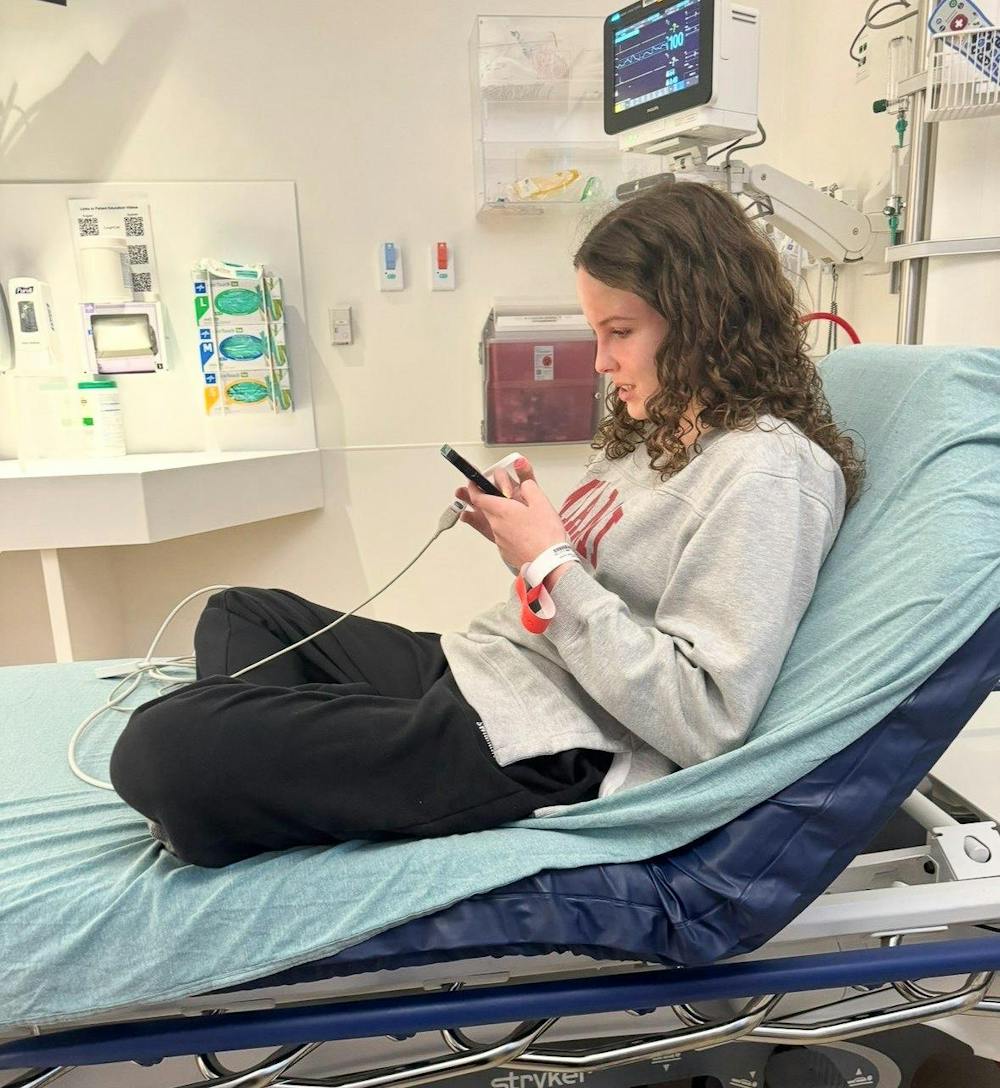
On a typical day, even sitting in class can become uncomfortable for students with postural orthostatic tachycardia syndrome (POTS) or Ehlers-Danlos syndrome (EDS).
POTS is a disorder of the autonomic nervous system commonly causing rapid heart rate increase, dizziness, fatigue, brain fog and many other symptoms. EDS is a disorder that weakens the body’s connective tissues and frequently causes joint hypermobility, stretchy skin and chronic pain.
Elizabeth Nadolson, a first-year biology major diagnosed with POTS and following the path to an EDS diagnosis, is affected by the illness on a daily basis.
“My heart will beat really fast for no reason,” Nadolson said. “My heart rate was at 130 and I was just standing there getting ready for bed.”
Simple tasks like walking around campus are difficult, Nadolson said. Even in class, she has to sit with her leg up or crossed, as the space between seats is so tight she is cramped and experiences numbness and pain.
Zimmer Combs, a first-year kinesiology major, faces a similar reality. In addition to EDS and POTS, she was diagnosed with mast cell activation syndrome, fibromyalgia and arthritis.
Enjoy what you're reading?
Signup for our newsletter
“I often wake up in pain,” Combs said. “My muscles tighten and stiffen, which makes it hard for me to wake up and just be able to go.”
She gets lightheaded depending on certain triggers, like walking up stairs, which is unavoidable in college.
“When it comes to accommodations, I do have a 504 plan to have my classes later in the day, which has helped,” Combs said. “[I also have] housing accommodations, first floor, close to the health services and the Rec Center. Also guidance from the Miller Disability Center with classes, attendance, flexibility, plans, taking exams and how much time I get to retake an exam if I miss it.”
EDS is an umbrella term for a group of 13 connective tissue disorders affecting each person differently.
“I’ve had like 17 diagnosed injuries, which is very common to have,” Combs said. “I could have a broken toe right now, [and] I'm not even realizing it because my pain tolerance is so high.”
Her brother also has EDS, but it affects him differently and he has never broken a bone, Combs said.
Although syndromes like POTS and EDS can present additional challenges to student life, resources are available to students like Nadolson and Combs. Miller Disability Center Assistant Director Annastashia Blesi said the center has many different tools to support those navigating chronic illness.
“How our accommodations work is we meet with a student and we discuss their disability lived experience and what barriers they’re experiencing,” Blesi said. “[That includes] the academic and housing environments and dining environment, really the college experience.”
From there, students can choose to connect with the center and seek the accommodations they need.
Blesi said because EDS is a spectrum disorder, no two students experience it the same way; some may have no chronic pain while others face debilitating symptoms daily, meaning their accommodation plans will look completely different.
“[Students] fill out an application online and we do ask that they provide some level of disability verifying documentation,” Blesi said. “We accept a wide range of documentation, but in general, we need some sort of clear diagnostic statement.”
While the center works to meet each student’s individual needs, Blesi said not every request can be granted.
“We, as a university, are committed to your access. We might not be able to say yes to everything, because equal access is equal access,” Blesi said. “We’re going to try to get you equal access to the learning experience and we have enough understanding of a lot of disabilities to give human-to-human advice.”
For students who have spent years being doubted by the medical system, reaching out can feel impossible, Blesi said. The Miller Center is one of the few disability cultural centers that fosters a community and pride for disabled people in the country. This means they want students to exist authentically in their disabled bodies.
Students like Combs have spent years adapting to their disabilities on their own before finding that kind of support.
“I’ve lived with it for so long,” Combs said. “I’ve always had to plan around my disability and it’s a routine now where I don’t really think about it, I just go and do it.”
Read More
College students should be taught by human professors, not AI
By Elena Jackson Albarrán , Cathy Wagner and Theresa Kulbaga | June 12, 2026"The Faculty Alliance of Miami (FAM), the union representing nearly 800 full-time continuing faculty and librarians, is fighting for reasonable protections, including a stipulation that faculty cannot be replaced by AI. The administration is refusing to agree even to these minimal protections."

Kent State eliminates Miami from the MAC tournament in a 3-1 pitchers duel
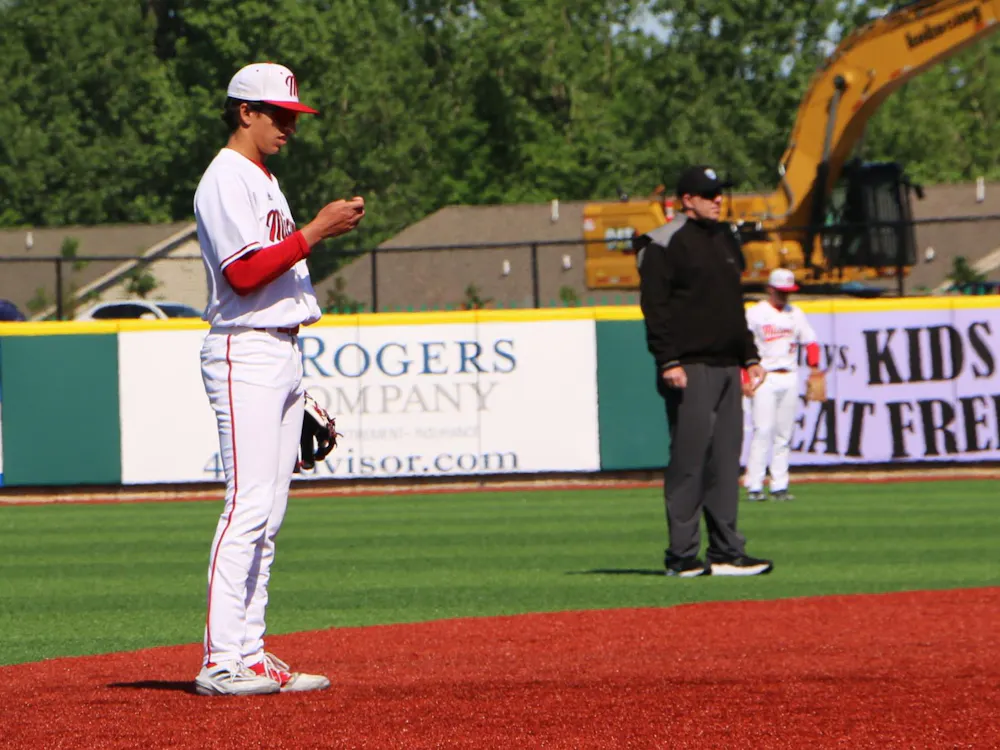
By Cooper Meneghetti | May 22, 2026The Miami University RedHawks baseball team suffered a 3-1 defeat at the hands of the Kent State University Golden Flashes. The loss eliminated the RedHawks from Mid-American Conference (MAC) tournament title contention.
Huskies deal RedHawks first defeat of MAC tournament in a 15-inning marathon
By Cooper Meneghetti | May 21, 2026RedHawks drop game one of MAC tournament to NIU