
When he feels anxious, there’s a pressure in his head — a squeezing feeling. He could not sleep. He could not eat. He didn’t want to speak to anyone. Classes and work felt meaningless.
Kyle’s passion was on the ice and in the weight room. He wanted to play, not for personal glory, but for those around him, his coaches and teammates, and to one day accomplish his goals. But he couldn’t. Instead, he had to sit and watch practices and games. His only companions were players not on the roster and his own thoughts.
“It’s just one of those things that kind of rocks your world,” Aucoin said. “You just feel like a loser watching your team play hockey, and you can’t be a part of it. You can’t be a part of the group you’ve wanted to be a part of your whole life. It just took me to a place where I was down about everything.”
Despite working with Calderoni before rock bottom, Kyle had not fully bought into meditation habits, journaling or the art of being present. He thought the energy he gained from one session every week would be enough to magically heal him from all his ailments.
It took him hitting rock bottom for his eyes to finally be opened to what could lie ahead if he was mindful. At the end of the day, it was a continuous cycle of thoughts and he needed a way out if he was going to continue playing college hockey.
He read. He studied. He tried different meditation techniques and routines. Every morning and every night, for 15-20 minutes, he sat in a pitch-black room with no noise or a guided meditation provided by Calderoni. During these meditations, he would put his hands in different formations to see which felt most comfortable and grounded him. He started journaling his thoughts, using pen and paper for them to address his fears instead of letting them run rampant in his head.
The difference wasn’t in what he was trying, but the frequency and consistency of his actions.
While Kyle was in the midst of using his different meditation techniques consistently, he found a different outlet for his pain and anxiety a little later down the road: faith.
Kyle had seen Cecilia Nakfoor while glancing across the tables at the Harvard library studying. He continued seeing her across the room in the following days after he first laid eyes on her.
He didn’t know who she was, but he knew he was intrigued.
After some digging, Kyle found out that two of his friends he was in a club with were dating her best friends, and he implored them to set him up.
But at first glance, Kyle was just another guy to Cecilia. She didn’t really think anything of him, even after a couple of conversations after meeting through mutual friends. She didn’t put him on a pedestal because he was a defenseman for the Division I hockey team. She didn’t even want to go out with him, repeatedly rejecting the idea to her friends despite their constant pleading for her to consider it.
Enjoy what you're reading?
Signup for our newsletter
Eventually, after an awkward meet up at a concert with their mutual friends, an even more awkward exchange of glances in the dining hall, where Kyle saw Cecilia sick , he grabbed her phone number and texted her a week later about going on a triple date with their friends, and it worked out.
Kyle won Cecilia over, though, with a later act of chivalry.
At the time, she was studying film and had a screening for a project being shown in a building, a 25-minute walk away from the rink. And Kyle, eager to see the kind of work Cecilia was doing, decided to take an Uber from the rink after practice to the building, sit in the back of the theater and watch the film, and leave without saying a word to anyone — not Cecilia, not her friends and not his friends.
On their first date, Cecilia asked Kyle one of the most important questions he believes he’s ever been asked: What are the top three most important things to you in your life?
His answer?
“The usual shit,” Aucoin said, “family, friends and hockey.”
And, naturally, he posed the question back to her, assuming her answer would be similar, starting with her family and branching out to other areas of her life. But her response caught him off guard and seemed to flip a switch.
She emphasized that faith is the most important thing to her.
Cecilia explained that her faith was the only reason her family could be as important to her as they are or run as well as they do. Her faith was the only reason she could explore a relationship with him. It was the foundation that harnessed her world together.
That summer, Kyle decided to take his belief one step further, attending church every Sunday and bringing along more and more of his teammates through his senior year at Harvard. He began praying the rosary and felt the effects, becoming more at peace with himself and his thoughts.
The more he meditated, journaled and prayed, Kyle began to feel more like himself again. He knew how to regulate his emotions. He learned how to control his thoughts from one moment to the next. Most of all, he knew what would make him feel at peace in times of chaos. And while his senior season was one that came with a lot of growth and development mentally alongside his newfound relationship, there was also plenty of annoyance with the results.
“I went in there and I gave it all I had, but I was frustrated,” Aucoin said. “I learned a lot that year.”
Fortunately for Kyle, due to his injury his junior year, he came out of his senior season with a chance at redemption.
Another year of college eligibility fell into his lap, but because of Ivy League rules governing athlete attendance, he had to graduate and could no longer play for Harvard. The emergence of the transfer portal in college athletics, provided an easy way to make sure he ended up where he wanted to be.
Despite his parents’ desperate pleas for him to remain open to other options, Aucoin knew where he wanted to end up after one phone call.
Following his entrance into the transfer portal, Aucoin was buzzed by his former coach, Noreen, now the bench boss of the Miami University RedHawks in the National Collegiate Hockey Conference (NCHC). He was told about Noreen’s vision for the Miami program. The confident, motivated demeanor of the RedHawks' bench boss, along with Kyle’s familiarity with him, fostered a sense of comfort and openness to opportunity.
After the way their time together ended in Tri-City, it only took one visit to Oxford and one dinner for them to be on the same page. Both Kyle and Noreen had grown; they wanted to make amends.
“I know it meant a lot to me, and I think it meant a lot to him, too,” Noreen said. “We just felt like this was the right situation at the right time, and we’re both appreciative for it.”
On April 6, 2025, Kyle announced his commitment to Miami from the transfer portal, becoming one of the first players in a massive class of new faces to commit to rebuilding the culture within Goggin Ice Center.
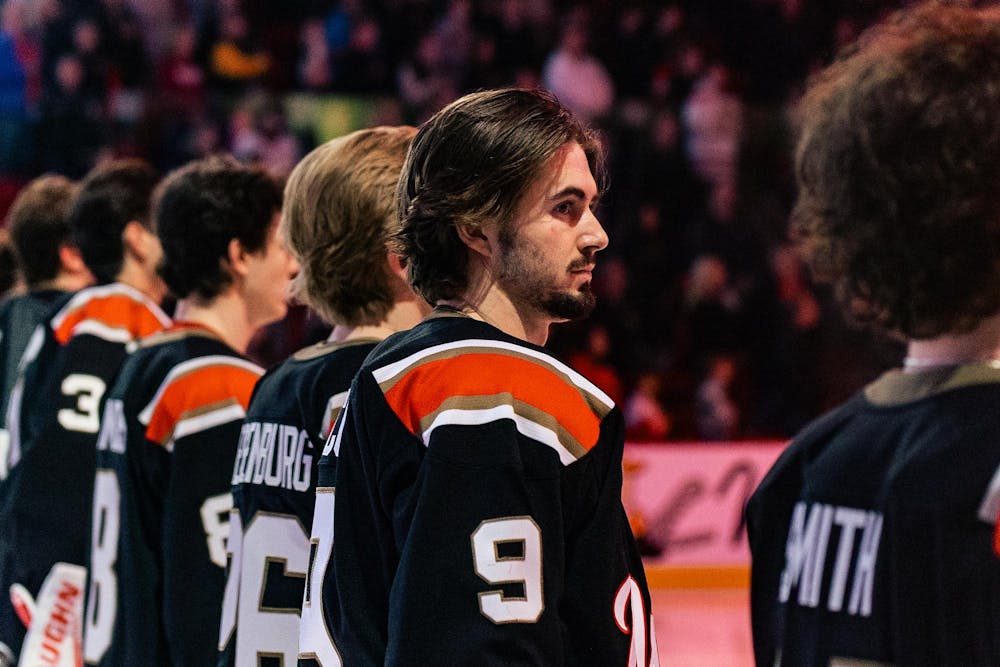
Kyle instantly became a key member of an almost entirely new Miami defense corps. He steps onto the ice at practice, donning the number nine, the number he chose as an alternate to his dad’s 33 that he wore while at Harvard.
The real work for Kyle is being done off the ice. When he exits through the tunnel and talks to Noreen now, he doesn’t speak much about hockey. Instead, they talk about tools — meditations, routines, books, podcasts and any other multimedia source that helps them to become not just grounded in their mission every day but also stay in the present moment and enjoy their time with teammates, coaches and friends.
“Stillness is the Key,” by Ryan Holiday has been their most recent shared reading experience, with the two discussing the book's contents for hours after practices and during off-time.
And while honing his own mindfulness craft, Kyle understands that he has the even greater responsibility of leading the young players and showing them the ropes, which he does frequently outside of practice sessions. He shares meditation tools, talks about his faith, brings teammates along to Sunday church and, most importantly, tries to instill knowledge that he wished he had at a younger age playing college hockey.
Assisting the new culture on the ice needed to be put on hold for a few weeks, as Aucoin found himself sidelined with another injury he sustained in a game against Rensselaer Polytechnic Institute in Miami’s second series of the season. Despite being hindered by a brace and crutches, there’s a calmness, a mindfulness, a preparedness for setbacks that Aucoin carried with him around Goggin Ice Center.
When he does put on the red and white jerseys hanging in his locker stall, nothing about Aucoin’s routine changes. It’s a foundation now — a habit. Whether he’s sidelined with an injury or hitting career-highs on the ice, the work off it will guide him in the right direction, one of healing from past scars, both physical and mental.
@jjmid04
Read More

PA program director resigns following demotion
By Caitlin O'Brien | 3 hours agoChristopher Howell, who was demoted from his post as director of the Physician Assistant (PA) program in December, was the target of complaints from three female staff who said he “makes us feel unsafe and uncomfortable,” according to the Office of Equity and Equal Opportunity (OEEO) Incident Reporting Form.
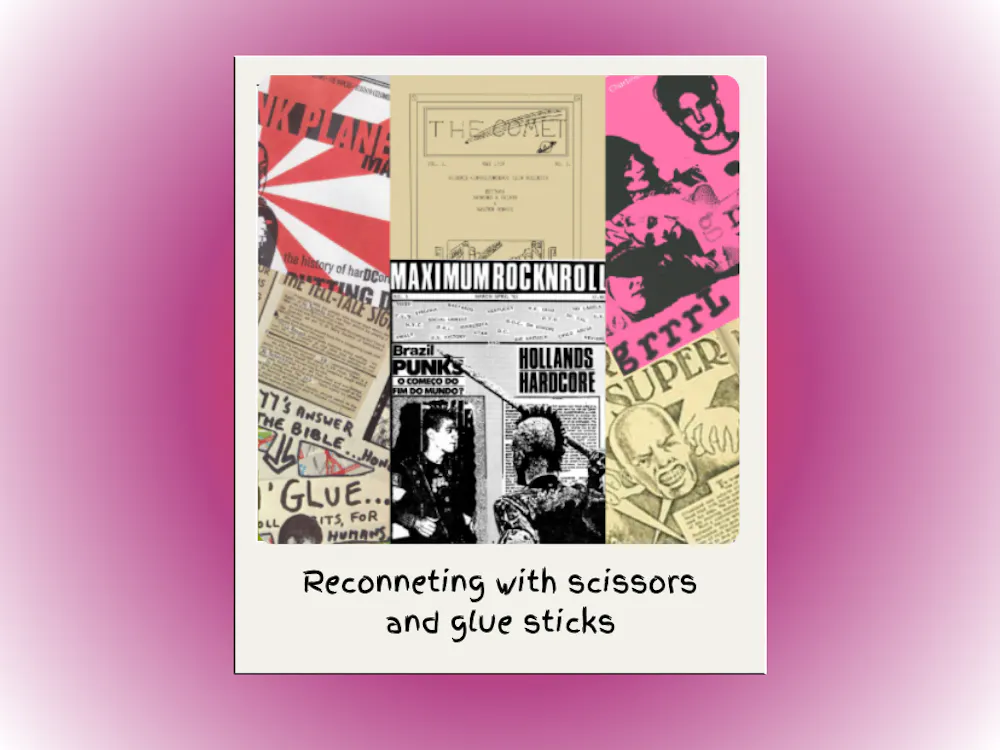
Reconnecting with scissors and glue sticks: A history of zines
By Ren Chaffee | 2 days agoSticky fingers, paper clippings and ink smears are the fundamentals of zines. While this may sound juvenile, this accessible entrance to a nuanced community is a huge part of the appeal. Anyone can do it, any time.Stefanie Hilles, a librarian at the Art and Architecture Library, defined zines as “self-published, kind of anti-establishment, underground little magazines that, in a lot of ways, are done for the love of the game instead of profit.”
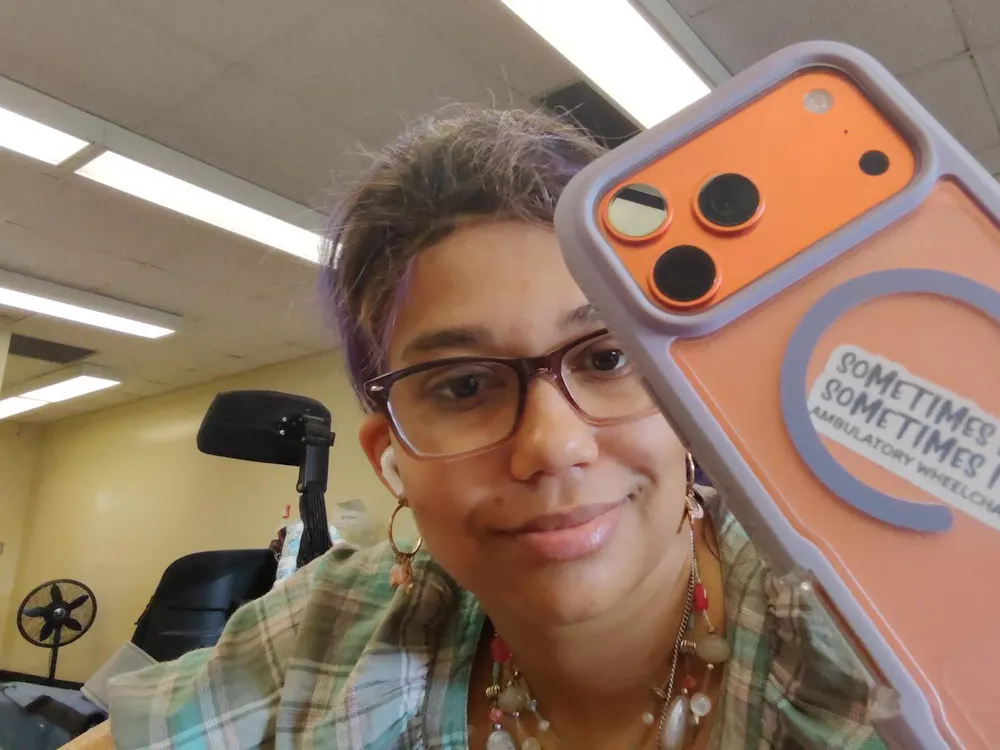
Invisible disabilities: Living life as an ambulatory wheelchair user
By Whitney Wilson-Harris | 2 days ago"If you don’t already know me, you can’t even tell I’m disabled — aside from my limp and the fact I have a handicap placard. When I am not using any of my mobility devices, the only sign of my disability is my oversized purse, which is necessary to carry all the medications and other supplies that I need when I am out and about."