
If there’s one thing you need to know about me, it’s that I love classic books. “Pride and Prejudice,” “Wuthering Heights,” you name it, I’ve read it.
You’re probably thinking, “Boooooooo, not the classics. They’re boring.” But I swear, they’re not. Classics offer us a rare glimpse into the past. Think about it — they’re the first-hand description of what life was like in that present moment. What’s more interesting than that?
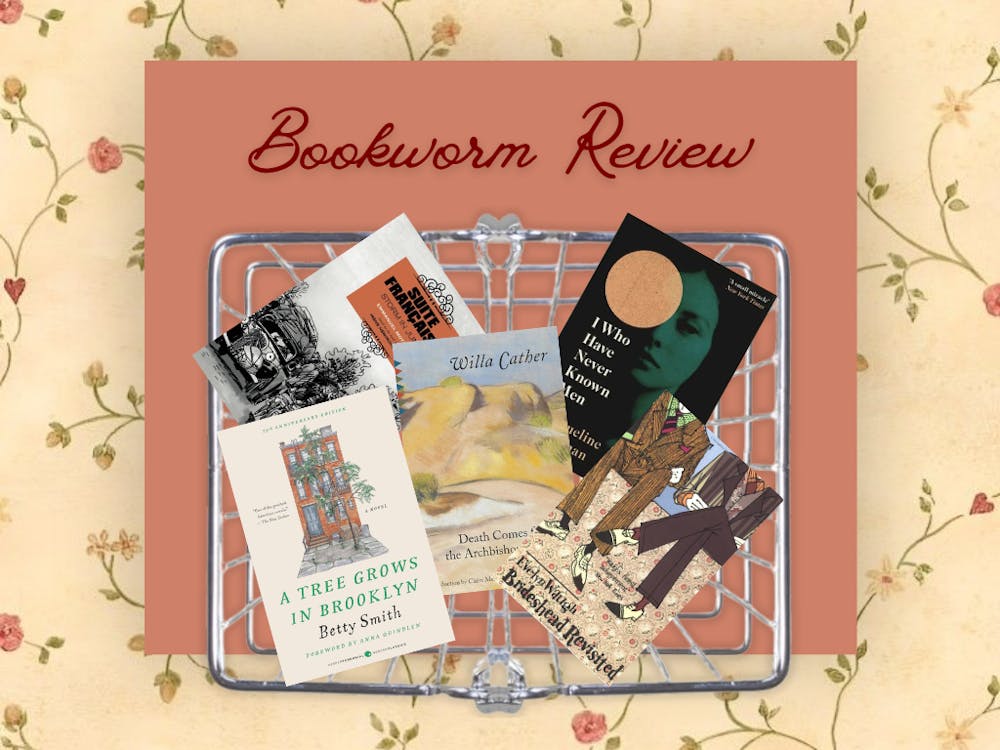
So here are five classic book recommendations to help expand your mind and live out all of your historical fantasies.
“Death Comes for the Archbishop” — Willa Cather
Horses, the wild, wild west and run-ins with dangerous outlaws — sounds like the perfect setting for a story about cowboys, right? I’ve got some bad news for you.
“Death Comes for the Archbishop” follows Bishop Jean Marie Latour and his friend Father Joseph Vaillant as they are sent to govern the newly established Catholic diocese in New Mexico — now, I know this doesn’t sound exciting, but stay with me.
While trying their best to establish their church, Bishop Latour and Father Vaillant encounter a whole crew of interesting, sometimes shady characters, and find themselves constantly entangled in all sorts of trouble.
This book is actually based on real-life events and is written in a simple but illustrative way, a Cather specialty. Additionally, there are some really enlightened takes on accepting others, including those in indigenous groups, which is a rarity among books from 1927.
“I Who Have Never Known Men” — Jaqueline Harpman
Let’s play a fun game. I’m going to call it “Is this real world or book world?”
A group of women is held in captivity by men. They have no privacy, no bodily autonomy and slowly lose their individuality and memories of their life from when they were free.
If you guessed “book world,” you’re right!
Enjoy what you're reading?
Signup for our newsletter
This bleak beginning sets the stage for Harpman’s classic science-fiction dystopian novel. A group of 39 women and a child are held in a cage by male guards. Their days become monotonous, with the women slowly accepting their fate.
But the child, who has no memories of her life before the cage, is the only one to question what is going on and to be determined to do something about it.
It’s a haunting narrative and a shocking mirror of our society now that will leave you questioning everything.
“Suite Française” — Irène Némirovsky
“Suite Française” is an interesting novel, partly because it’s not complete.
Written at the start of the Nazi occupation of France during World War II, “Suite Française” is divided into two books. One follows a large cast of characters fleeing Paris, the other follows a small French town dealing with its new Nazi neighbors.
The characters are written so realistically — I’ve only read a few books where the characters felt truly alive. A large part of that is due to Némirovsky’s writing. It’s gorgeous and heartbreaking.
Unfortunately, readers will never know how the book ends. Némirovsky, a Ukrainian immigrant of Jewish ancestry, was arrested by Nazis in France and sent to a concentration camp, where she later died. “Suite Française” is her last novel, which was found hidden in a suitcase, and is a fitting final tribute to one of the most underrated female authors of the 20th century.
“A Tree Grows in Brooklyn” — Betty Smith
Francie Nolan lives in a tenement in Brooklyn, as the title suggests. Her family is poor and struggles to survive. But Francie, with her love for reading and a creative imagination, finds new ways to find joy and slowly but surely create a better life for herself.
“A Tree Grows in Brooklyn” was wildly popular when it was first published, with its messages about perseverance and hope resonating with a post-Great Depression audience. It was also distributed as a mass-market paperback to American soldiers during World War II, where my Grandpa Fahy first read and fell in love with it.
This book is one of the best metaphors for the “American Dream,” and it’s such an endearing novel that is perfect for those who love “Anne of Green Gables.”
“Brideshead Revisited” — Evelyn Waugh
Did anyone else hate reading “The Great Gatsby?”
Even if you didn’t, which is so unbelievably bizarre to me, I think you’ll enjoy “Brideshead Revisited” a whole lot more.
Set at the start of the 1920’s in England, “Brideshead Revisited” follows middle-class Charles Ryder as he becomes friends with Lord Sebastian Flyte. The two go on a series of misadventures at university and become increasingly closer to each other. Charles eventually meets Sebastian’s eccentric family, who are the only Catholic-English nobility.
As Sebastian falls deeper and deeper into alcoholism, Charles becomes infatuated with Sebastian’s twin sister Julia, and eventually, the allure of riches leads to life-changing consequences.
It’s a far better critique of greed, with more likable characters than “The Great Gatsby,” and will keep you turning the pages to find out how the drama unfolds.
Read More

‘Practical Magic 2’: Shenanigans
By Eliza Garrett | YesterdayThe Owens sisters are back after nearly three decades, and this time, they have even more magic, family drama and romance than ever before. “Practical Magic 2” brings Gillian and Sally Owens back to the big screen and allows the audience to experience their magic once again.

Lizzy McAlpine makes folk her own in ‘Angel’
By Ren Chaffee | 3 days ago“Angel,” Lizzy McAlpine’s new album, released Sept. 18. Although there are some mixed reviews, “Angel” hits the mark for me.

Finding comfort in food
By August Humphrey | 5 days agoFood: possibly one of my favorite four-letter words; not just because I love a good meal, but also because of how it can represent people’s identities. Just take a quick look at the TV schedule for the Food Network, where celebrities take us into their personal lives with food. People like Ree Drummond take us behind the scenes and show us what food means to them, and the impact it’s had on their lives. Not only do we need food to live, we need it to thrive.