
The Associated Student Government (ASG) tabled a resolution to standardize course grading scales across departments Tuesday after extended debate over academic fairness and faculty autonomy.
Senator Nicholas McClure introduced a resolution to standardize grading scales across courses. He proposed to make each grading scale the same per department, rather than class by class. Senators discussed whether the policy should be applied at the college, department or Miami Plan level. After discussion and amendments, McClure tabled the resolution to April 21 to allow for further input among faculty and departments.
Several senators expressed concern that a universal grading system would diminish professors’ autonomy.
“Educators today are already facing a lot of challenges to scrutiny and people telling them how to perform their jobs,” Senator Max Tumbleson said. “I don’t think that’s something students should have the authority to have a say in.”
Others argued that inconsistent grading policies could put some students at a disadvantage, as some employers look at GPAs when hiring.
“[Employers] are just looking at the plain number at the end of the day,” Senator Zeplynn Whitmore said. “I don’t think that would ultimately be fair to be judging students’ performance on different scales.”
Enjoy what you're reading?
Signup for our newsletter
ASG also failed a resolution that would have made course evaluation data publicly available through an internal Miami database. The resolution failed in a 10-14 vote. One member abstained from voting.
Senator McClure proposed the resolution to publicize only quantitative data from course evaluations to help students make informed course decisions. Supporters of the resolution argued that access to the data would better communicate course structure and expectations.
However, senators raised concerns about the intention and reliability of the evaluations.
Senator Duke Buckalew said course evaluations are intended for departmental faculty to improve their classes, not guide students in selecting professors, and said the resolution could potentially damage the institution’s credibility.
Senator Quin Ahler said professors often incentivize filling out course evaluations by offering students extra credit, and questioned their value for student decision-making if many responses are disingenuous.
“I don’t think that there’s much substance that [students will] take away from quantitative data,” Senator Gabriel Slark said. “If students are actually interested in knowing more about a course, they’re not going to look at the numbers, they’re going to look at personal experience.”
Students Bri Fitzgerald and Anna West presented survey findings opposing proposed changes to Cook Field. With over three thousand respondents, the survey showed widespread support for Cook Field’s current role in campus culture and student experience.
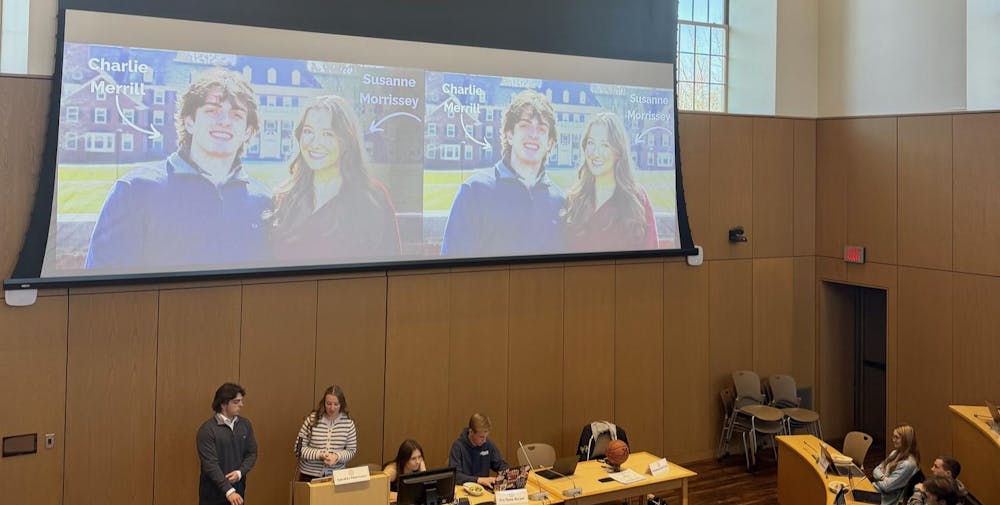
ASG also heard from President-elect Charlie Merrill and Vice President-elect Susanne Morrissey, who outlined their priorities and intentions for the upcoming term, including mental health initiatives, skill development programming and efforts to strengthen campus culture and community.
ASG will meet again Tuesday, April 14 at 6 p.m. in the Joslin Senate Chambers.
Read More

Why do women need to be perfect?
By Veronica Dallas | 6 hours ago"However you look at this trend, women are getting more and more negative feedback no matter what they do or who they cater toward."

Where did all the episodes go?
By Casey Bertch | 6 hours agoEight episodes. That’s all most of your favorite modern shows will get per season. Maybe, if they’re lucky, they’ll get 10. Long gone are the days of a 22-episode sitcom, made for networks to air reruns 24/7.

David McComb’s journey to the starting quarterback job for the RedHawks
By Alyssa Vazquez | YesterdayMcComb was impressive through his first four games with the RedHawks before suffering a season-ending injury in week four against the University of Connecticut.