
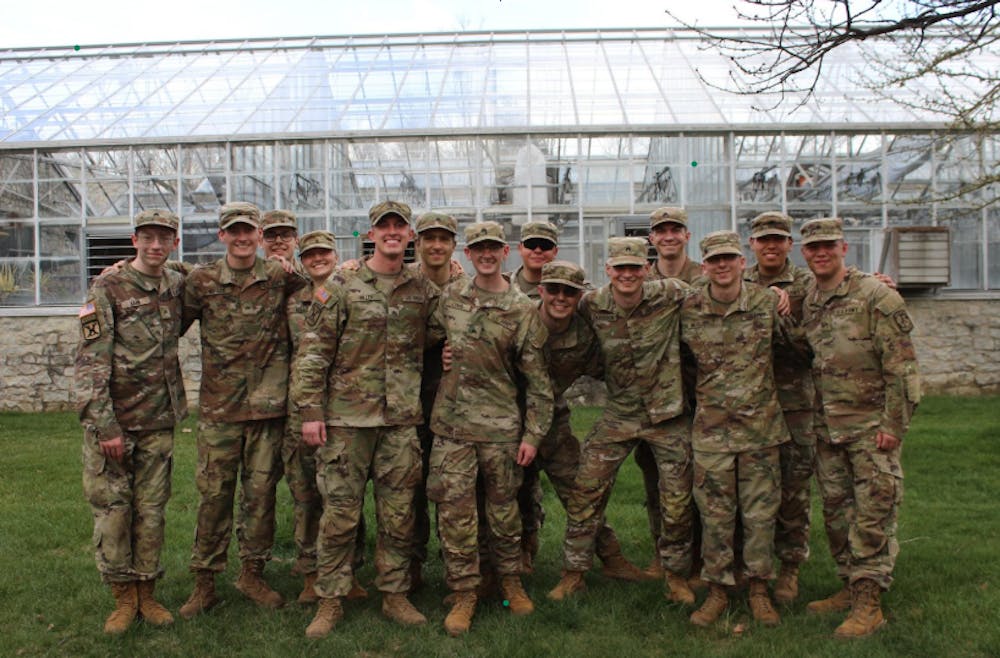
“How many of you were born before 9/11?” his professor asked.
Reluctantly, Jackson Miller raised his hand, one of two raised in the entire class.
Miller is a 26-year-old student veteran at Miami University. He’s a sophomore studying organizational leadership.
Miller joined the U.S. Army in 2019, after about two years contesting a Marines disqualification over a minor eye condition.
He served as a sergeant in field artillery at Fort Riley in Northwest Kansas, in Death Valley, California and overseas in Poland, Germany and Belarus.
“I'm going to do it,” Miller said when recalling his path to enlistment. “I don’t care what it takes.”
When Miller returned home to Oxford, Ohio, in 2023, after a little more than four years of service, it took him about six months to a year to adjust to civilian life.
When Miller saw a fellow veteran that he served with at a restaurant in Oxford, he took this as a sign. He was going to attend Miami and complete the Army Reserve Officer Training Corps (ROTC) program to rejoin the Army, this time, as an officer.
“This is my calling,” Miller said.
Miller said Miami’s Student Veterans Center has helped immensely when navigating the Veteran Affairs benefits he receives from the federal government. Resources are listed on Miami’s One Stop, which, according to Grant Woodruff, have been a big help.
Miami’s efforts to support students with military backgrounds were awarded the Collegiate Purple Star by Ohio’s Department of Higher Education. Miami was one of the first Ohio universities to receive this award, while Ohio was the first state to grant these designations.
Woodruff, a sophomore organizational leadership major, is a member of the Ohio Army National Guard and attends Miami with his tuition paid, since it’s an Ohio public university per Ohio’s G.I. Promise.
Enjoy what you're reading?
Signup for our newsletter
Woodruff said he knew he wanted to stay physically active after high school, but didn’t want to play sports in college in order to focus on college. He also knew the Army National Guard would help pay for his tuition, so Woodruff joined right out of high school.
Woodruff missed the second semester of his first year to complete basic training, which took place from January to August, 2025. He now spends one weekend per month at Woodlawn Training and Community Center working for the Ohio Army National Guard in the 216th Engineer Battalion as a mechanic on Army trucks.
Along with helping student veterans and current service members, Miami also cares for its ROTC members.
Sophomore global policy and diplomacy and Spanish major, Mary Catherine Kelly, is a cadet in Miami’s Army ROTC program and an active Ohio Army National Guard member in the 216th Engineer Battalion. Kelly has many veteran family members, and she joined ROTC in the fall semester of her first year.
“I was curious, so I joined for fun my freshman year, end of first semester,” she said. “I fell in love with it.”
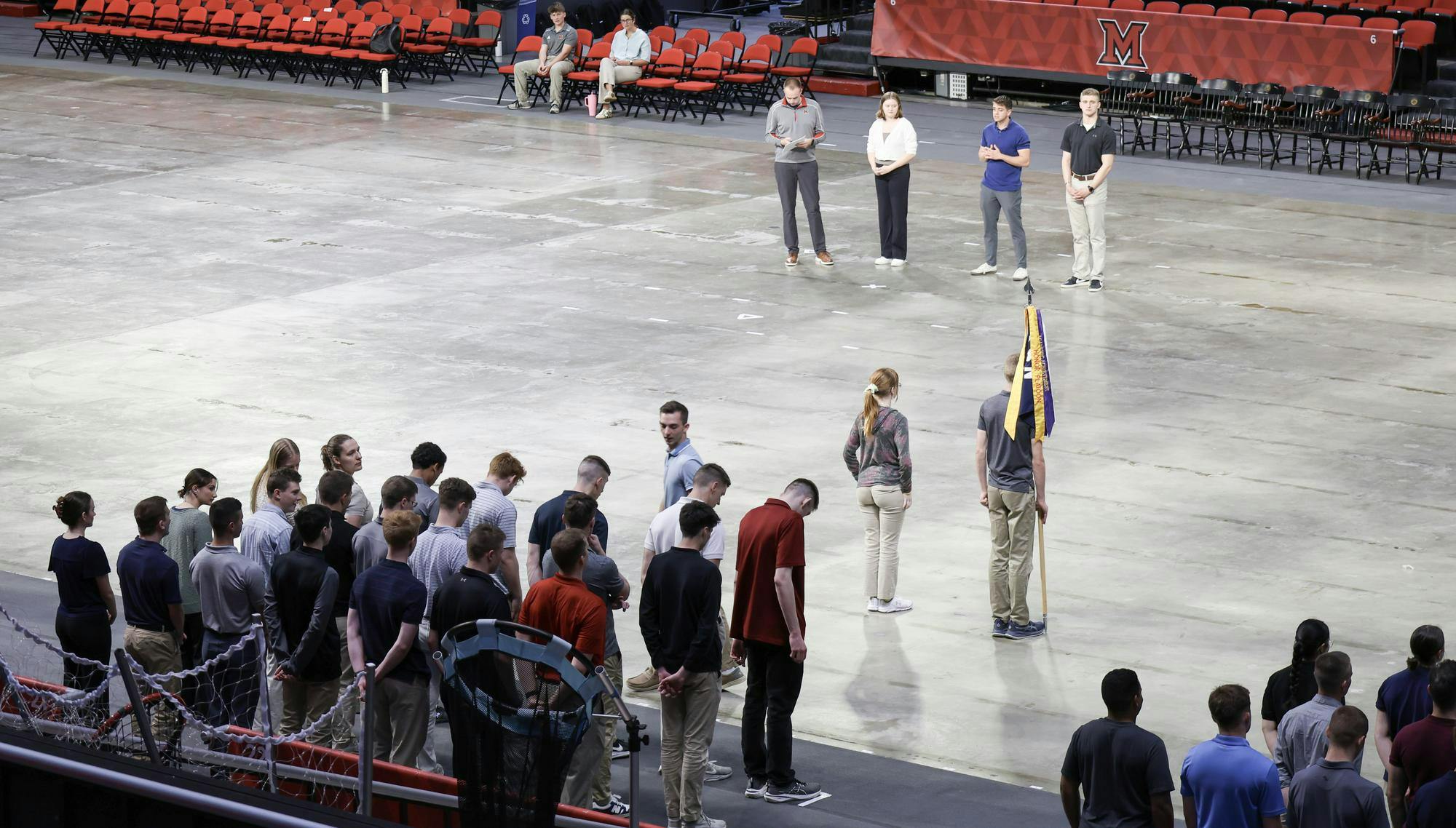
In Army ROTC, each week Kelly, Miller and their fellow cadets complete three days of physical training, two days of military science and leadership classes and one day of lab, which includes drills. Once a semester they also train at the Fort Knox military base in Kentucky.
Kelly said after the March 12 attack on ROTC students at Old Dominion University in Norfolk, Virgina, Miami University Police Department followed Miami’s cadets around campus and to and from their training. Kelly also said that professors and administrators reached out in emails, giving their condolences and support to the Army ROTC students.
“Miami orchestrated our safety really well,” Kelly said. “My family really appreciated that.”
Woodruff said the opportunities the Ohio Army National Guard provides should be presented more often to people that don’t have a set life plan.
“I think not enough people look into it,” Woodruff said. “The military definitely helps point [people] in the right direction if they’re struggling.”
Despite the benefits, Woodruff and Kelly both said being a service member is not always positive. Both have been called profanities and received dirty looks on campus when in uniform.
Woodruff says it is upsetting to experience that lack of respect and understanding after dedicating so much time to serving the country.
In addition to facing ridicule, service members also face mental health struggles.
The 2025 National Veteran Suicide Prevention Annual Report offers the most recent information regarding veteran suicides from 2001-2023. In the 2025 report, the U.S. Department of Veterans Affairs (VA) reported 6,398 veterans deaths by suicide. The rate of suicides per 100,000 veterans increased from 34.7 deaths in 2022 to 35.2 deaths in 2023.
Because of these mental health struggles and the stigmas about being in the military, the Butler County Veterans Service Commission (BCVSC) has been working for decades to improve veterans’ lives.
The BCVSC provides a plethora of services and programs to local veterans including peer support groups, helping connect veterans with VA healthcare, providing transportation, teaching training progams to recognize the warning signs of suicide and hosting community outreach events to reduce isolation.
Mike Farmer, the executive director of BCVSC, says their programs can range from individualized care to over 500 participating veterans. He also says these programs are successful in helping local veterans create community with one another.
“In the mental health space, the goal is meaningful connection and sustained engagement,” Farmer wrote in an email to The Miami Student. “Even smaller groups can have a significant impact when veterans build trust, stay connected, and feel more comfortable seeking help when they need it.”
Farmer said he has also seen awareness around veteran mental health increase in recent years as there are far more public conversations about it today.
“There is a growing recognition that veteran mental health is not just a clinical issue,” Farmer wrote. “It is a community issue that requires coordination between federal systems like the VA, local organizations and peer networks. So, while we have made progress in reducing stigma and increasing visibility, the focus now has to be on access, coordination and early intervention.”
If you or someone you know is struggling, the National Veterans Crisis Line can be accessed by dialing 988 and pressing 1.
Read More
What happens when the world stops coming to campus?
By Vedika Kaushal | 3 hours ago"People have been traveling across borders to learn languages, study different intellectual traditions and bring new ideas back with them for centuries. That exchange is not new, and I don’t think it’s something we should lose sight of now."

Shows to keep you entertained this fall
By Ren Chaffee | 3 hours agoSometimes the transition into fall can be scary. The weather inevitably gets colder, and class begins again. The perfect way to fight the impending sense of doom is to watch a good show.

Miami’s civics center faces potential changes in proposed bill
By Owen Martin | 23 hours agoLess than two weeks after it began offering courses, Miami University’s Center for Civics, Culture and Society is facing a potential restructuring from the same body that created it.