
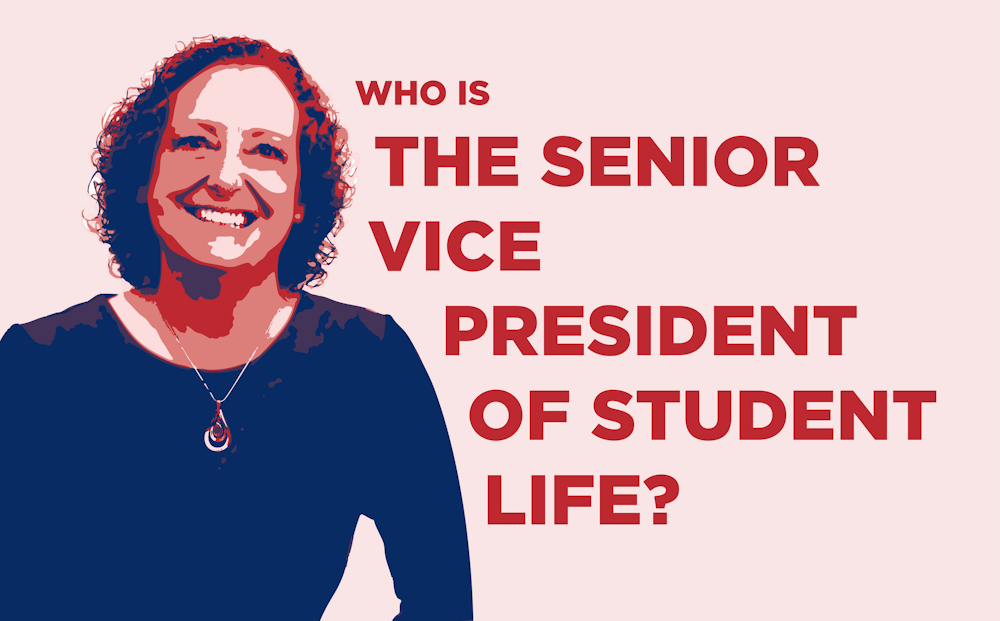
When she’s not baking pie, hiking or reading, Jayne Brownell is tirelessly managing Miami University’s Division of Student Life.
Brownell has spent the past 11 years building on Miami’s vision in which the whole student is educated. She has focused on five strategic priorities: community and belonging, leadership and engagement, health and wellness, student transitions and academic support.
“[Brownell] has created a culture,” Scott Walter, assistant vice president for student affairs, said. “As the Senior Vice President of Student Life, [Brownell] represents a student body voice at the President’s Executive Cabinet level, at the Board [of Trustees] level and literally has unlimited energy for promoting students and their voice. All the things you see in student life are because of [Brownell] over the past decade.”
Brownell said she has pride in what the office has done for mental health initiatives – from growing awareness to expanding campus resources. She has been on a mental health committee for multiple years and prioritizes inserting the topic of well-being into every environment.
In the 2014-2015 school year, Miami had nine mental health counselors with a 22-day waitlist. Since Brownell’s first presentation about mental health to the trustees in 2015, the number of counselors has doubled, and the waitlist time has decreased to four days.
The Division of Student Life oversees 14 different departments, ranging from housing and dining to safety and security. Brownell said she meets with the directors of each office on a regular basis to make sure they are working in the same direction for the benefit of students. She describes her role in these meetings as being the chief student advocate in the room.
Enjoy what you're reading?
Signup for our newsletter
“I feel like my role with the cabinet, Board of Trustees and alumni is to make sure that students are the center of everything we do,” Brownell said. “ ... The people in those rooms care about students so much, but sometimes [when] conversations [are] about the logistics and all the other stuff, I always have in my mind: how is this going to affect students?”
Brownell also has consistent meetings with the student life leadership team, direct reporters, the cabinet and President Gregory Crawford. She also attends student events, handles appeals and teaches a course about student affairs in higher education, while managing an inbox that receives hundreds of emails a day.
Both Walter and Brownell said there are no identical weeks for the division of student life.
What often takes most of her time are the challenges of student mental health, alcohol and drugs, sexual and interpersonal violence, hazing and responding to discrimination or lack of belonging and community.
“I would argue [that] student activities — doing late night Miami, having fraternities and sororities [and] residence hall programs — those are all prevention, too,” Brownell said. “ … Students who feel like they belong and are cared for and are part of a community are much more likely to do well in other parts of their life, too.”
Brownell’s initiatives trickle down throughout all the departments overseen by student life, including residence life. Resident Assistant Coryn Cummings, a junior biology and neuroscience major, said student life encourages monthly residence hall events and bulletin boards with themes consistent with alcohol safety, campus involvement, academic support and mental health habits.
“[Community and belonging] is like our number one pillar they tell us in training,” Cummings said. “At other universities, I don't know how much they stress it, but here, your primary job is to build community.”
Read More

Why do women need to be perfect?
By Veronica Dallas | 10 hours ago"However you look at this trend, women are getting more and more negative feedback no matter what they do or who they cater toward."

Where did all the episodes go?
By Casey Bertch | 10 hours agoEight episodes. That’s all most of your favorite modern shows will get per season. Maybe, if they’re lucky, they’ll get 10. Long gone are the days of a 22-episode sitcom, made for networks to air reruns 24/7.

David McComb’s journey to the starting quarterback job for the RedHawks
By Alyssa Vazquez | YesterdayMcComb was impressive through his first four games with the RedHawks before suffering a season-ending injury in week four against the University of Connecticut.